
The Story
Plant Bio
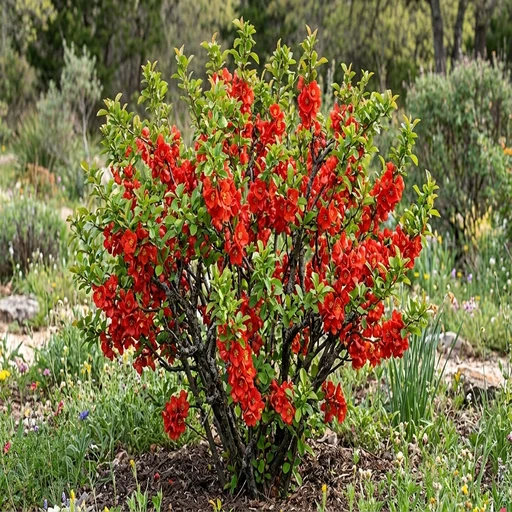
Chaenomeles × superba is a dense, multi-stemmed deciduous hybrid shrub characterized by tangled, spiny branches and glossy, finely serrated leaves. The parent species are native to eastern Asia, producing a tough garden plant that tolerates a wide range of soils and severe winter frosts.
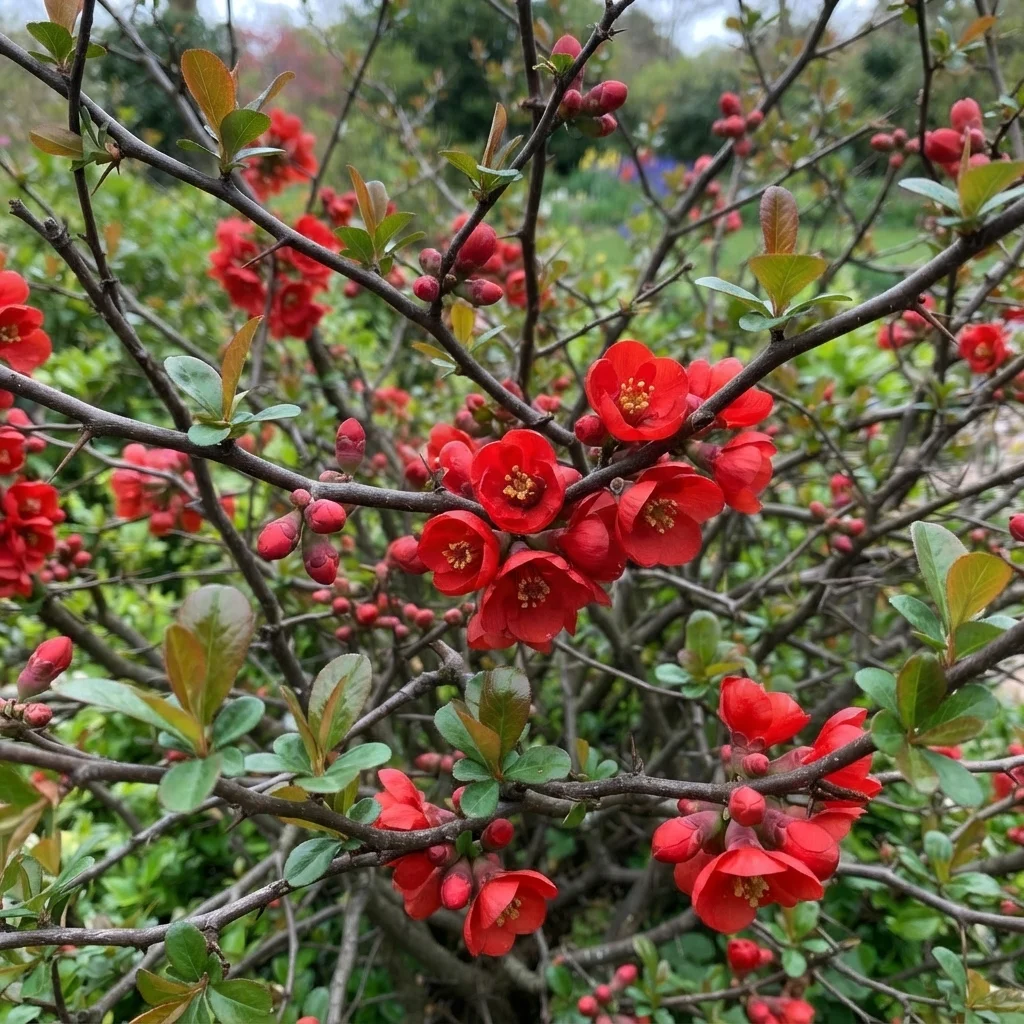
'Crimson & Gold' is distinguished by its deep fire-engine red flowers featuring prominent, contrasting golden-yellow anthers. The single blooms open in early spring on bare wood, accompanied by new foliage that emerges with a distinct bronze-red tint before maturing to dark green.
Uses & Benefits:
Essentials
At a Glance
Plant Type
Shrub
Height
60"
Width
60"
Light
Full Sun, Partial Sun
Zones
4, 5, 6, 7, 8
Water
Low to moderate
Humidity
Moderate
Lifespan
Multi-decade
Native To
Garden origin (parent species native to China and Japan)
Toxicity
Foliage and seeds contain small amounts of cyanogenic glycosides
Bloom period
Early spring – Mid-spring
In flower about 2 months of the year
Planting
How to Grow
- Select a planting site in full sun to maximize flower production and ensure the soil drains rapidly.
- Dig a hole twice as wide as the root ball and backfill with native soil, avoiding heavy organic amendments that hold excess moisture.
- Water deeply at the base immediately after planting to settle the soil around the root system.
- Apply a thin layer of organic mulch over the root zone, keeping it clear of the main stems to prevent rot.
- Irrigate regularly during the first growing season until the root system is fully established.
Pro Tip
Prune immediately after flowering to preserve next year's buds, which develop on the current season's growth. Avoid late-season shearing or planting in poorly drained sites where standing water triggers root rot.
Keep It Thriving
Care Guide
Do
- Prune stems immediately after spring flowering is complete to encourage new flowering spurs.
- Remove basal root suckers regularly to control the horizontal spread of the shrub.
- Apply a balanced, slow-release fertilizer in early spring as new growth begins.
Don't
- Do not prune in late winter or early spring, which removes the dormant flower buds.
- Do not plant in low-lying areas prone to standing water or prolonged waterlogging.
- Do not apply high-nitrogen fertilizers, which stimulate excessive foliage at the expense of blooms.
Seasonal Care Calendar
| Task | Jan | Feb | Mar | Apr | May | Jun | Jul | Aug | Sep | Oct | Nov | Dec |
|---|---|---|---|---|---|---|---|---|---|---|---|---|
| Fertilize | ||||||||||||
| Pest Check | ||||||||||||
| Prune | ||||||||||||
| Spring Cleanup |
Watch Out For
Pests & Diseases
Common Pests
Common Diseases
In the Garden
Landscape Uses & Companions
Landscape Uses
Companion Plants
Multiply
Propagation Methods
Good to Know
Common Questions
Flowering Quince questions
What zones can Flowering Quince grow in?
Flowering Quince is hardy in USDA Zones 4–8. Inside that range it survives winter in the ground; outside it, grow it as an annual or a container plant you protect.
Is Flowering Quince deer resistant?
Yes — Flowering Quince is rated deer-resistant. Deer typically pass it over, though extreme hunger can override any plant's defenses.
When does Flowering Quince bloom?
Flowering Quince typically blooms in early spring through mid-spring. Exact timing shifts a week or two with your zone — Sow's bloom calendar maps it to your garden.
Does Flowering Quince need full sun?
Flowering Quince does best in full sun to part shade. In hot climates, afternoon shade keeps blooms fresher longer.
Is Flowering Quince drought tolerant?
Yes — once established (usually after the first full season), Flowering Quince handles dry spells with minimal watering. Water deeply its first year to build the root system that makes that possible.
More Chaenomeles to compare
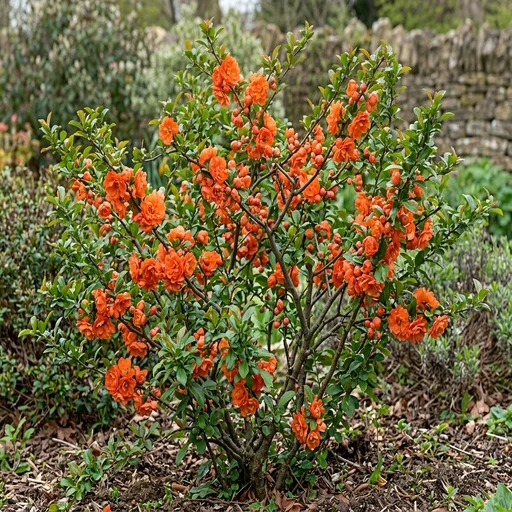
Orange Storm Flowering Quince
Chaenomeles speciosa 'Orange Storm'
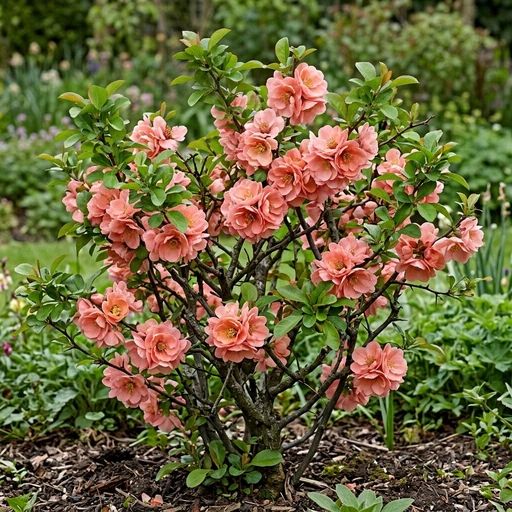
Cameo Flowering Quince
Chaenomeles superba 'Cameo'
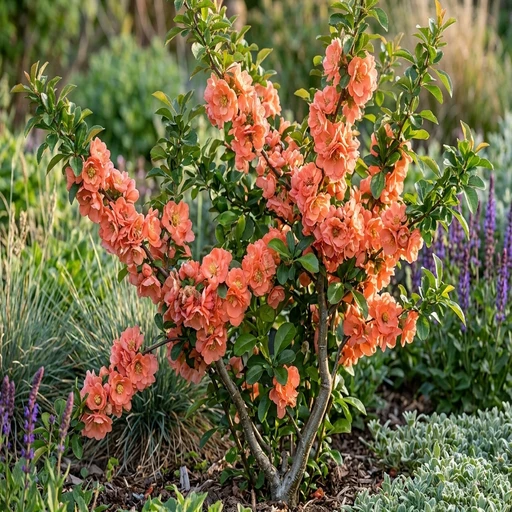
Double Take Peach Quince
Chaenomeles speciosa 'Double Take Peach'
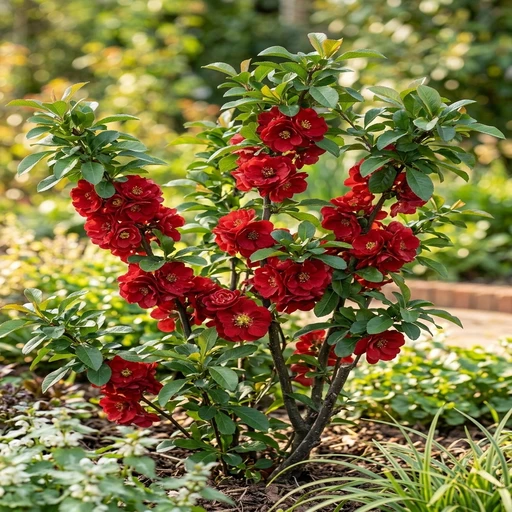
Scarlet Storm Flowering Quince
Chaenomeles speciosa 'Scarlet Storm'
Texas Scarlet Flowering Quince
Chaenomeles speciosa 'Texas Scarlet'
Japanese Quince
Chaenomeles japonica
Keep exploring
Explore the genus
Hardy in your zone?
Grow Flowering Quince with confidence
See it in a design of your actual yard, get zone-matched care reminders, and track it season by season in your garden journal.