The Story
Plant Bio
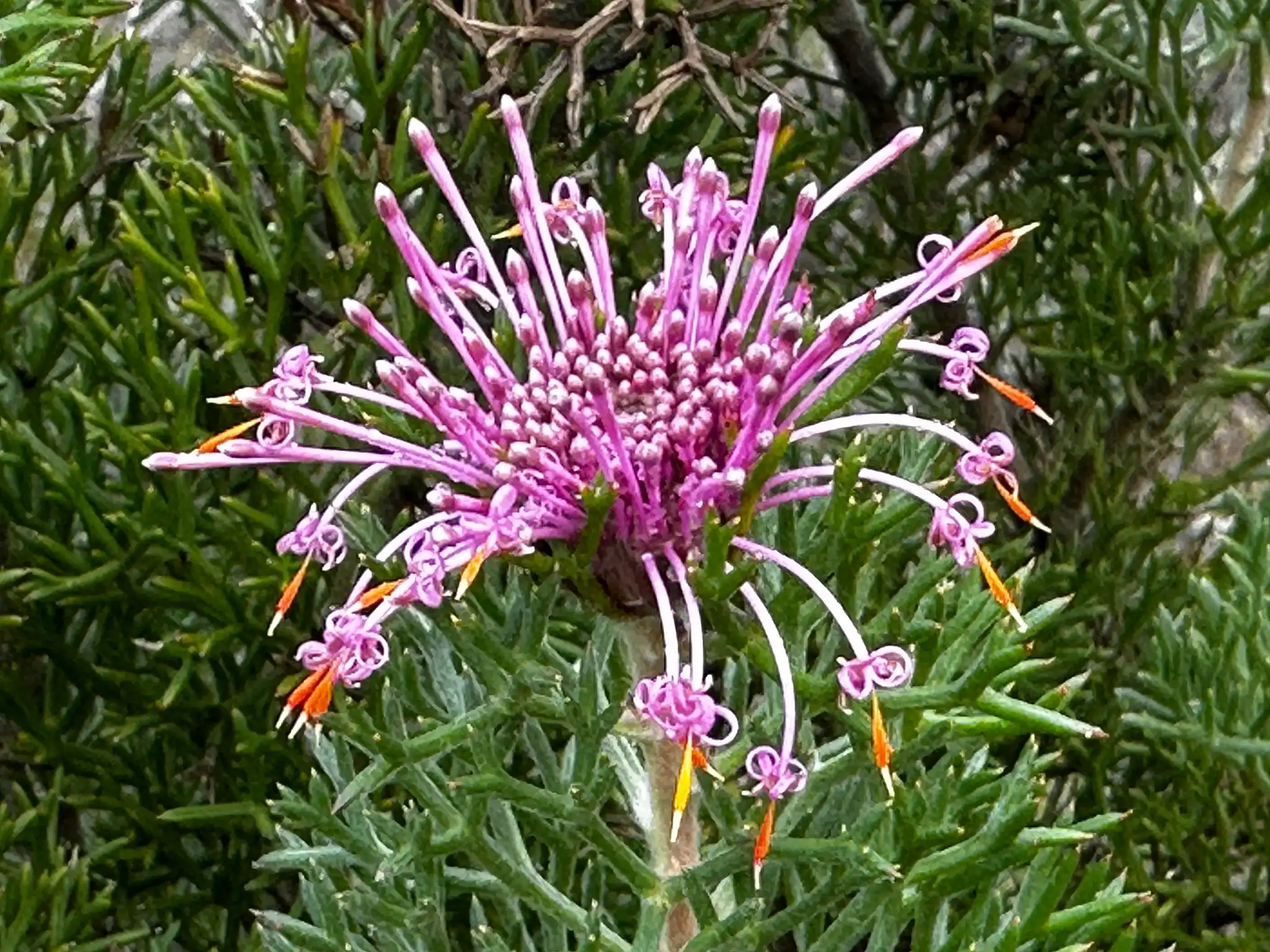
Isopogon formosus, the rose coneflower, is an erect, multi-stemmed evergreen shrub reaching five to six feet in height, characterized by rigid, deeply divided leaves with sharply pointed, prickly tips. The new growth emerges with a silky-hairy texture and a distinct reddish-bronze color before maturing to deep green.
The terminal flower heads are spherical, rose-pink to fuchsia cones about two inches across, featuring bright yellow styles that age to red. These showy blooms are followed by persistent, decorative woody cones that remain on the branches long after the flowering season ends.
Uses & Benefits:
Essentials
At a Glance
Plant Type
Shrub
Height
72"
Width
72"
Light
Full Sun, Partial Sun
Zones
9, 10
Water
Low
Humidity
Low
Lifespan
Moderate
Native To
Australia
Toxicity
Non-toxic
Bloom period
Winter – Spring
In flower about 6 months of the year
Planting
How to Grow
- Select a planting site with exceptional drainage, such as a raised bed, sandy slope, or gravelly bank.
- Ensure the soil pH is acidic to neutral, avoiding any areas treated with lime or heavy clay soils.
- Dig a hole twice as wide as the root ball but of equal depth, keeping the crown level with the surrounding soil.
- Water deeply to settle the soil, then establish a strict watering schedule that allows the soil to dry out between waterings.
Pro Tip
Never prune hard into old, leafless wood; this species lacks a lignotuber and cannot regenerate if cut back to the bare stems.
Keep It Thriving
Care Guide
Do
- Plant in full sun to maximize flower production and maintain a compact growth habit.
- Use only native-formulated, low-phosphorus fertilizers to avoid toxic nutrient buildup.
- Tip-prune young plants regularly to encourage lateral branching and a bushier form.
Don't
- Do not allow the plant to sit in standing water or poorly drained, heavy clay soils.
- Never apply standard garden fertilizers containing high levels of phosphorus.
- Do not prune heavily into old, woody stems that lack active foliage.
Seasonal Care Calendar
| Task | Jan | Feb | Mar | Apr | May | Jun | Jul | Aug | Sep | Oct | Nov | Dec |
|---|---|---|---|---|---|---|---|---|---|---|---|---|
| Fertilize | ||||||||||||
| Pest Check | ||||||||||||
| Prune | ||||||||||||
| Winter Prep |
Watch Out For
Pests & Diseases
Common Pests
Common Diseases
In the Garden
Landscape Uses & Companions
Landscape Uses
Companion Plants
Multiply
Propagation Methods
Good to Know
Common Questions
Rose Coneflower questions
What zones can Rose Coneflower grow in?
Rose Coneflower is hardy in USDA Zones 9–10. Inside that range it survives winter in the ground; outside it, grow it as an annual or a container plant you protect.
When does Rose Coneflower bloom?
Rose Coneflower typically blooms in winter through spring. Exact timing shifts a week or two with your zone — Sow's bloom calendar maps it to your garden.
Does Rose Coneflower need full sun?
Rose Coneflower does best in full sun to part shade. In hot climates, afternoon shade keeps blooms fresher longer.
Is Rose Coneflower drought tolerant?
Yes — once established (usually after the first full season), Rose Coneflower handles dry spells with minimal watering. Water deeply its first year to build the root system that makes that possible.
More Isopogon to compare
Keep exploring
Explore the genus
Hardy in your zone?
Grow Rose Coneflower with confidence
See it in a design of your actual yard, get zone-matched care reminders, and track it season by season in your garden journal.