Also known as Drumsticks · 10 saves
Isopogon
Isopogon, the genus most gardeners know as drumsticks. We track 3 varieties; the ones most used by real gardeners.
The 3 most-saved Isopogon varieties
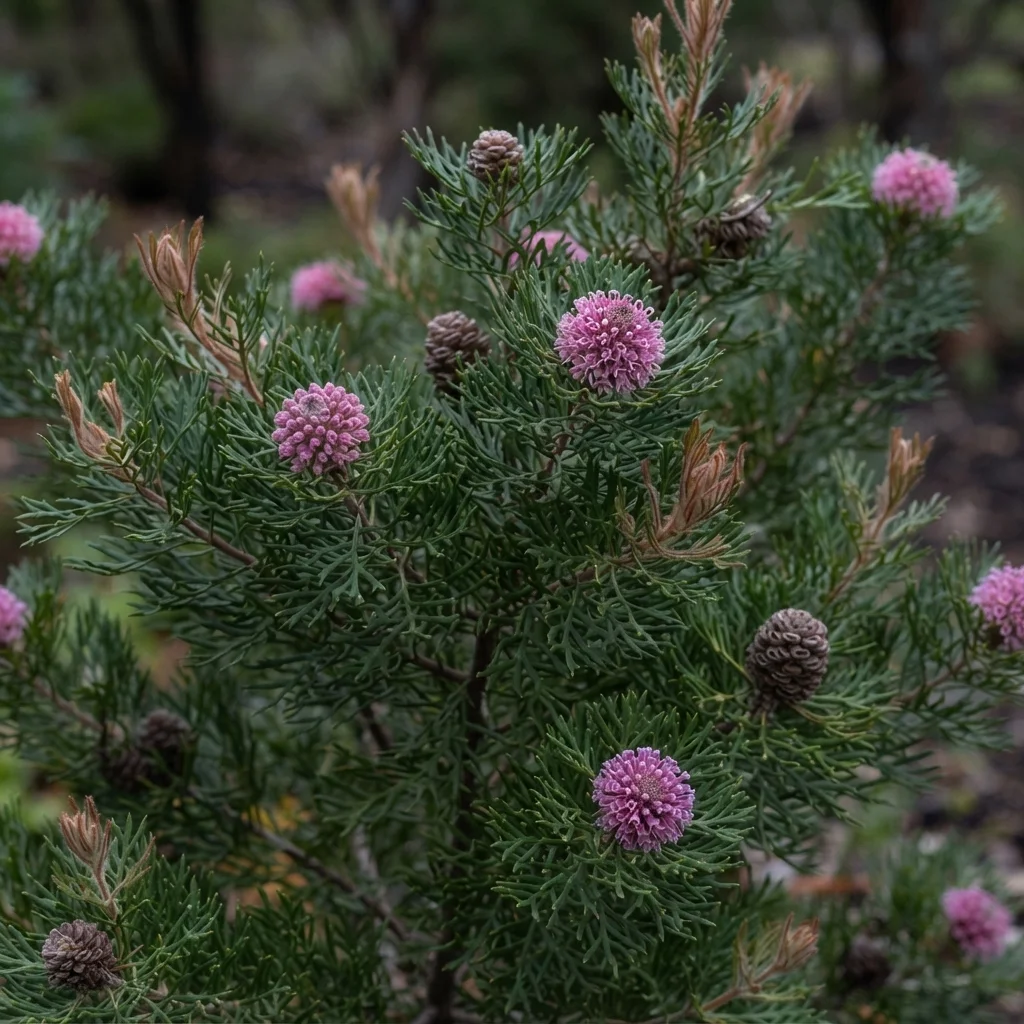
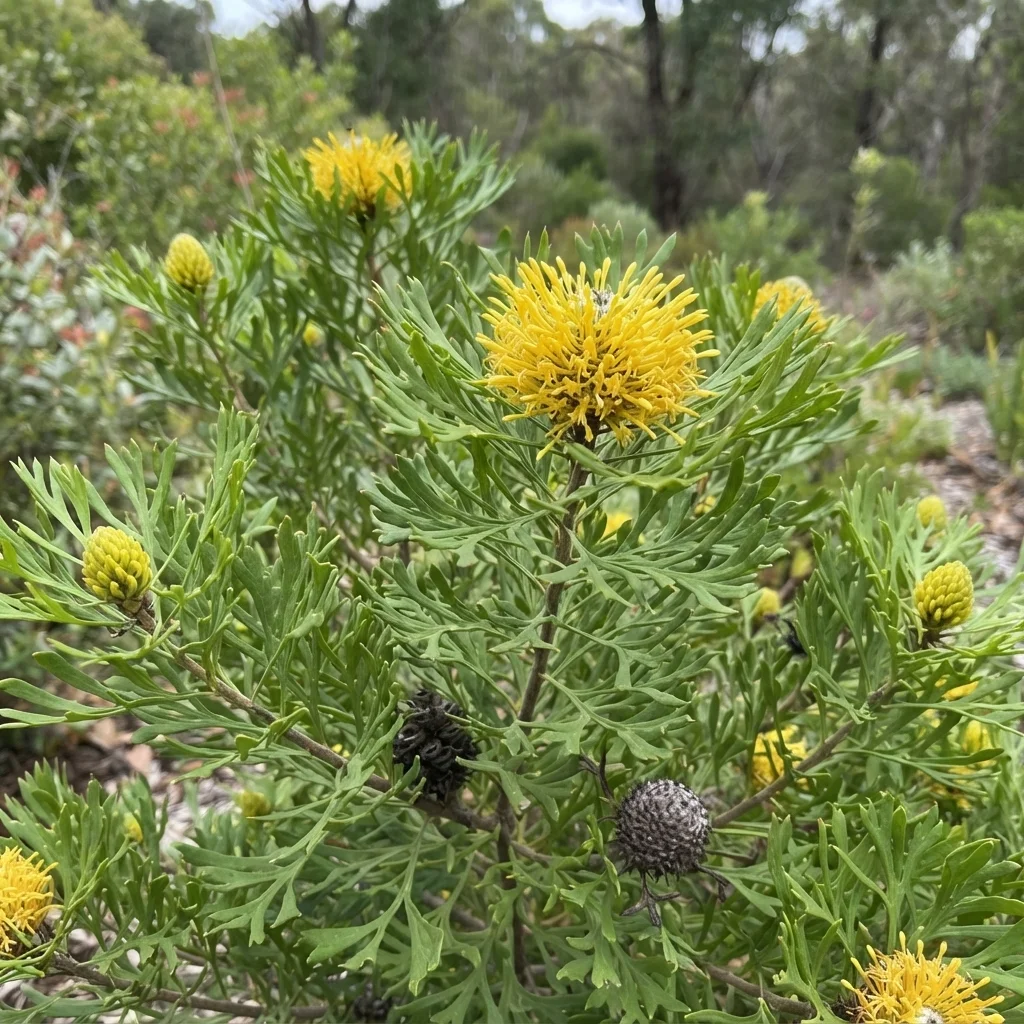
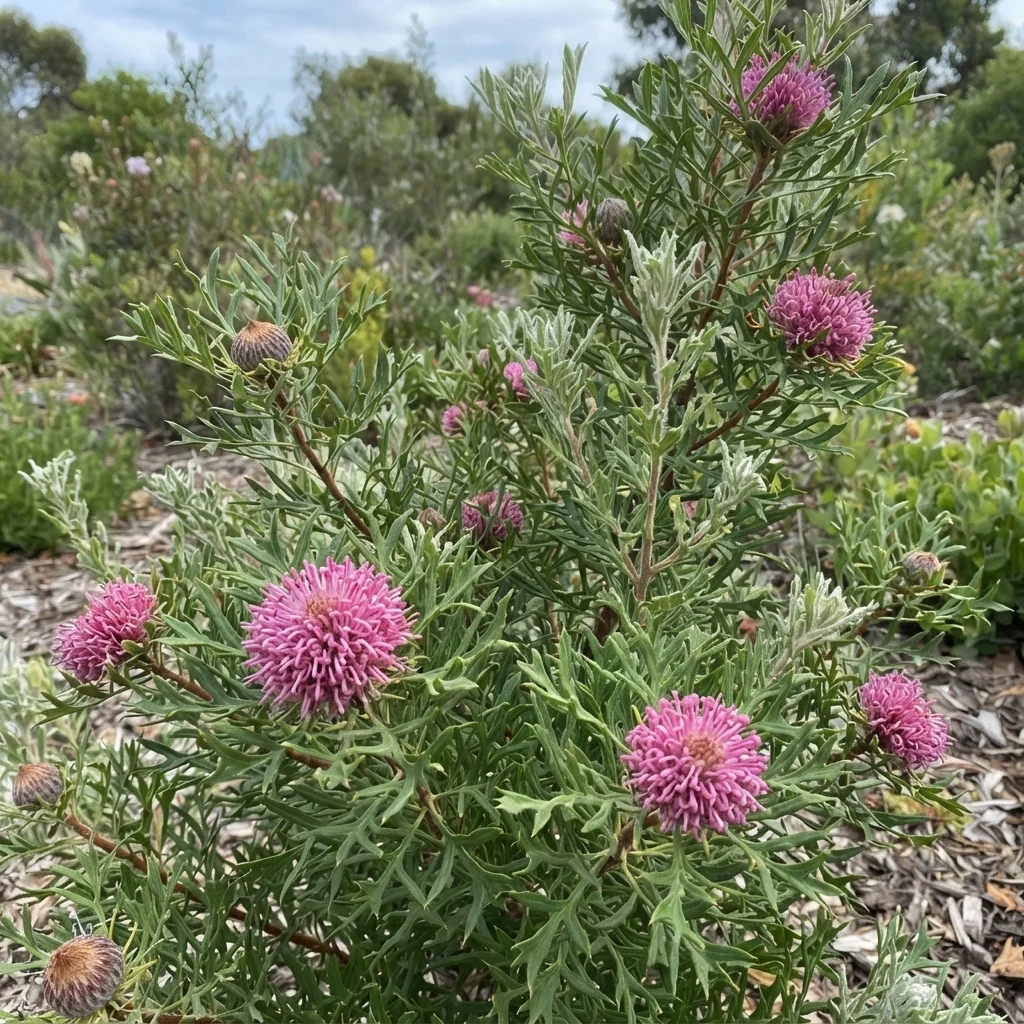
3 species of Isopogon
Each one is a parent of the varieties above.
Track your Isopogon in Sow
Save the Isopogon you grow and get care reminders timed to your zone.
How to grow Isopogon
Whats common across all Isopogon varieties in our catalog — drawn from the care records of the 3 most-grown of them.
The Isopogon year
- PruneMay and June100% of varieties
Lightly tip-prune immediately after flowering to maintain a compact, bushy habit.
- FertilizeMarch and April100% of varieties
Apply a very low-phosphorus, native-specific slow-release fertilizer at the start of the growing season.
- Check for PestsJune and July100% of varieties
Monitor foliage for spider mites and powdery mildew during warm, humid periods.


Do
- Grow in highly porous, sandy, or sandstone-derived soils.
- Ensure excellent air circulation around the foliage to prevent powdery mildew.
- Use exclusively low-phosphorus, native-formulated fertilizers.
- Plant in exceptionally well-draining, sandy, gravelly, or rocky soils.
- Use only specialized, phosphorus-free fertilizers formulated for native Australian plants if feeding is necessary.
Avoid
- Never prune back into old, bare wood lacking green leaves.
- Do not overwater or allow the roots to sit in heavy, poorly drained clay soils.
- Avoid applying standard general-purpose garden fertilizers.
- Do not apply standard commercial fertilizers, as phosphorus is highly toxic to the specialized root system.
What goes wrong with Isopogon
| Problem | What you'll see | What to do |
|---|---|---|
| Spider mites | Fine webbing on foliage and stippled, yellowing leaves under dry, glasshouse conditions. | Increase ventilation, mist the foliage regularly, or apply insecticidal soap if infestations persist. |
| Aphids | Clusters of small green or black insects on tender new growth, causing distorted shoots. | Wash them off with a strong spray of water or apply horticultural oil. |
| Powdery mildew | White, powdery fungal patches on the leaves, typically occurring in stagnant, humid air. | Space plants to improve air circulation and prune surrounding vegetation to increase sunlight. |
| Root rot | Sudden wilting, foliage browning, and root decay triggered by soggy, poorly drained soil. | Ensure flawless drainage, avoid overwatering, and discard severely infected container specimens. |
| Phytophthora root rot | Sudden wilting, foliage browning, and rapid plant death, particularly in warm, wet soils. | Ensure exceptional soil drainage and avoid overwatering; infected plants cannot be saved. |
Making more Isopogon
Seed
- Collect dried, mature cones from the plant.
- Place the cones in a warm paper bag until they open and release the seeds.
- Sow seeds into a well-drained, sandy seed-raising mix.
- Keep the medium lightly moist in a warm, bright position until germination occurs.
Semi-hardwood cuttings
- Take 3- to 4-inch semi-hardwood cuttings in late summer.
- Remove the lower leaves to expose the nodes.
- Dip the base in a mild rooting hormone gel.
- Insert into a porous mix of perlite and peat, keeping humid until roots form.
Isopogon questions
How many types of Isopogon are there?
The Sow catalog tracks 3 distinct Isopogon varieties. The most popular — ranked by 10 real gardeners — are shown first above.
What zones does Isopogon grow in?
Across its varieties, Isopogon covers USDA Zones 9–10. Individual varieties differ — each plant page lists its exact range, and Sow filters the catalog to your zone automatically.
When does Isopogon bloom?
Most Isopogon varieties bloom in winter, late spring. Staggering early, mid, and late varieties extends the genus's season in one bed.
Which Isopogon should I choose?
Start from the most-saved varieties above — popularity across thousands of gardens is a strong signal of reliability — then filter by your zone and sun. In the Sow app you can preview any of them in a photo of your actual yard before you buy.