The Story
Plant Bio
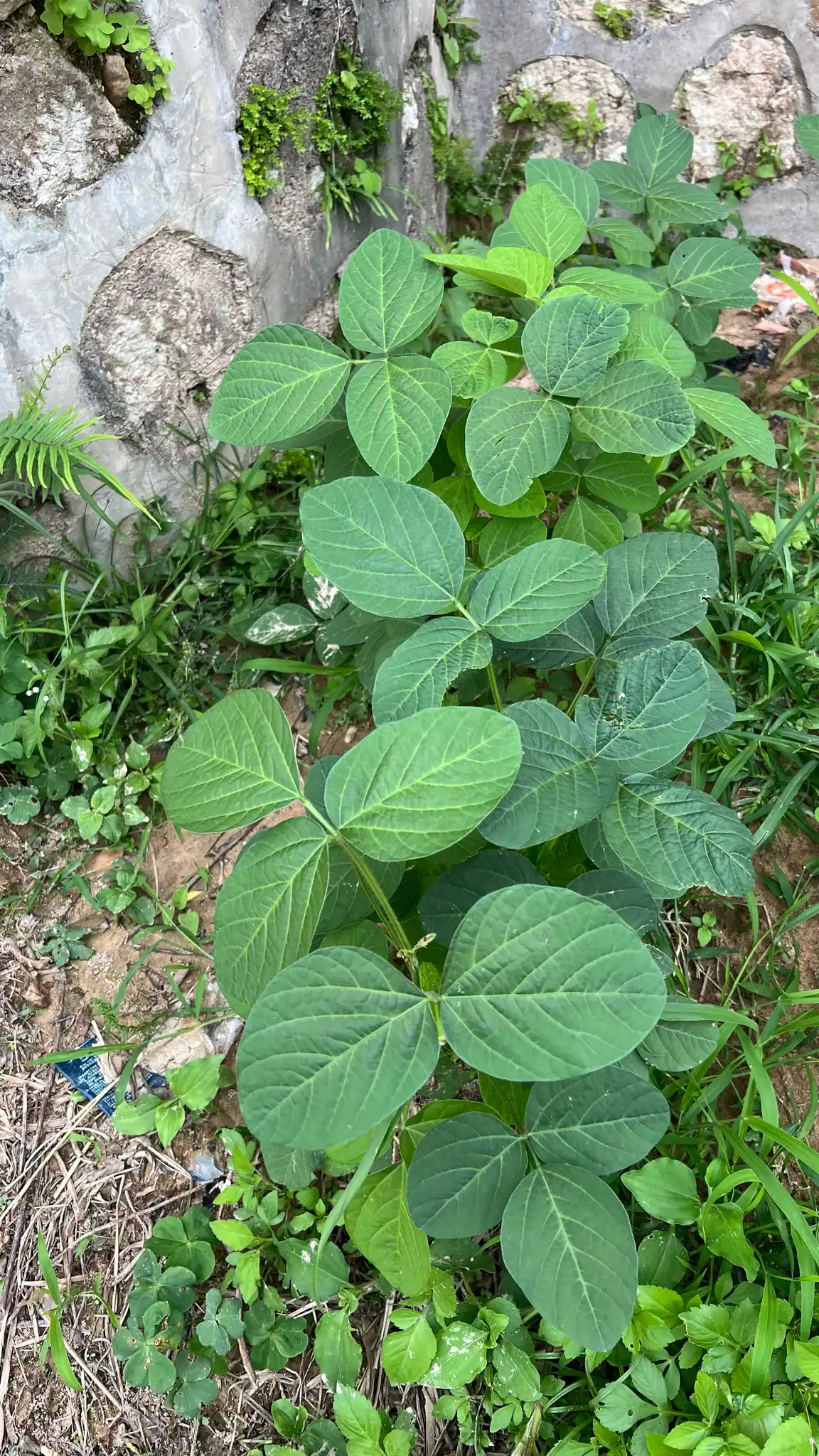
Glycine max, the soybean, is an erect, bushy annual legume native to East Asia, characterized by its branching upright stems and trifoliolate leaves covered in fine, downy hairs. Inconspicuous white, pink, or purple pea-like flowers emerge from axillary racemes during summer, followed by clusters of fuzzy seed pods containing the edible beans.
This species is highly valued as a warm-season agricultural crop and cover crop, fixing its own atmospheric nitrogen through symbiotic root nodulation. Standard garden selections typically form compact, self-supporting mounds that mature within a single growing season.
Uses & Benefits:
Essentials
At a Glance
Plant Type
Annual
Height
36"
Width
18"
Light
Full Sun
Zones
4, 5, 6, 7, 8, 9, 10
Water
Moderate
Humidity
Moderate to high
Lifespan
Annual
Native To
Asia
Toxicity
Toxic if eaten raw
Bloom period
Summer
In flower about 3 months of the year
Planting
How to Grow
- Sow seeds directly into well-drained loam or sandy loam after all danger of frost has passed and soil temperatures reach 60°F.
- Space seeds 1 to 2 inches apart at a depth of 1 inch, leaving 24 to 30 inches between rows.
- Water consistently to keep soil evenly moist, particularly during the critical flowering and pod-development stages.
- Harvest the pods when they are plump and green for edamame, or allow them to dry completely on the vine for dry bean storage.
Pro Tip
Sow seeds only after soil temperatures reach 60°F (15°C), as planting into cold, wet spring soil causes seed rot and stunting. Avoid synthetic nitrogen fertilizers, which inhibit the plant's natural nitrogen-fixing nodules and result in excessive foliage at the expense of pod development.
Keep It Thriving
Care Guide
Do
- Inoculate seeds with Bradyrhizobium japonicum before planting to maximize nitrogen-fixing efficiency in soils where soybeans have not been grown recently.
- Provide a full-sun location with excellent drainage to prevent root rot pathogens.
- Monitor plants regularly for Japanese beetles and hand-pick them to prevent severe foliage skeletonization.
Don't
- Do not apply heavy doses of synthetic nitrogen fertilizer, as this suppresses root nodulation and reduces overall bean yield.
- Do not plant seeds in cold, soggy spring soils, which leads to seed rot and poor germination.
- Do not consume the beans raw, as they contain trypsin inhibitors that must be neutralized by cooking.
Seasonal Care Calendar
| Task | Jan | Feb | Mar | Apr | May | Jun | Jul | Aug | Sep | Oct | Nov | Dec |
|---|---|---|---|---|---|---|---|---|---|---|---|---|
| Fertilize | ||||||||||||
| Harvest | ||||||||||||
| Pest Check | ||||||||||||
| Plant |
Watch Out For
Pests & Diseases
Common Pests
Common Diseases
In the Garden
Landscape Uses & Companions
Landscape Uses
Companion Plants
Multiply
Propagation Methods
Good to Know
Common Questions
Soybean questions
What zones can Soybean grow in?
Soybean is hardy in USDA Zones 4–10. Inside that range it survives winter in the ground; outside it, grow it as an annual or a container plant you protect.
Is Soybean deer resistant?
Not reliably. Deer may browse Soybean, especially tender spring growth — plan on repellents or fencing where pressure is high.
When does Soybean bloom?
Soybean typically blooms in summer through summer. Exact timing shifts a week or two with your zone — Sow's bloom calendar maps it to your garden.
Does Soybean need full sun?
Soybean does best in full sun (6+ hours).
Is Soybean drought tolerant?
Yes — once established (usually after the first full season), Soybean handles dry spells with minimal watering. Water deeply its first year to build the root system that makes that possible.
Keep exploring
Explore the genus
Grow Soybean with confidence
See it in a design of your actual yard, get zone-matched care reminders, and track it season by season in your garden journal.