The Story
Plant Bio
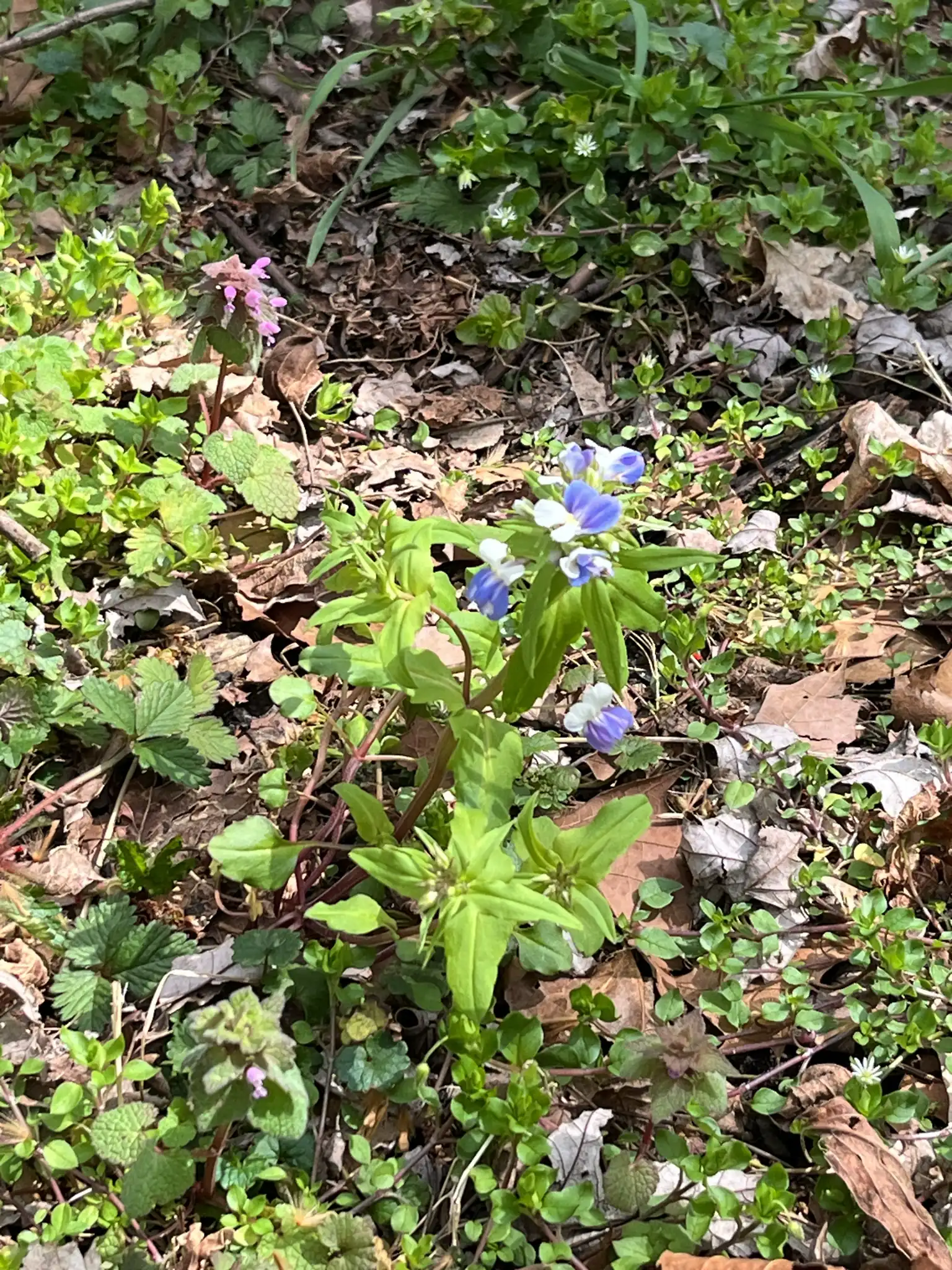
Collinsia verna, commonly known as blue-eyed Mary, is a delicate winter annual native to the moist woodlands of the eastern and midwestern United States. In mid-spring, it produces whorls of small, two-lipped flowers featuring two white upper lobes and two sky-blue lower lobes on weak, sprawling stems.
This species functions as a true spring ephemeral, completing its entire life cycle and dying back completely before the heat of summer. It overwinters as a tiny, cold-hardy seedling beneath protective leaf litter, ready to bloom rapidly as the forest canopy closes.
Uses & Benefits:
Essentials
At a Glance
Plant Type
Annual
Height
18"
Width
12"
Light
Partial Sun, Shade
Zones
4, 5, 6, 7, 8, 9
Water
Medium
Humidity
Moderate to High
Lifespan
Annual (Self-sowing)
Native To
North America
Toxicity
Non-toxic
Bloom period
Spring – Late spring
In flower about 3 months of the year
Planting
How to Grow
- Select a site with dappled shade and rich, moist, organic-humus woodland loam.
- Sow fresh seeds directly onto the soil surface in early summer immediately after collection.
- Maintain consistent moisture through the summer without allowing the soil to become waterlogged.
- Leave autumn leaf litter undisturbed to protect the tiny green seedlings that germinate in the fall.
Pro Tip
Sow seeds immediately after they mature in early summer; dried seeds stored until spring will fail to germinate because they require a warm summer dormancy followed by autumn cooling to trigger germination.
Keep It Thriving
Care Guide
Do
- Sow seeds fresh in early summer to ensure natural germination cycles.
- Mulch with organic leaf litter to mimic a natural woodland floor.
- Allow plants to self-sow naturally to maintain the colony year after year.
Don't
- Do not cultivate or disturb the soil beds from late summer through winter.
- Do not attempt to store seeds dry for spring sowing.
- Do not plant in heavy clay or areas prone to standing water.
Seasonal Care Calendar
| Task | Jan | Feb | Mar | Apr | May | Jun | Jul | Aug | Sep | Oct | Nov | Dec |
|---|---|---|---|---|---|---|---|---|---|---|---|---|
| Mulch | ||||||||||||
| Pest Check | ||||||||||||
| Propagate | ||||||||||||
| Spring Cleanup |
Watch Out For
Pests & Diseases
Common Pests
Common Diseases
In the Garden
Landscape Uses & Companions
Landscape Uses
Companion Plants
Multiply
Propagation Methods
Good to Know
Common Questions
Blue-eyed Mary questions
What zones can Blue-eyed Mary grow in?
Blue-eyed Mary is hardy in USDA Zones 4–9. Inside that range it survives winter in the ground; outside it, grow it as an annual or a container plant you protect.
Is Blue-eyed Mary deer resistant?
Not reliably. Deer may browse Blue-eyed Mary, especially tender spring growth — plan on repellents or fencing where pressure is high.
When does Blue-eyed Mary bloom?
Blue-eyed Mary typically blooms in spring through late spring. Exact timing shifts a week or two with your zone — Sow's bloom calendar maps it to your garden.
Does Blue-eyed Mary need full sun?
Blue-eyed Mary does best in part shade.
More Collinsia to compare
Keep exploring
Explore the genus
Grow Blue-eyed Mary with confidence
See it in a design of your actual yard, get zone-matched care reminders, and track it season by season in your garden journal.