The Story
Plant Bio
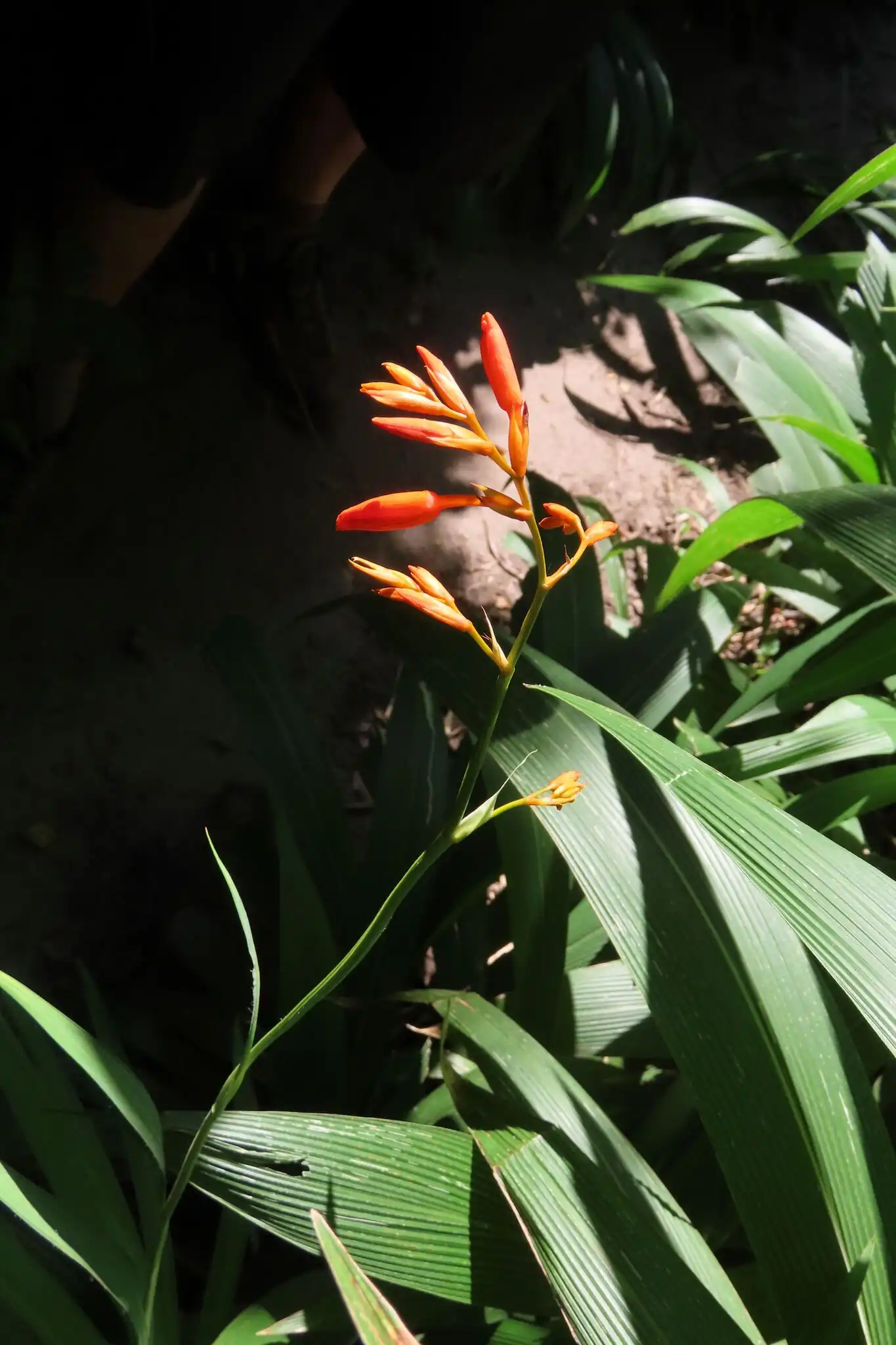
Crocosmia aurea is a deciduous, cormous perennial native to southern and eastern Africa, forming dense clumps from underground corms and long stolons. It features an upright, architectural habit with vertical fans of sword-shaped, soft green leaves that die back completely in winter.
The species produces branched, drooping, one-sided spikes of luminous orange to golden-red, star-to-funnel-shaped flowers that measure approximately 40 millimeters across. These nectar-rich blooms open from summer through early fall, attracting hummingbirds and insect pollinators.
Uses & Benefits:
Essentials
At a Glance
Plant Type
Perennial
Height
39"
Width
30"
Light
Full Sun, Partial Sun
Zones
7, 8, 9
Water
Moderate
Humidity
Moderate
Lifespan
Perennial
Native To
Southern and eastern Africa
Toxicity
Non-toxic
Bloom period
Summer – Autumn
In flower about 6 months of the year
Marketplace
Where to Buy
Shipping costs Year-round shipping Free shipping
Planting
How to Grow
- Select a planting site in full sun to partial shade with moist, humus-rich, well-drained sandy or loamy soil.
- Plant dormant corms in spring at a depth of three to four inches (eight to ten centimeters) to protect them from winter rot.
- Water regularly during the first growing season to establish a deep, resilient root system.
- Apply a balanced, slow-release organic fertilizer or compost top-dressing in early spring as new shoots emerge.
Pro Tip
Plant the corms three to four inches deep in well-drained soil; shallow planting or heavy, waterlogged clay causes winter corm rot.
Keep It Thriving
Care Guide
Do
- Cut dead foliage back to ground level in late winter after it has completely browned.
- Provide afternoon shade in regions with exceptionally hot summer climates.
- Mulch heavily in USDA Zone 6 to protect dormant corms from prolonged deep freezes.
Don't
- Do not plant corms in heavy, poorly drained clay soils where winter waterlogging will cause rot.
- Do not prune or cut into living green foliage during the active growing season.
- Avoid using high-nitrogen fertilizers that stimulate excessive foliage growth at the expense of flowers.
- Do not divide the clumps too frequently, as flowering is most prolific when plants are left undisturbed for several years.
Seasonal Care Calendar
| Task | Jan | Feb | Mar | Apr | May | Jun | Jul | Aug | Sep | Oct | Nov | Dec |
|---|---|---|---|---|---|---|---|---|---|---|---|---|
| Divide | ||||||||||||
| Fertilize | ||||||||||||
| Pest Check | ||||||||||||
| Plant | ||||||||||||
| Prune |
Watch Out For
Pests & Diseases
Common Pests
Common Diseases
In the Garden
Landscape Uses & Companions
Landscape Uses
Companion Plants
Multiply
Propagation Methods
Good to Know
Common Questions
Falling Stars questions
What zones can Falling Stars grow in?
Falling Stars is hardy in USDA Zones 7–9. Inside that range it survives winter in the ground; outside it, grow it as an annual or a container plant you protect.
Is Falling Stars deer resistant?
Yes — Falling Stars is rated deer-resistant. Deer typically pass it over, though extreme hunger can override any plant's defenses.
When does Falling Stars bloom?
Falling Stars typically blooms in summer through autumn. Exact timing shifts a week or two with your zone — Sow's bloom calendar maps it to your garden.
Does Falling Stars need full sun?
Falling Stars does best in full sun to part shade. In hot climates, afternoon shade keeps blooms fresher longer.
Is Falling Stars drought tolerant?
Yes — once established (usually after the first full season), Falling Stars handles dry spells with minimal watering. Water deeply its first year to build the root system that makes that possible.
More Crocosmia to compare
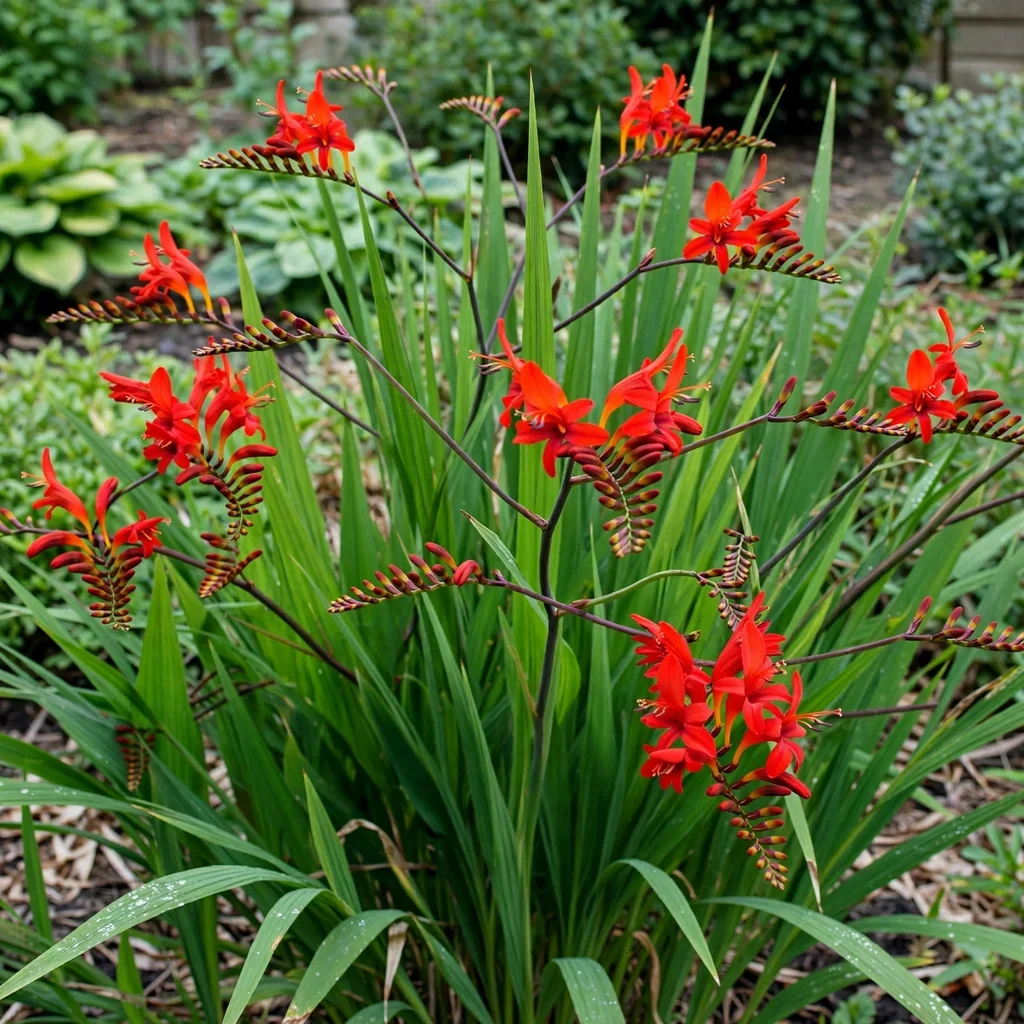
Lucifer Crocosmia
Crocosmia x crocosmiiflora 'Lucifer'
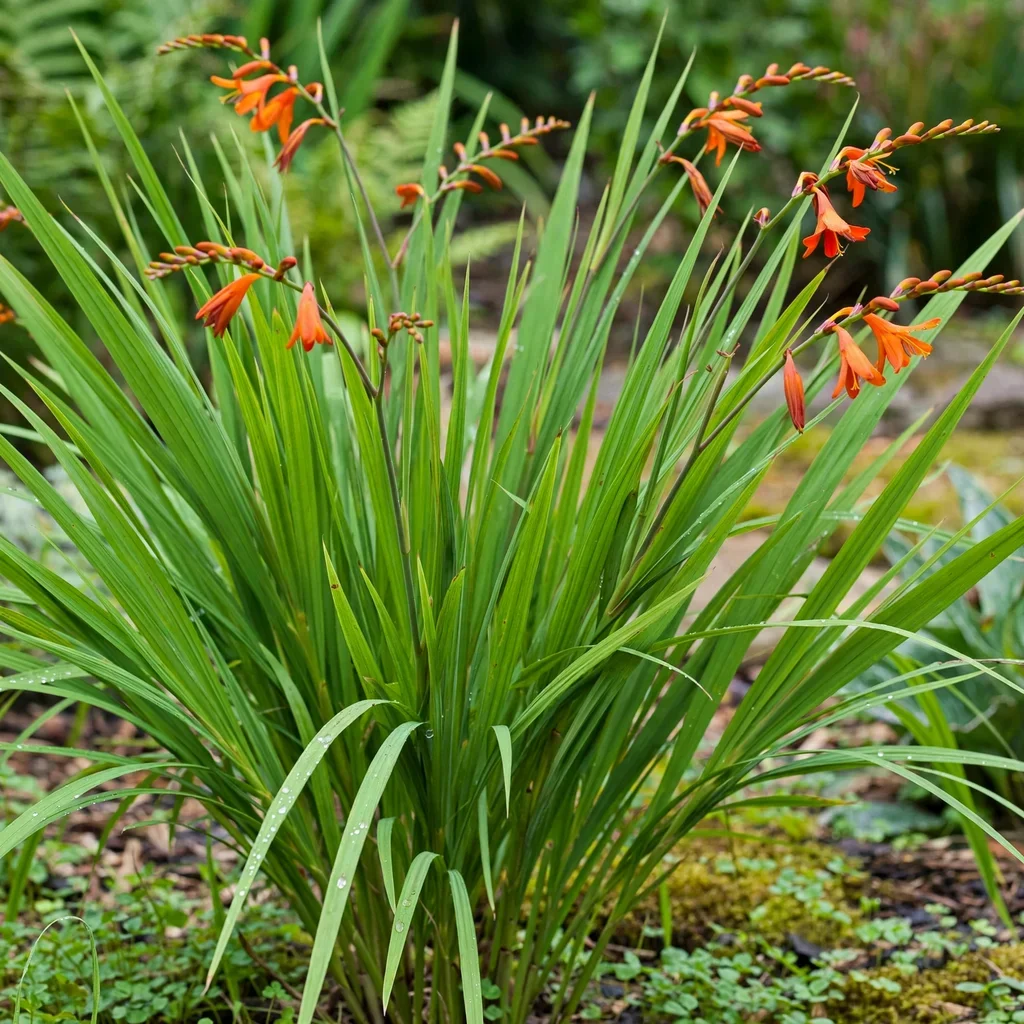
Montbretia
Crocosmia x crocosmiiflora
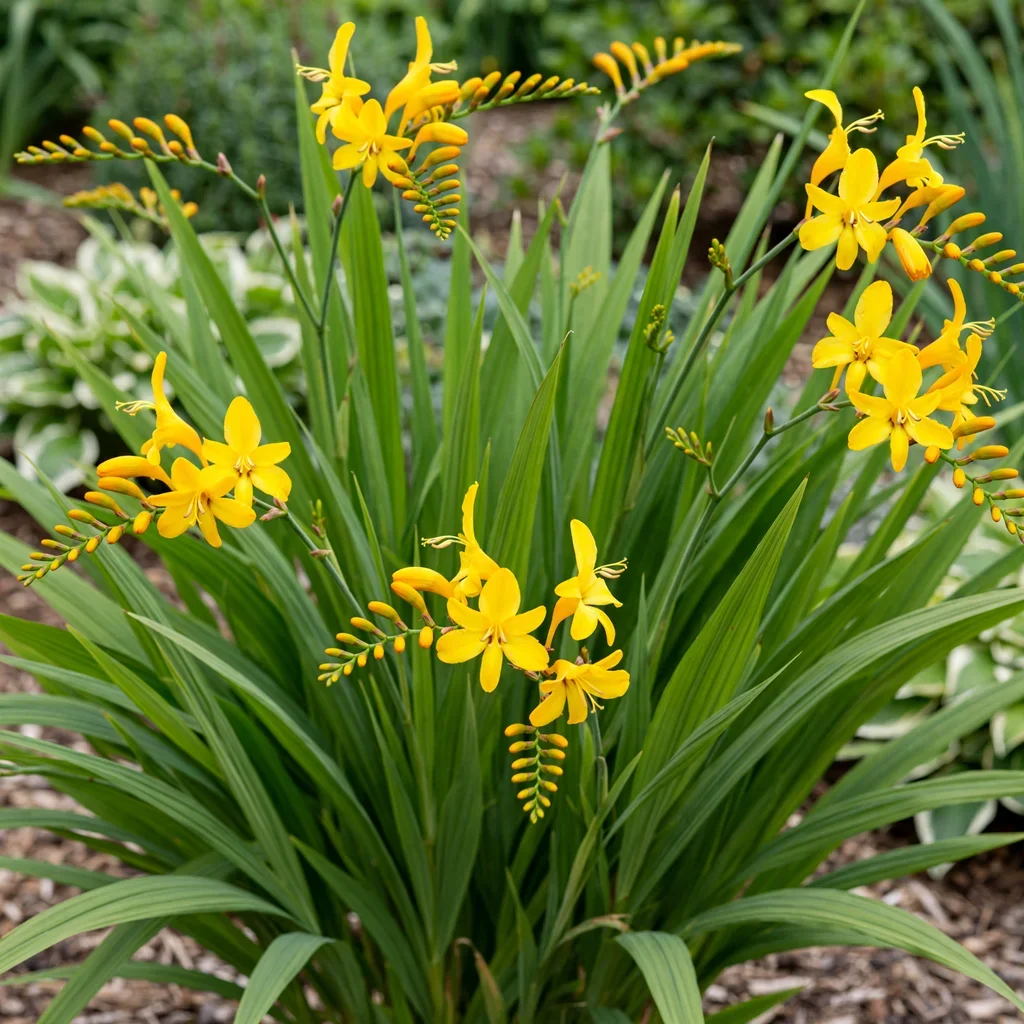
Walberton's Yellow Montbretia
Crocosmia x crocosmiiflora 'Walberton Yellow'
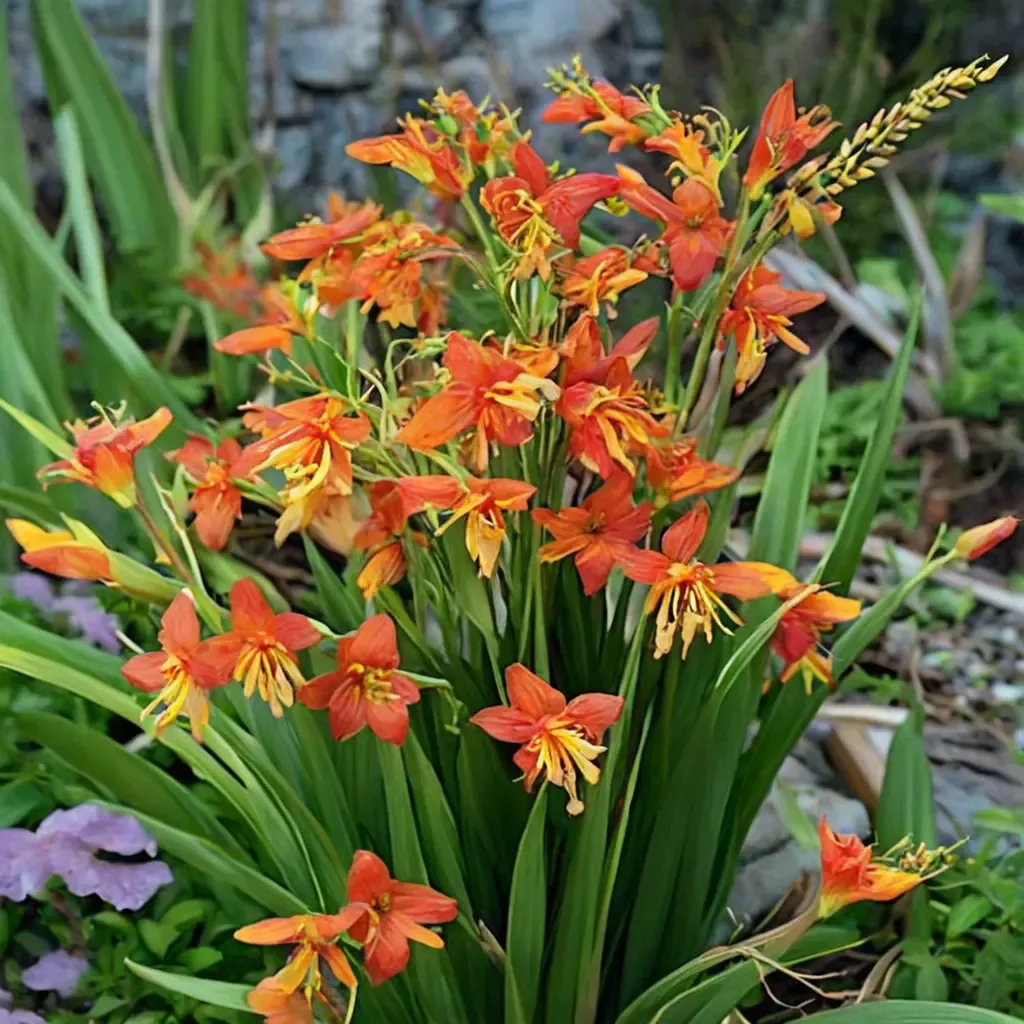
Masonorum Mason's Crocosmia
Crocosmia x crocosmiiflora 'Masonorum'
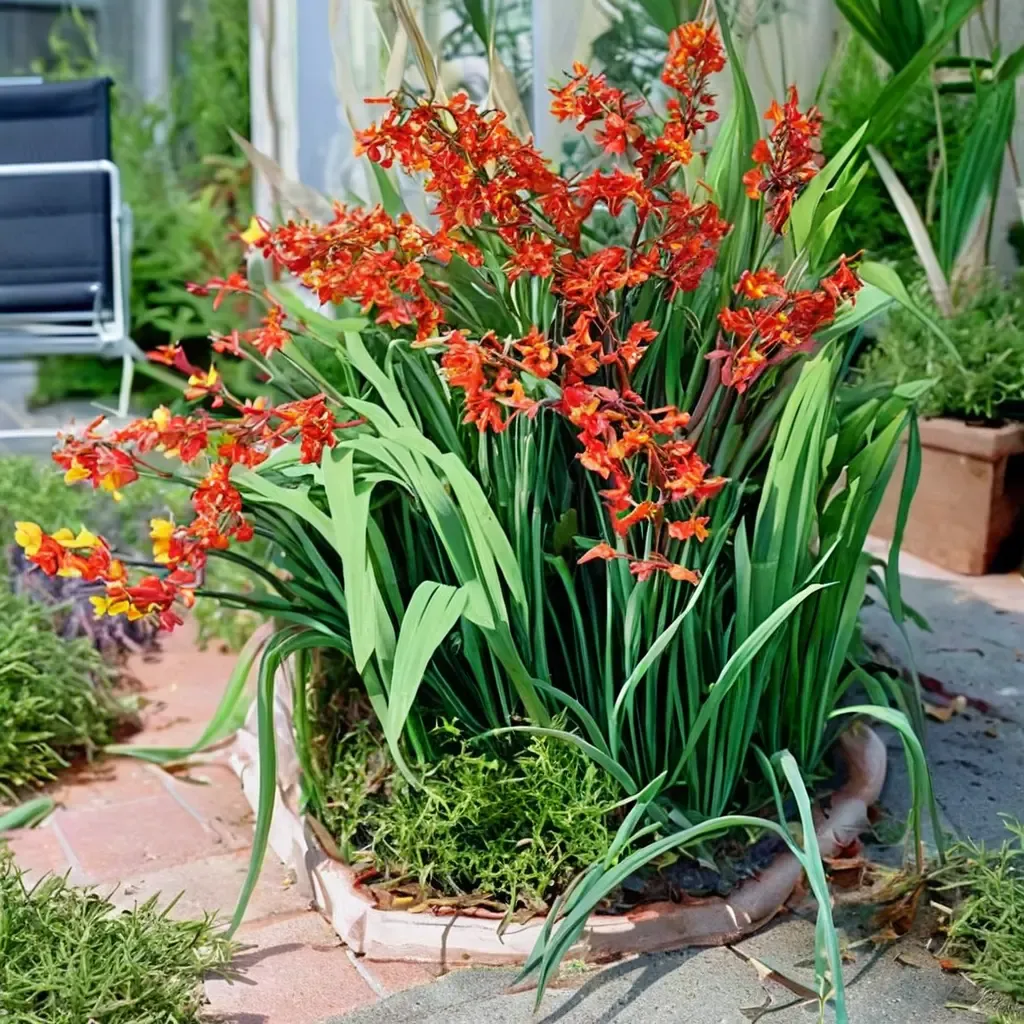
Carmin Brilliant Montbretia
Crocosmia x hybrida 'Carmin Brilliant'
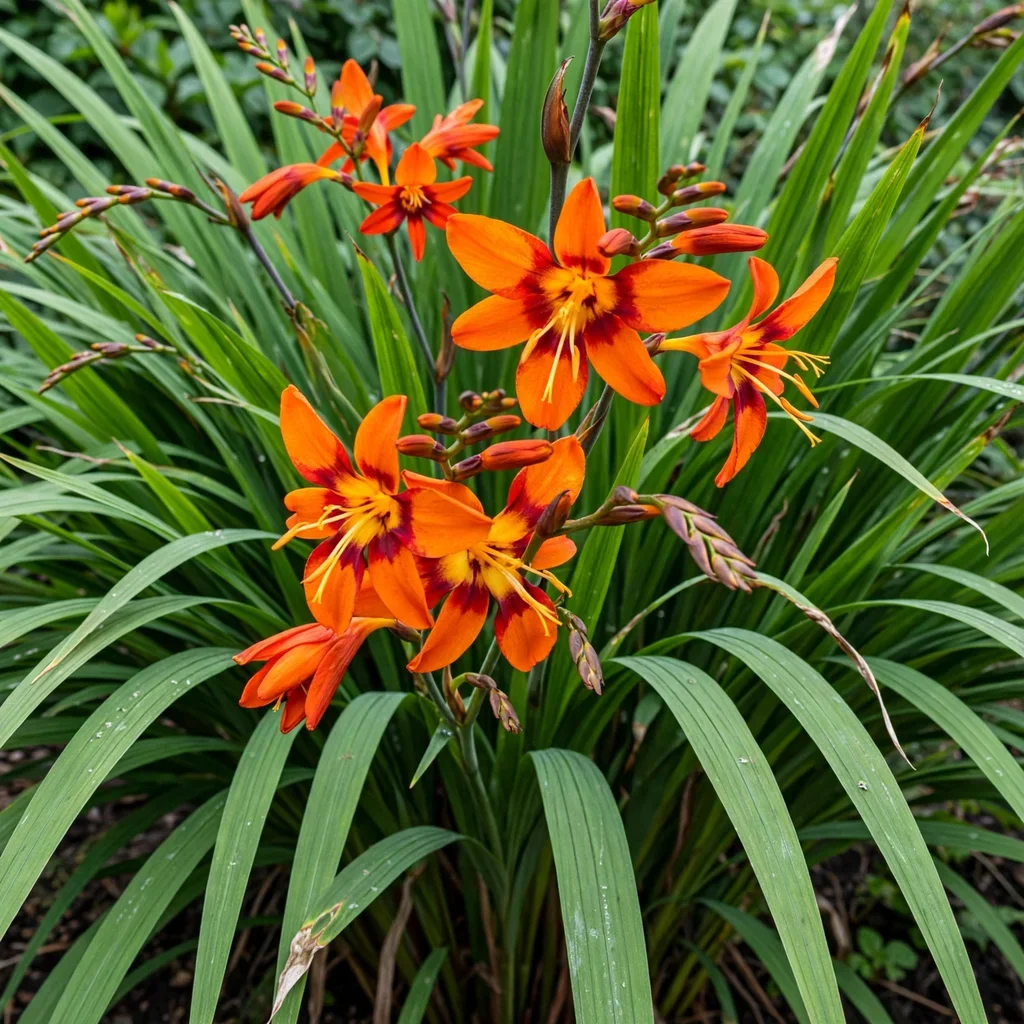
Emily McKenzie Crocosmia Montbretia
Crocosmia x hybrida 'Emily Mckenzie'
Keep exploring
Explore the genus
Hardy in your zone?
Grow Falling Stars with confidence
See it in a design of your actual yard, get zone-matched care reminders, and track it season by season in your garden journal.