The Story
Plant Bio
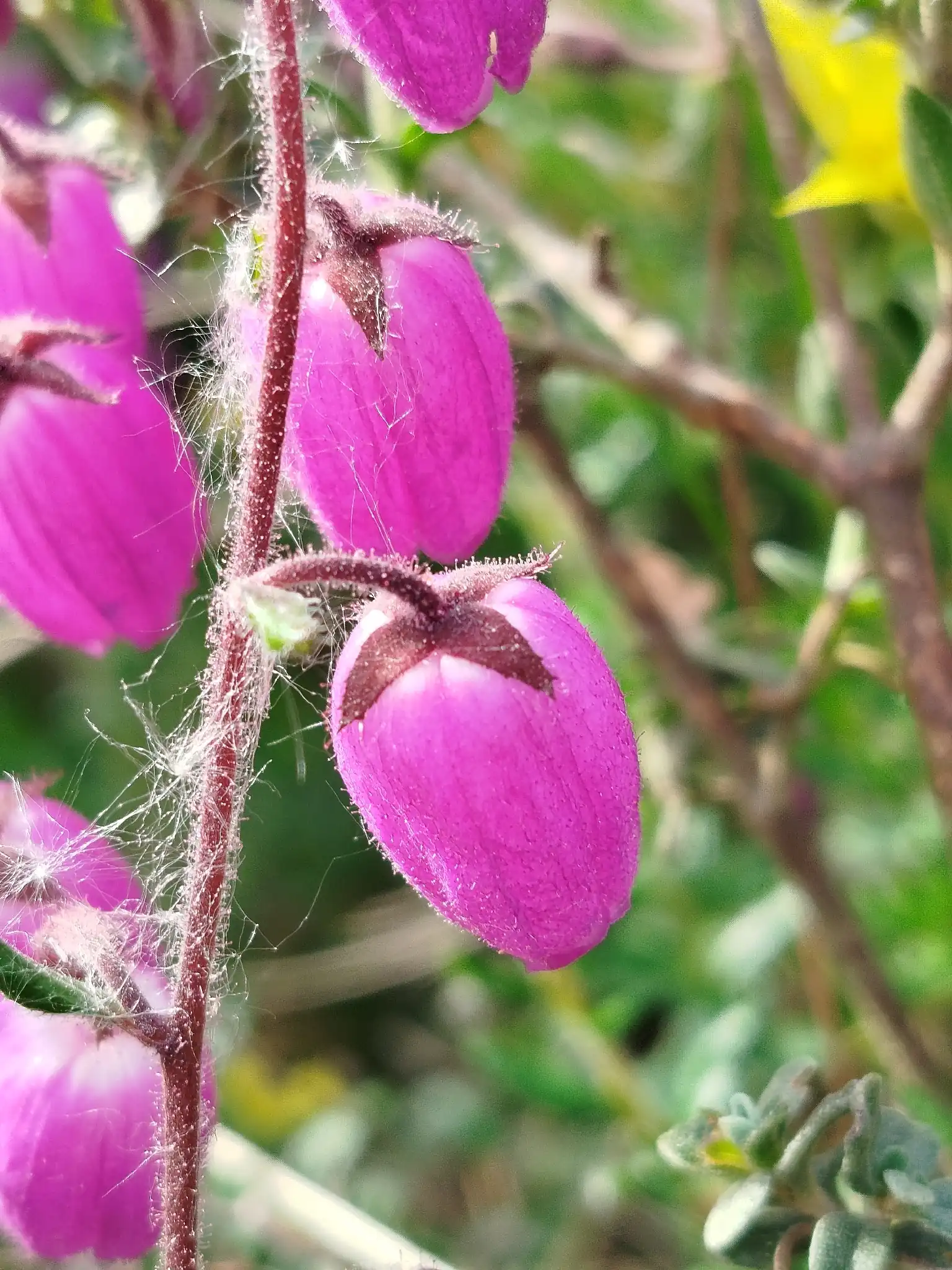
Daboecia cantabrigiensis is a low-growing, mound-forming evergreen dwarf shrub native to the coastal heaths of southwestern Europe. The species is characterized by small, glossy green leaves with silvery-white undersides and terminal racemes of pendulous, urn-shaped flowers that bloom from early summer through mid-fall.
This taxon, often associated with Daboecia cantabrica, is distinguished by its exceptionally large bell-shaped blossoms compared to other hardy heaths. The foliage frequently emerges with bronze tones in spring before maturing to a deep, lustrous green.
Uses & Benefits:
Essentials
At a Glance
Plant Type
Shrub
Height
16"
Width
24"
Light
Full Sun, Partial Sun
Zones
6, 7, 8, 9
Water
Moderate
Humidity
Moderate to high
Lifespan
Perennial
Native To
Southwestern Europe
Toxicity
Non-toxic
Bloom period
Summer – Autumn
In flower about 6 months of the year
Planting
How to Grow
- Select a planting site with full sun to partial shade and highly acidic, sandy, or peaty soil.
- Dig a hole twice the width of the root ball and backfill with organic matter like peat moss to lower pH.
- Plant the shrub so the crown sits level with the surrounding soil, and water thoroughly to settle.
- Apply a thick layer of pine needle or bark mulch to conserve moisture and maintain soil acidity.
Pro Tip
Ensure the soil is highly acidic and exceptionally well-drained; shearing should only target the previous season's leafy growth, as cutting into old, leafless wood will kill the stems.
Keep It Thriving
Care Guide
Do
- Grow in acidic, well-draining, humus-rich soil.
- Provide consistent moisture during the first growing season.
- Shear lightly in early spring to maintain a compact shape.
- Protect from harsh, drying winter winds in colder zones.
Don't
- Do not plant in heavy clay or alkaline soils.
- Do not prune hard into old, leafless woody stems.
- Do not over-fertilize, especially with high-phosphorus feeds.
- Do not allow the soil to become waterlogged or compacted.
Seasonal Care Calendar
| Task | Jan | Feb | Mar | Apr | May | Jun | Jul | Aug | Sep | Oct | Nov | Dec |
|---|---|---|---|---|---|---|---|---|---|---|---|---|
| Fertilize | ||||||||||||
| Mulch | ||||||||||||
| Pest Check | ||||||||||||
| Prune |
Watch Out For
Pests & Diseases
Common Pests
Common Diseases
In the Garden
Landscape Uses & Companions
Landscape Uses
Companion Plants
Multiply
Propagation Methods
Good to Know
Common Questions
St. Dabeoc's Heath questions
What zones can St. Dabeoc's Heath grow in?
St. Dabeoc's Heath is hardy in USDA Zones 6–9. Inside that range it survives winter in the ground; outside it, grow it as an annual or a container plant you protect.
When does St. Dabeoc's Heath bloom?
St. Dabeoc's Heath typically blooms in summer through autumn. Exact timing shifts a week or two with your zone — Sow's bloom calendar maps it to your garden.
Does St. Dabeoc's Heath need full sun?
St. Dabeoc's Heath does best in full sun to part shade. In hot climates, afternoon shade keeps blooms fresher longer.
Keep exploring
Explore the genus
Hardy in your zone?
Grow St. Dabeoc's Heath with confidence
See it in a design of your actual yard, get zone-matched care reminders, and track it season by season in your garden journal.