The Story
Plant Bio
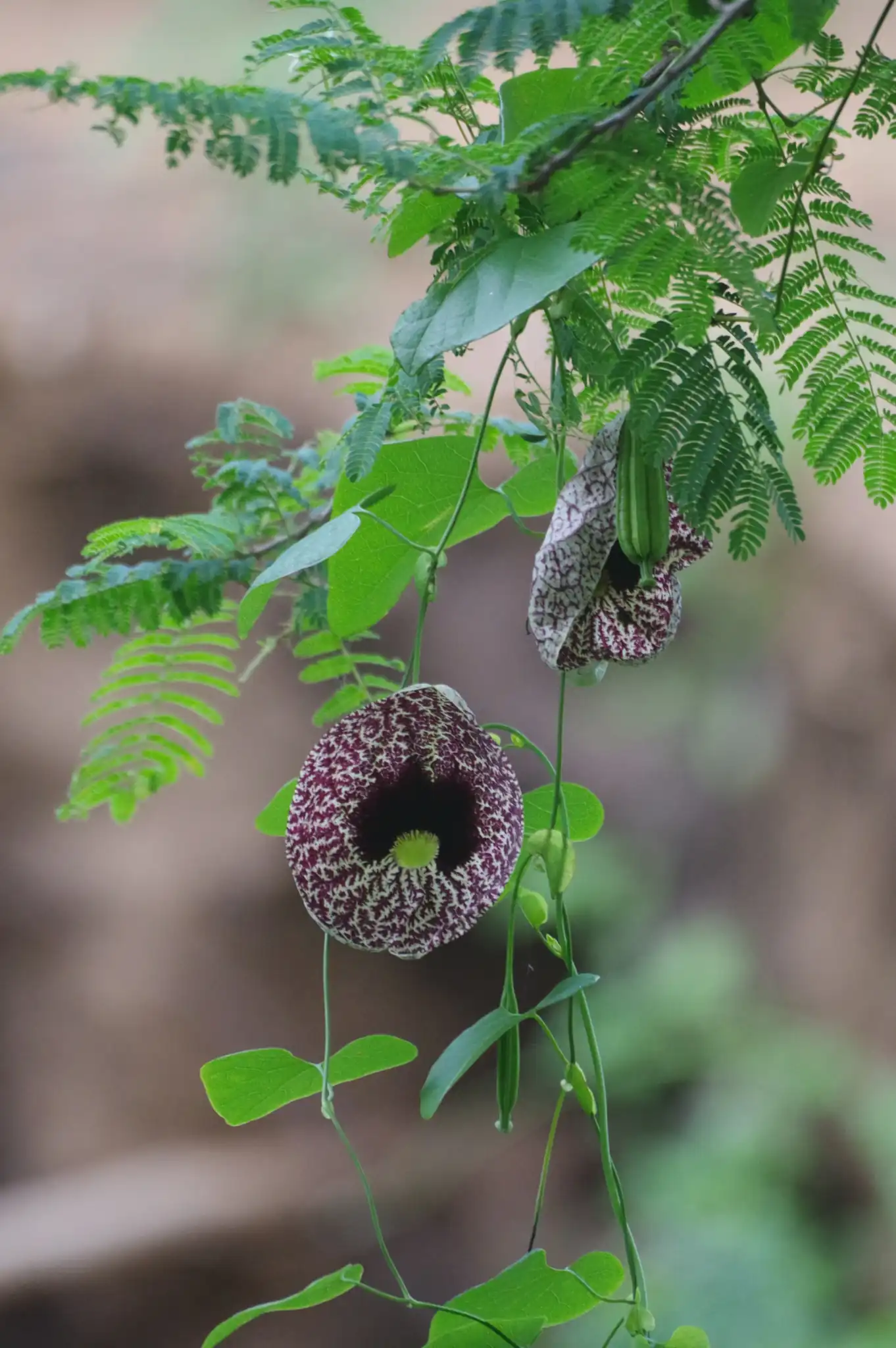
Aristolochia littoralis is an evergreen, twining woody vine native to South America, climbing by slender stems that coil around supportive structures. The alternate, kidney-shaped leaves emerge light green and mature to a glabrous medium green, providing a dense cover.
The solitary, pipe-shaped flowers feature a creamy-white exterior heavily patterned with dark purple-brown veins and a deep chocolate-brown throat. These specialized blooms emit a carrion-like odor to attract and temporarily trap small flies for pollination.
Uses & Benefits:
Essentials
At a Glance
Plant Type
Vine
Height
144"
Width
72"
Light
Full Sun, Partial Sun
Zones
9, 10
Water
Moderate
Humidity
High
Lifespan
Perennial
Native To
South America
Toxicity
Highly toxic if ingested; sap may irritate skin
Bloom period
Summer – Fall
In flower about 6 months of the year
Planting
How to Grow
- Select a planting site in full sun to partial shade with rich, humus-heavy, well-drained loamy soil.
- Install a sturdy trellis, arbor, or fence to support the twining stems as they climb.
- Water regularly during the growing season to maintain consistent soil moisture, avoiding waterlogged conditions.
- Apply a balanced, slow-release fertilizer in spring and maintain a layer of organic mulch to preserve root moisture.
Pro Tip
Prune the vine heavily in late winter or early spring before new growth starts to control its vigorous spread, but avoid cutting back into old, leafless wood that lacks dormant buds.
Keep It Thriving
Care Guide
Do
- Provide a strong support structure for the coiling stems to climb.
- Keep the soil consistently moist but exceptionally well-drained.
- Wear gloves when handling the plant to avoid potential skin irritation from the sap.
Don't
- Do not plant this species near native butterfly habitats where it can disrupt local ecosystems.
- Do not allow the soil to dry out completely during extended hot spells.
- Do not prune into old, bare wood without visible dormant buds.
Seasonal Care Calendar
| Task | Jan | Feb | Mar | Apr | May | Jun | Jul | Aug | Sep | Oct | Nov | Dec |
|---|---|---|---|---|---|---|---|---|---|---|---|---|
| Fertilize | ||||||||||||
| Mulch | ||||||||||||
| Pest Check | ||||||||||||
| Prune |
Watch Out For
Pests & Diseases
Common Pests
Common Diseases
In the Garden
Landscape Uses & Companions
Landscape Uses
Companion Plants
Multiply
Propagation Methods
Good to Know
Common Questions
Calico Flower questions
What zones can Calico Flower grow in?
Calico Flower is hardy in USDA Zones 9–10. Inside that range it survives winter in the ground; outside it, grow it as an annual or a container plant you protect.
Is Calico Flower deer resistant?
Yes — Calico Flower is rated deer-resistant. Deer typically pass it over, though extreme hunger can override any plant's defenses.
When does Calico Flower bloom?
Calico Flower typically blooms in summer through fall. Exact timing shifts a week or two with your zone — Sow's bloom calendar maps it to your garden.
Does Calico Flower need full sun?
Calico Flower does best in full sun to part shade. In hot climates, afternoon shade keeps blooms fresher longer.
More Aristolochia to compare
Keep exploring
Explore the genus
Hardy in your zone?
Grow Calico Flower with confidence
See it in a design of your actual yard, get zone-matched care reminders, and track it season by season in your garden journal.