The Story
Plant Bio
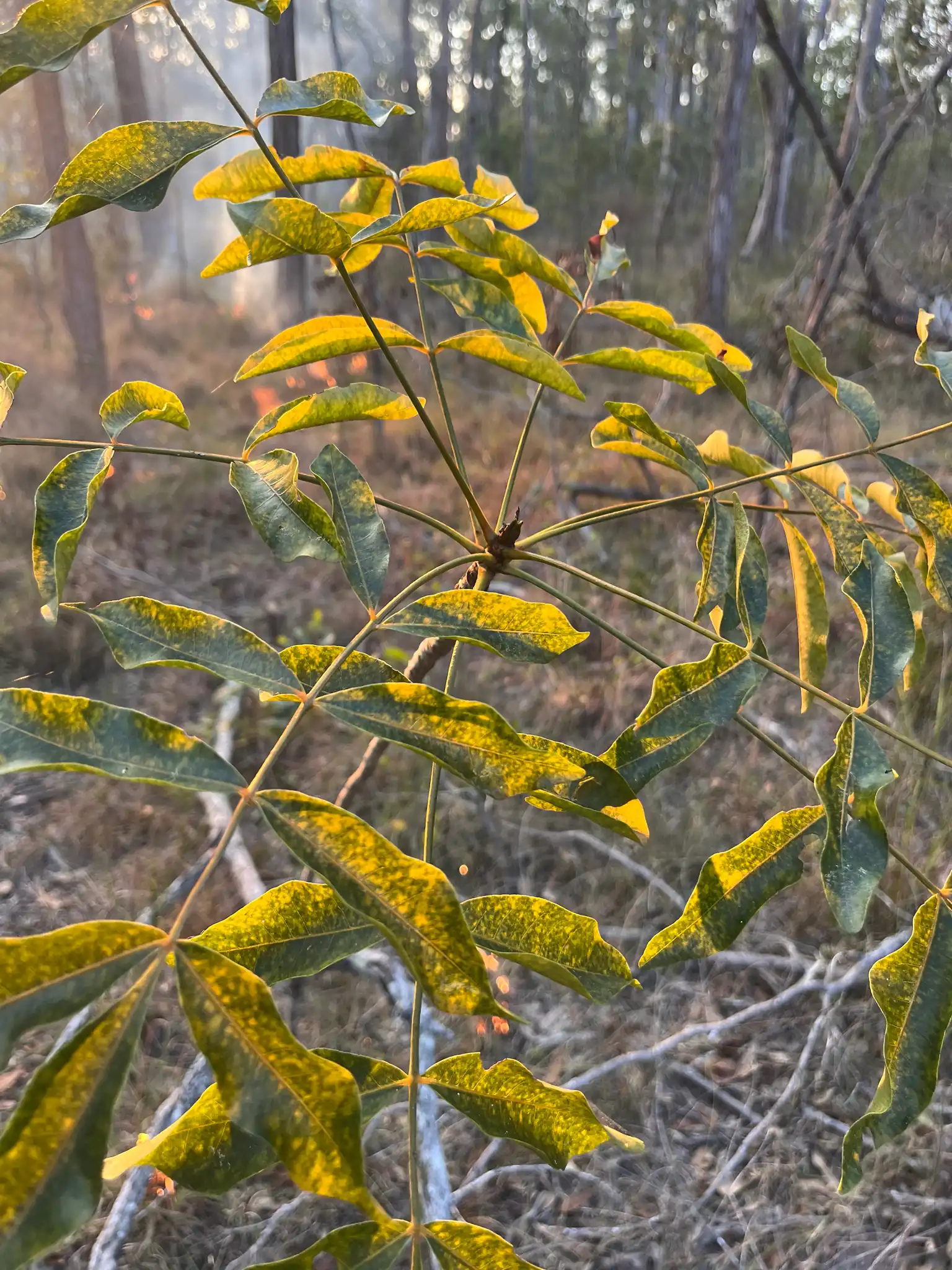
Flindersia australis is a large, semi-deciduous tree that develops a dense, rounded crown and a moderately buttressed trunk at maturity. The glossy green, pinnate leaves feature prominent oil glands and emerge with bronze tones, providing dense shade in warm-temperate and subtropical climates.
This species is highly resilient to urban pollution, coastal exposure, and prolonged dry periods once its root system is established. In late spring, it produces terminal clusters of small, cream-colored flowers that emit a subtle citrus fragrance.
Uses & Benefits:
Essentials
At a Glance
Plant Type
Tree
Height
780"
Width
390"
Light
Full Sun, Partial Sun
Zones
9, 10
Water
Low to Medium
Humidity
High
Lifespan
Long-lived
Native To
Australia
Toxicity
Non-toxic
Bloom period
Spring – Summer
In flower about 6 months of the year
Planting
How to Grow
- Select a planting site in full sun to partial shade with deep, well-drained soil.
- Dig a hole twice as wide as the root ball and of equal depth to prevent settling.
- Backfill with native soil without amendments, tamping lightly to remove air pockets.
- Water deeply at the base and apply a thick layer of organic mulch, keeping it clear of the trunk.
Pro Tip
Avoid planting this tree near high-traffic walkways or patios, as the large, woody, star-shaped seed capsules develop sharp, spiked tubercles that present a physical hazard when stepped on barefoot.
Keep It Thriving
Care Guide
Do
- Water regularly during the first two growing seasons to establish a deep root system.
- Prune young trees early to establish a strong, single central leader.
- Ensure the soil drains rapidly to prevent root rot in heavy clay soils.
Don't
- Do not prune aggressively into old, leafless wood, as regrowth will be slow and patchy.
- Do not plant in low-lying areas prone to standing water or waterlogging.
- Do not apply heavy phosphorus fertilizers, though the tree is not highly sensitive to them.
Seasonal Care Calendar
| Task | Jan | Feb | Mar | Apr | May | Jun | Jul | Aug | Sep | Oct | Nov | Dec |
|---|---|---|---|---|---|---|---|---|---|---|---|---|
| Fertilize | ||||||||||||
| Mulch | ||||||||||||
| Pest Check | ||||||||||||
| Prune |
Watch Out For
Pests & Diseases
Common Pests
Common Diseases
In the Garden
Landscape Uses & Companions
Landscape Uses
Companion Plants
Multiply
Propagation Methods
Good to Know
Common Questions
Crow's Ash questions
What zones can Crow's Ash grow in?
Crow's Ash is hardy in USDA Zones 9–10. Inside that range it survives winter in the ground; outside it, grow it as an annual or a container plant you protect.
When does Crow's Ash bloom?
Crow's Ash typically blooms in spring through summer. Exact timing shifts a week or two with your zone — Sow's bloom calendar maps it to your garden.
Does Crow's Ash need full sun?
Crow's Ash does best in full sun to part shade. In hot climates, afternoon shade keeps blooms fresher longer.
Is Crow's Ash drought tolerant?
Yes — once established (usually after the first full season), Crow's Ash handles dry spells with minimal watering. Water deeply its first year to build the root system that makes that possible.
Keep exploring
Explore the genus
Hardy in your zone?
Grow Crow's Ash with confidence
See it in a design of your actual yard, get zone-matched care reminders, and track it season by season in your garden journal.