1 named cultivar
The Story
Plant Bio
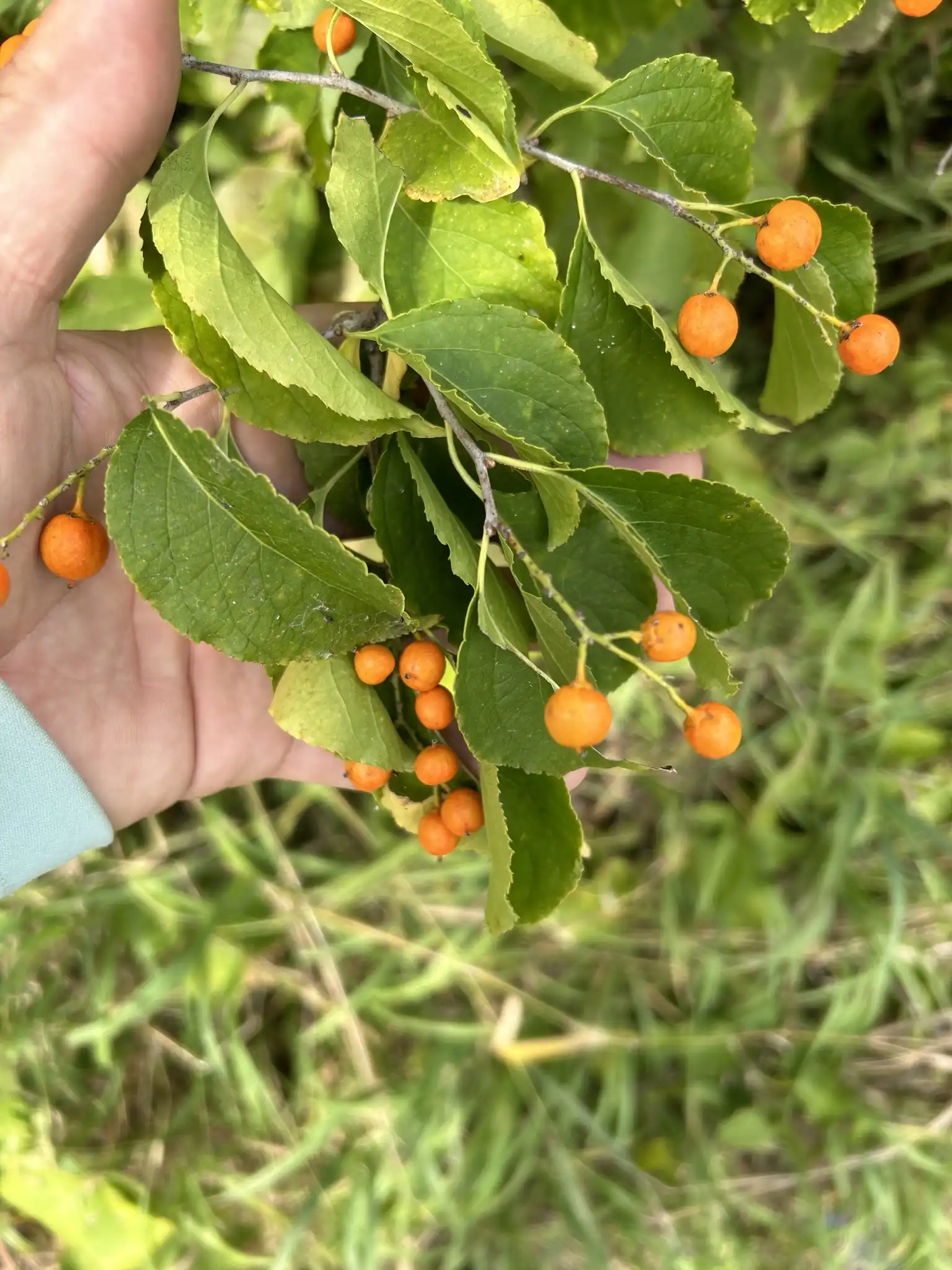
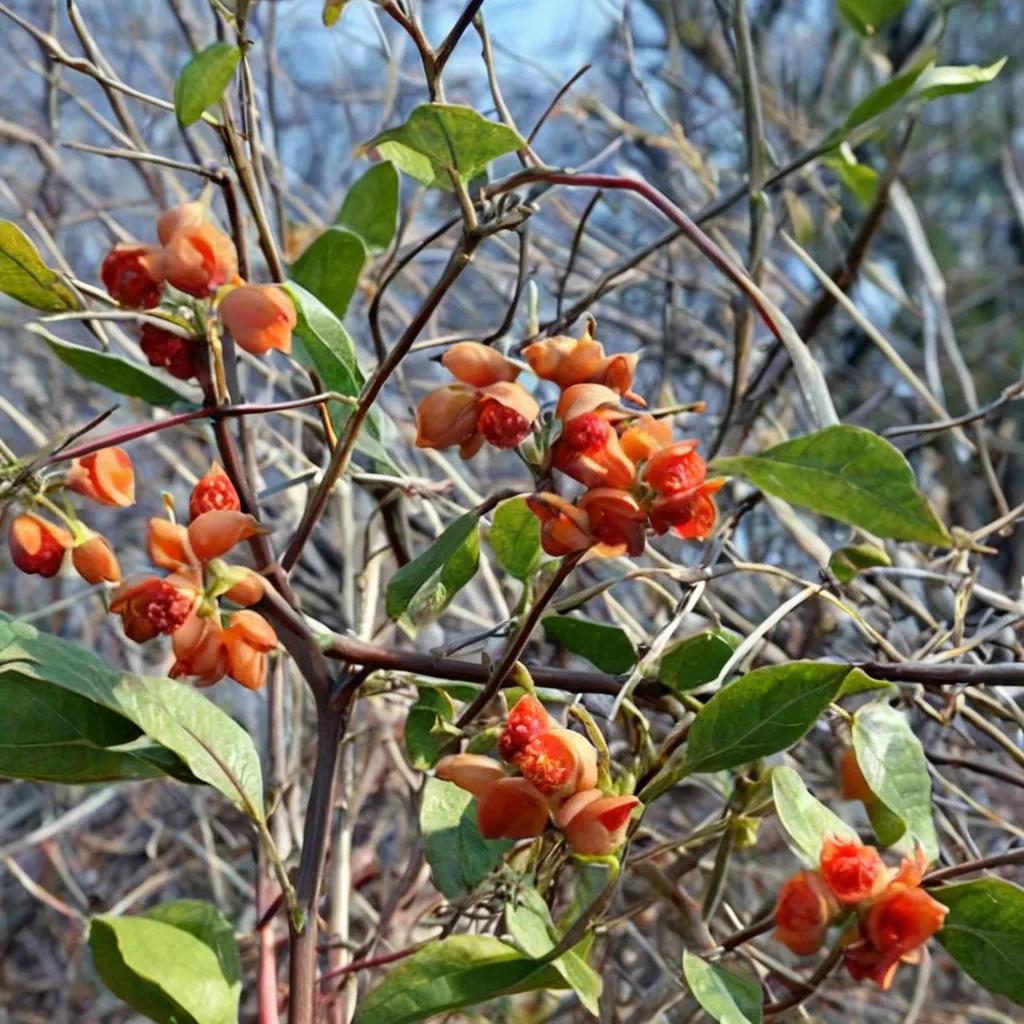
Celastrus scandens, American bittersweet, is a woody twining vine native from central and eastern Canada through the northern, eastern and central United States, climbing twenty to twenty-five feet. Small greenish flowers in spring are easy to miss; the point is the autumn fruit, orange capsules that split to reveal scarlet seeds and persist through winter. It is dioecious, so fruit needs both sexes.
Its terminal flower and fruit clusters are the reliable way to tell it from the invasive Oriental bittersweet, which fruits along the stems at the leaf axils — a distinction worth learning, because the Asian species is displacing this one across its range. The twining stems can girdle and kill young trees, so give it a fence or arbour rather than a sapling.
Uses & Benefits:
Essentials
At a Glance
Plant Type
Vine
Height
270"
Width
72"
Light
Full Sun, Partial Sun
Zones
4, 5, 6, 7, 8
Water
Low to moderate
Humidity
Moderate
Lifespan
Perennial
Native To
Central and eastern North America
Toxicity
Toxic if ingested
Planting
How to Grow
- Plant in spring in well-drained soil.
- Choose full sun for the heaviest fruiting.
- Plant at least one male with every few females.
- Provide a sturdy fence, arbour or wires.
- Water through the first season only.
- Prune in late winter to control size.
Pro Tip
Buy sexed plants and check the fruiting pattern — terminal clusters mean American, axillary clusters mean the invasive Oriental species.
Keep It Thriving
Care Guide
Do
- Plant males and females for fruit 🍂
- Give it a strong support 🪵
- Prune hard in late winter ✂️
- Site it in full sun for the best crop ☀️
Don't
- Let it twine up a young tree; it girdles ❌
- Expect fruit from a single plant ❌
- Confuse it with invasive Oriental bittersweet ❌
Seasonal Care Calendar
| Task | Jan | Feb | Mar | Apr | May | Jun | Jul | Aug | Sep | Oct | Nov | Dec |
|---|---|---|---|---|---|---|---|---|---|---|---|---|
| Monitor | ||||||||||||
| Prune |
Watch Out For
Pests & Diseases
Common Pests
Common Diseases
In the Garden
Landscape Uses & Companions
Landscape Uses
Multiply
Propagation Methods
Good to Know
Common Questions
American Bittersweet questions
What zones can American Bittersweet grow in?
American Bittersweet is hardy in USDA Zones 4–8. Inside that range it survives winter in the ground; outside it, grow it as an annual or a container plant you protect.
Is American Bittersweet deer resistant?
Yes — American Bittersweet is rated deer-resistant. Deer typically pass it over, though extreme hunger can override any plant's defenses.
When does American Bittersweet bloom?
American Bittersweet typically blooms in late spring through early fall. Exact timing shifts a week or two with your zone — Sow's bloom calendar maps it to your garden.
Does American Bittersweet need full sun?
American Bittersweet does best in full sun to part shade. In hot climates, afternoon shade keeps blooms fresher longer.
Is American Bittersweet drought tolerant?
Yes — once established (usually after the first full season), American Bittersweet handles dry spells with minimal watering. Water deeply its first year to build the root system that makes that possible.
More Celastrus to compare
Keep exploring
Explore the genus
Hardy in your zone?
Grow American Bittersweet with confidence
See it in a design of your actual yard, get zone-matched care reminders, and track it season by season in your garden journal.