
The Story
Plant Bio
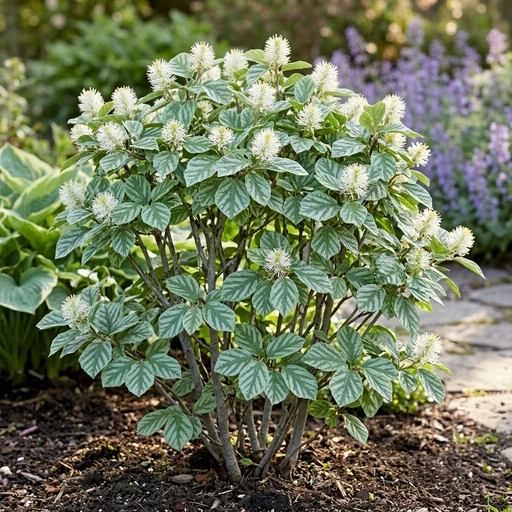
Fothergilla is a genus of deciduous shrubs native to the southeastern U.S., prized for their fragrant, bottlebrush-like spring flowers that appear before the leaves, and their spectacular, multi-hued autumn foliage.
'Legend of the Small' is a compact, densely mounded selection of a naturally occurring hybrid. It is noted for its profuse display of honey-scented white flowers and reliable, brilliant fall color in shades of yellow, orange, and red.
Uses & Benefits:
Essentials
At a Glance
Plant Type
Shrub
Height
36"
Width
36"
Light
Full Sun, Partial Sun
Zones
5, 6, 7, 8
Water
Moderate
Humidity
Moderate
Lifespan
Long-lived shrub
Native To
Hybrid of North American natives
Toxicity
Non-toxic
Bloom period
Mid-spring – Late spring
In flower about 2 months of the year
Marketplace
Where to Buy
Shipping costs Year-round shipping Free shipping
Planting
How to Grow
- Select a site with full sun to part shade.
- Amend soil with compost to create a rich, acidic medium.
- Dig a hole as deep as the root ball and twice as wide.
- Set the shrub in the hole, ensuring the crown is at soil level.
- Backfill with amended soil and water thoroughly.
- Mulch with pine needles or shredded bark to retain moisture.
Pro Tip
Plant in acidic soil to ensure the most vibrant fall color; foliage may turn a less impressive yellow in neutral or alkaline soils.
Keep It Thriving
Care Guide
Do
- Provide moist, well-drained, acidic soil.
- Plant in full sun for the best flowering and fall color.
- Water regularly, especially during the first year and in dry spells.
- Allow the shrub to maintain its natural mounded shape.
- Remove any suckers that may appear at the base.
Don't
- Do not plant in heavy, alkaline, or dry, sandy soils.
- Avoid pruning in late summer, fall, or winter, as this will remove spring's flower buds.
- Don't let the soil dry out completely.
- Avoid fertilizing with high-phosphorus fertilizers.
- Do not plant in deep shade, which results in poor flowering and color.
Seasonal Care Calendar
| Task | Jan | Feb | Mar | Apr | May | Jun | Jul | Aug | Sep | Oct | Nov | Dec |
|---|---|---|---|---|---|---|---|---|---|---|---|---|
| Mulch | ||||||||||||
| Plant | ||||||||||||
| Prune |
Watch Out For
Pests & Diseases
Common Pests
Common Diseases
In the Garden
Landscape Uses & Companions
Landscape Uses
Multiply
Propagation Methods
Good to Know
Common Questions
Bottlebrush Fothergilla questions
What zones can Bottlebrush Fothergilla grow in?
Bottlebrush Fothergilla is hardy in USDA Zones 5–8. Inside that range it survives winter in the ground; outside it, grow it as an annual or a container plant you protect.
Is Bottlebrush Fothergilla deer resistant?
Yes — Bottlebrush Fothergilla is rated deer-resistant. Deer typically pass it over, though extreme hunger can override any plant's defenses.
When does Bottlebrush Fothergilla bloom?
Bottlebrush Fothergilla typically blooms in mid-spring through late spring. Exact timing shifts a week or two with your zone — Sow's bloom calendar maps it to your garden.
Does Bottlebrush Fothergilla need full sun?
Bottlebrush Fothergilla does best in full sun to part shade. In hot climates, afternoon shade keeps blooms fresher longer.
More Fothergilla to compare
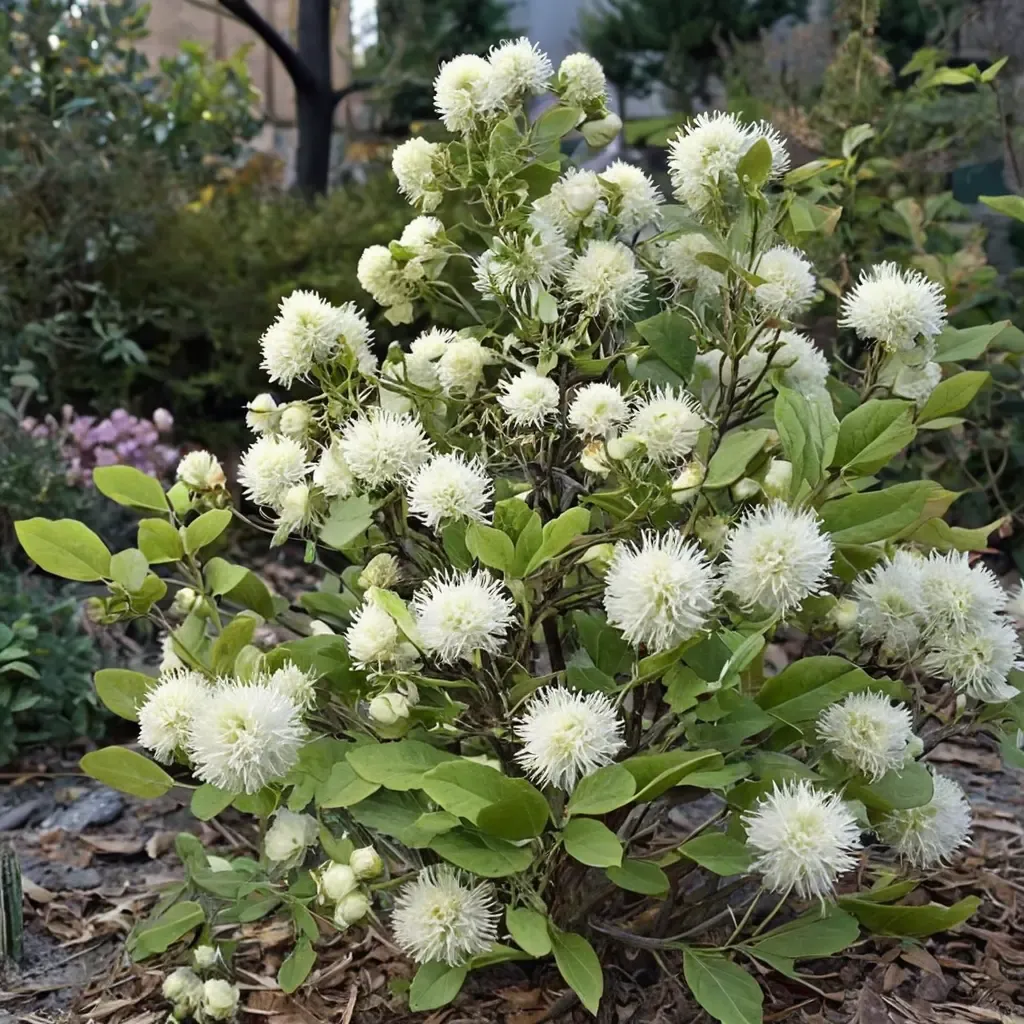
Mt. Airy Fothergilla
Fothergilla major 'Mt Airy'
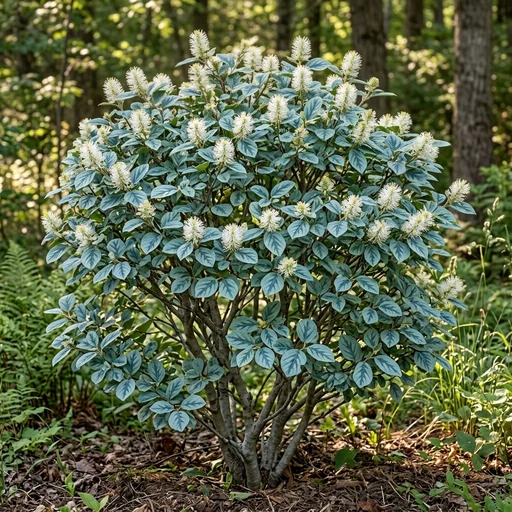
Blue Mist Dwarf Fothergilla
Fothergilla gardenii 'Blue Mist'
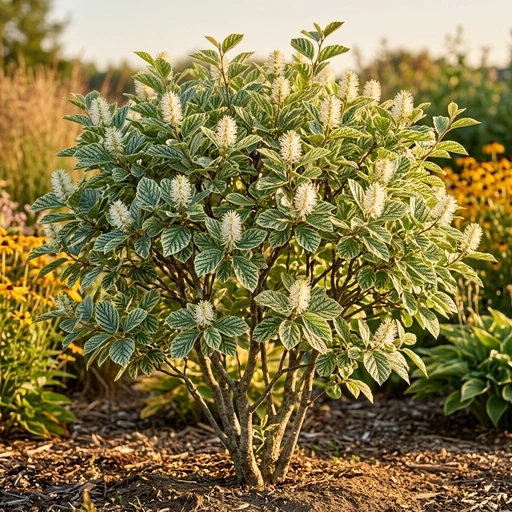
Dwarf Fothergilla
Fothergilla gardenii
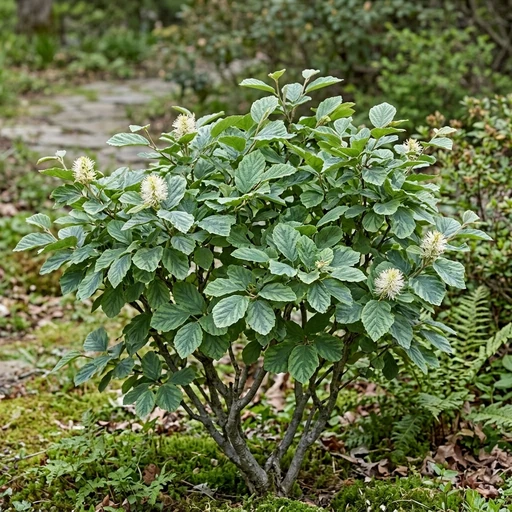
Blue Shadow Fothergilla
Fothergilla gardenii 'Blue Shadow'
Mount Airy Fothergilla
Fothergilla gardenii 'Mount Airy'
Keep exploring
Explore the genus
Hardy in your zone?
Grow Bottlebrush Fothergilla with confidence
See it in a design of your actual yard, get zone-matched care reminders, and track it season by season in your garden journal.