The Story
Plant Bio
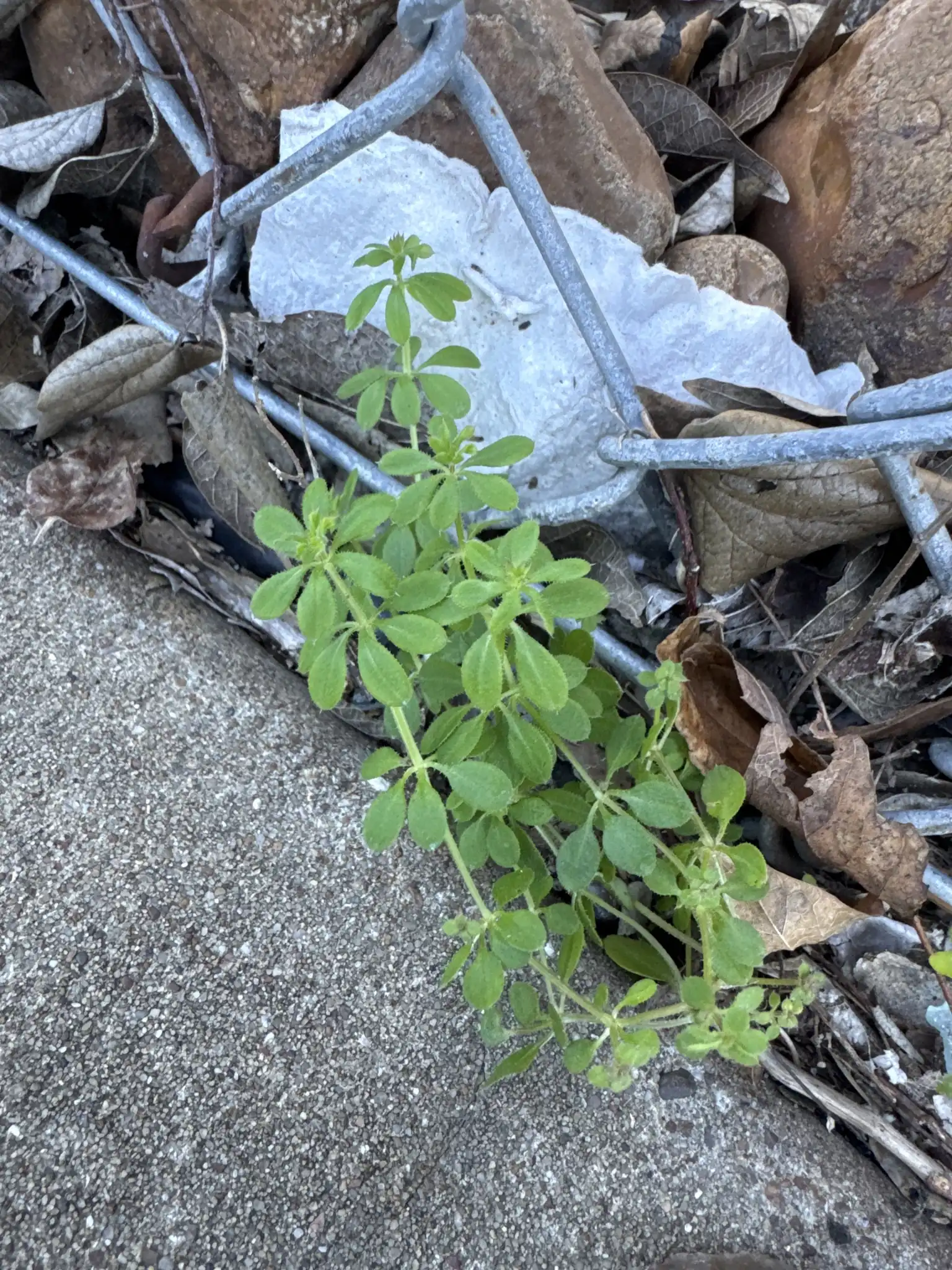
Galium aparine is a weak-stemmed annual forb that scrambles over surrounding vegetation using backward-hooked bristles along its square stems. The simple, bright green leaves are arranged in whorls of six to eight, and the plant produces tiny, four-petaled white flowers in spring and summer.
This species is notable for its highly adhesive nature, as the microscopic hook-hairs on its stems, leaves, and seed vessels cling readily to animal fur and clothing. The resulting small, dry fruits persist in the soil seed bank, allowing the plant to spread rapidly in disturbed, nutrient-rich soils.
Uses & Benefits:
Essentials
At a Glance
Plant Type
Annual
Height
39"
Width
118"
Light
Full Sun, Partial Sun, Shade
Zones
4, 5, 6, 7, 8, 9, 10
Water
Low to moderate
Humidity
Moderate to high
Lifespan
Annual
Native To
Eurasia
Toxicity
Non-toxic
Bloom period
Spring – Summer
In flower about 6 months of the year
Planting
How to Grow
- Select a site with moist, well-drained soil in any light exposure from full sun to deep shade.
- Sow seeds shallowly in cool weather, as germination occurs prolifically during autumn or early spring.
- Provide adjacent plants or a physical support for the weak stems to scramble over if containment is not a priority.
- Monitor the area closely in spring to manually pull plants before they flower and set seed.
Pro Tip
Do not apply nitrogen-rich fertilizers, as excess nutrients stimulate aggressive, sprawling vegetative growth that quickly smothers neighboring plants.
Keep It Thriving
Care Guide
Do
- Pull plants manually in early spring before the flowers develop into sticky seed burrs.
- Wear gloves when handling the foliage to prevent mechanical skin irritation from the stiff hook-hairs.
- Dispose of cleared plants carefully to avoid spreading viable seeds into compost piles.
Don't
- Do not fertilize the soil, as high nitrogen levels encourage highly vigorous and invasive scrambling growth.
- Do not allow the plant to set fruit if you wish to prevent a persistent weed infestation in subsequent seasons.
- Do not attempt to train this annual on permanent ornamental trellises, as it dies back completely in hot summer conditions.
Seasonal Care Calendar
| Task | Jan | Feb | Mar | Apr | May | Jun | Jul | Aug | Sep | Oct | Nov | Dec |
|---|---|---|---|---|---|---|---|---|---|---|---|---|
| Pest Check | ||||||||||||
| Propagate | ||||||||||||
| Prune | ||||||||||||
| Spring Cleanup |
Watch Out For
Pests & Diseases
Common Pests
Common Diseases
In the Garden
Landscape Uses & Companions
Landscape Uses
Companion Plants
Multiply
Propagation Methods
Good to Know
Common Questions
Cleavers questions
What zones can Cleavers grow in?
Cleavers is hardy in USDA Zones 4–10. Inside that range it survives winter in the ground; outside it, grow it as an annual or a container plant you protect.
When does Cleavers bloom?
Cleavers typically blooms in spring through summer. Exact timing shifts a week or two with your zone — Sow's bloom calendar maps it to your garden.
Does Cleavers need full sun?
Cleavers does best in full sun to part shade. In hot climates, afternoon shade keeps blooms fresher longer.
More Galium to compare
Keep exploring
Explore the genus
Grow Cleavers with confidence
See it in a design of your actual yard, get zone-matched care reminders, and track it season by season in your garden journal.