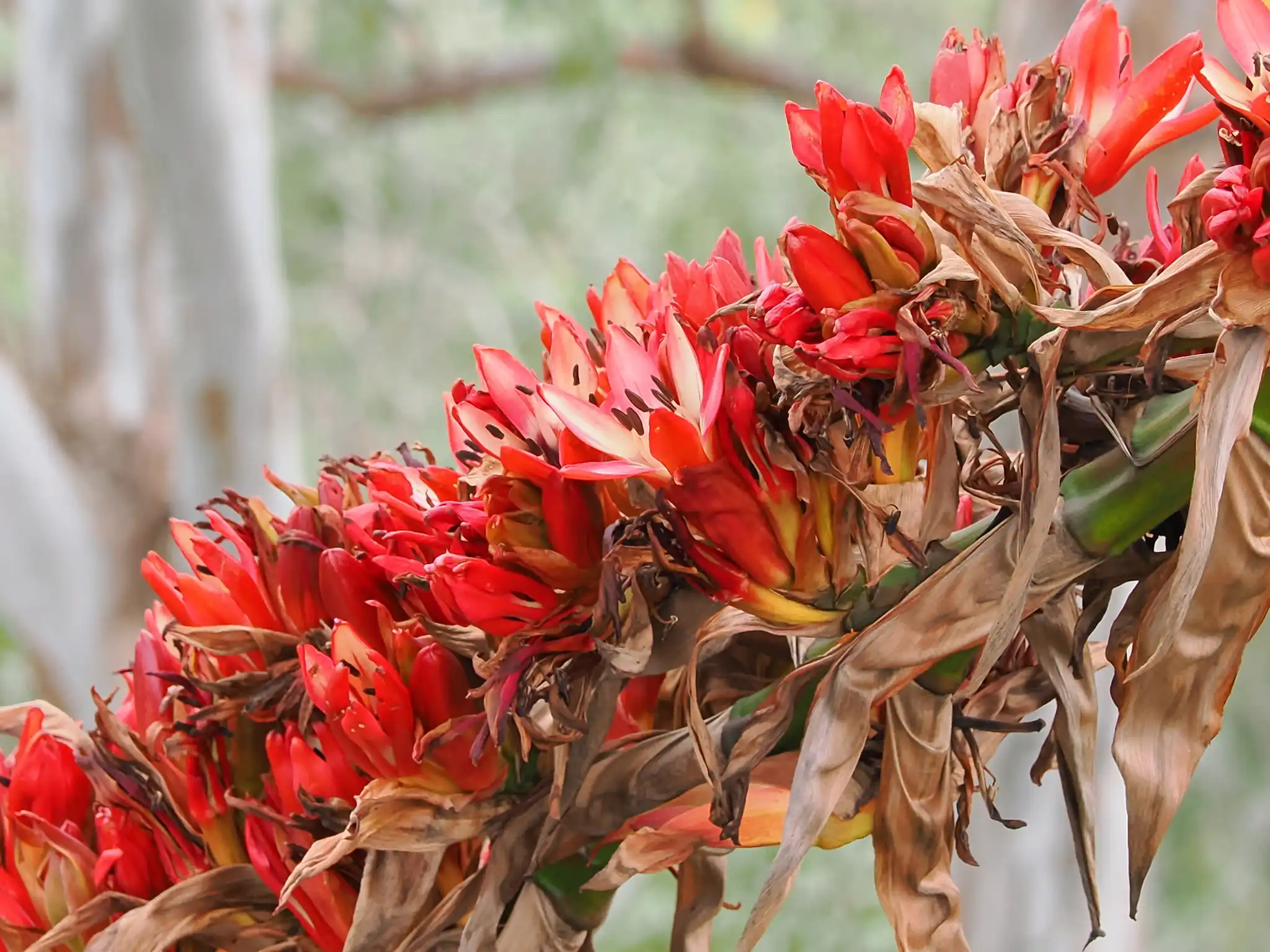
The Story
Plant Bio
Doryanthes palmeri is a massive, architectural evergreen monocot native to the coastal cliffs and rainforest margins of eastern Australia. It forms a colossal basal rosette of ribbed, sword-shaped leaves that can reach up to ten feet in length.
This species is distinguished by its giant, arching flower spikes that emerge from the center of mature rosettes and reach up to sixteen feet tall. The terminal panicles carry dense clusters of deep red, funnel-shaped flowers surrounded by prominent crimson bracts.
Uses & Benefits:
Essentials
At a Glance
Plant Type
Perennial
Height
196"
Width
188"
Light
Full Sun, Partial Sun
Zones
9, 10
Water
Low
Humidity
Moderate
Lifespan
Perennial
Native To
Australia
Toxicity
Non-toxic
Bloom period
Spring – Early summer
In flower about 4 months of the year
Planting
How to Grow
- Select a planting site in full sun with sharp, free-draining sandy loam or rocky soil.
- Dig a hole twice as wide as the root ball but no deeper, ensuring the crown sits slightly above the surrounding soil level.
- Water deeply immediately after planting to settle the soil around the roots, then withhold further water until the top few inches dry out.
- Establish a minimal watering schedule, providing occasional deep irrigation only during prolonged dry summer spells.
Pro Tip
Plant on a slope or elevated berm to ensure rapid drainage; winter wet in low-lying garden hollows causes crown rot.
Keep It Thriving
Care Guide
Do
- Plant on sloped ground or raised beds to guarantee excellent drainage.
- Cut spent flower stalks down to the base of the rosette once blooming finishes.
- Remove dead or yellowing lower leaves in fall to maintain a clean appearance.
Don't
- Do not plant in low-lying areas where water pools or soil remains soggy.
- Do not cut back healthy green leaves, as this severely weakens the monocarpic rosette.
- Do not attempt to propagate the plant using leaf cuttings, which will fail.
Seasonal Care Calendar
| Task | Jan | Feb | Mar | Apr | May | Jun | Jul | Aug | Sep | Oct | Nov | Dec |
|---|---|---|---|---|---|---|---|---|---|---|---|---|
| Fertilize | ||||||||||||
| Pest Check | ||||||||||||
| Plant | ||||||||||||
| Prune |
Watch Out For
Pests & Diseases
Common Pests
Common Diseases
In the Garden
Landscape Uses & Companions
Landscape Uses
Companion Plants
Multiply
Propagation Methods
Good to Know
Common Questions
Giant Spear Lily questions
What zones can Giant Spear Lily grow in?
Giant Spear Lily is hardy in USDA Zones 9–10. Inside that range it survives winter in the ground; outside it, grow it as an annual or a container plant you protect.
Is Giant Spear Lily deer resistant?
Not reliably. Deer may browse Giant Spear Lily, especially tender spring growth — plan on repellents or fencing where pressure is high.
When does Giant Spear Lily bloom?
Giant Spear Lily typically blooms in spring through early summer. Exact timing shifts a week or two with your zone — Sow's bloom calendar maps it to your garden.
Does Giant Spear Lily need full sun?
Giant Spear Lily does best in full sun to part shade. In hot climates, afternoon shade keeps blooms fresher longer.
Is Giant Spear Lily drought tolerant?
Yes — once established (usually after the first full season), Giant Spear Lily handles dry spells with minimal watering. Water deeply its first year to build the root system that makes that possible.
More Doryanthes to compare
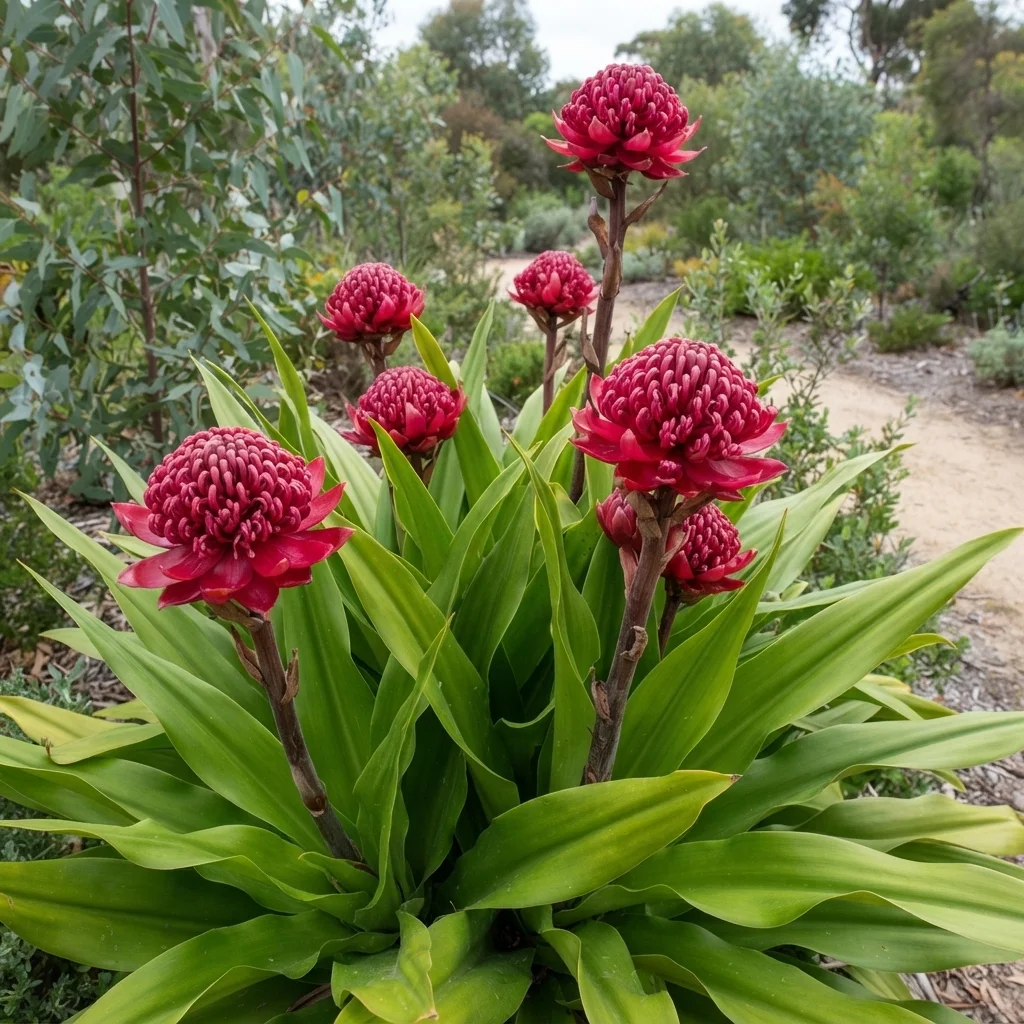
Keep exploring
Explore the genus
Hardy in your zone?
Grow Giant Spear Lily with confidence
See it in a design of your actual yard, get zone-matched care reminders, and track it season by season in your garden journal.