The Story
Plant Bio
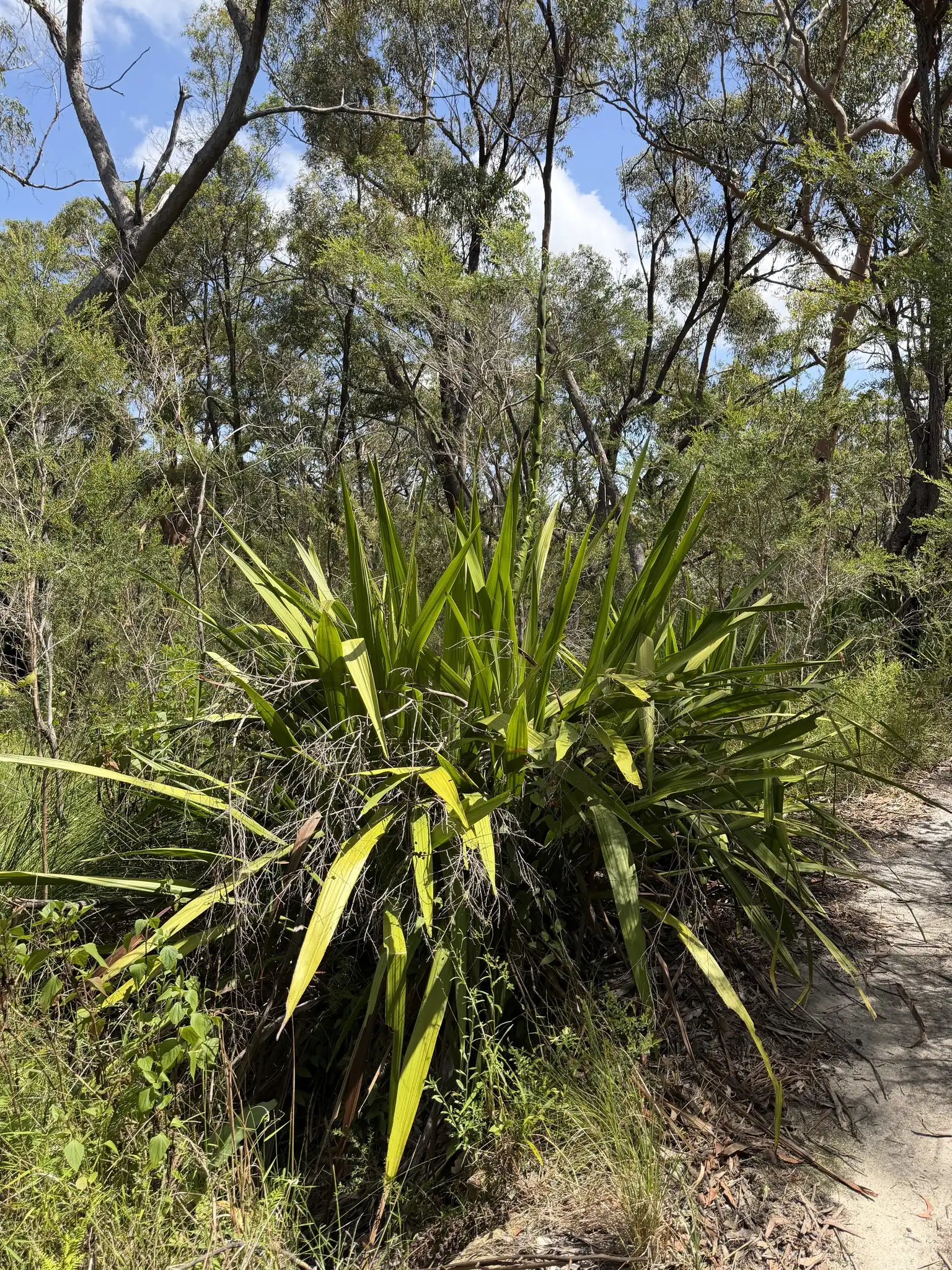
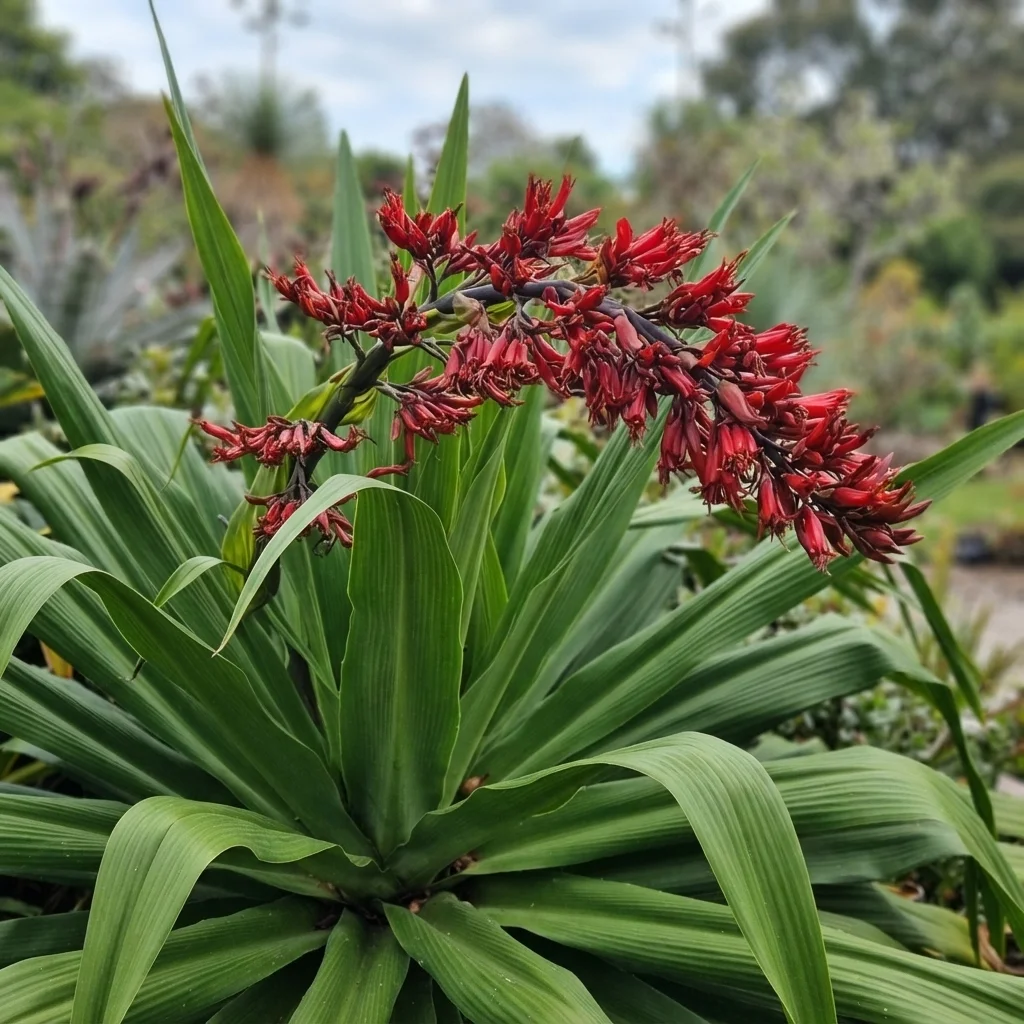
Doryanthes excelsa is a massive, clumping perennial endemic to the sandstone cliffs and open forests of coastal New South Wales. It forms a giant basal rosette of stiff, sword-shaped leaves up to five feet long, from which a thick flowering stem emerges to bear a dense, torch-like cluster of deep crimson flowers.
This species is distinguished by its extraordinary scale, with flowering scapes reaching up to twenty feet in height. The individual trumpet-shaped flowers are rich in nectar and surrounded by dark brownish bracts.
Uses & Benefits:
Essentials
At a Glance
Plant Type
Perennial
Height
236"
Width
157"
Light
Full Sun, Partial Sun
Zones
9, 10
Water
Low
Humidity
Moderate to High
Lifespan
Perennial
Native To
Australia
Toxicity
Non-toxic
Bloom period
Spring – Early summer
In flower about 4 months of the year
Planting
How to Grow
- Select a planting site in full sun with deep, highly porous sandy or loamy soil to ensure rapid drainage.
- Dig a hole twice the width of the root ball and plant at the same depth as the nursery container, avoiding burying the crown.
- Water deeply but infrequently, allowing the soil to dry out completely between waterings to prevent root rot.
- Apply a light application of a balanced slow-release fertilizer once annually in the spring to support steady growth.
Pro Tip
Cut spent flowering scapes cleanly at the base only after they have completely dried out; forcing division of young clumps too early severely sets back growth and delays flowering.
Keep It Thriving
Care Guide
Do
- Remove individual yellowing or damaged outer leaves at the base to maintain a clean appearance.
- Cut spent flowering scapes cleanly at the base only after they have completely dried out.
- Provide protection or temporary shelter during hard winter frosts to prevent damage to developing flower buds.
Don't
- Do not plant in heavy, poorly drained clay soils or low-lying areas where water accumulates.
- Do not attempt to divide young, single-headed specimens, as early division severely setbacks growth.
- Do not overwater or allow the root system to sit in stagnant, saturated soil.
Seasonal Care Calendar
| Task | Jan | Feb | Mar | Apr | May | Jun | Jul | Aug | Sep | Oct | Nov | Dec |
|---|---|---|---|---|---|---|---|---|---|---|---|---|
| Fertilize | ||||||||||||
| Pest Check | ||||||||||||
| Prune | ||||||||||||
| Winter Prep |
Watch Out For
Pests & Diseases
Common Pests
Common Diseases
In the Garden
Landscape Uses & Companions
Landscape Uses
Companion Plants
Multiply
Propagation Methods
Good to Know
Common Questions
Gymea Lily questions
What zones can Gymea Lily grow in?
Gymea Lily is hardy in USDA Zones 9–10. Inside that range it survives winter in the ground; outside it, grow it as an annual or a container plant you protect.
Is Gymea Lily deer resistant?
Not reliably. Deer may browse Gymea Lily, especially tender spring growth — plan on repellents or fencing where pressure is high.
When does Gymea Lily bloom?
Gymea Lily typically blooms in spring through early summer. Exact timing shifts a week or two with your zone — Sow's bloom calendar maps it to your garden.
Does Gymea Lily need full sun?
Gymea Lily does best in full sun to part shade. In hot climates, afternoon shade keeps blooms fresher longer.
Is Gymea Lily drought tolerant?
Yes — once established (usually after the first full season), Gymea Lily handles dry spells with minimal watering. Water deeply its first year to build the root system that makes that possible.
More Doryanthes to compare
Keep exploring
Explore the genus
Hardy in your zone?
Grow Gymea Lily with confidence
See it in a design of your actual yard, get zone-matched care reminders, and track it season by season in your garden journal.