The Story
Plant Bio
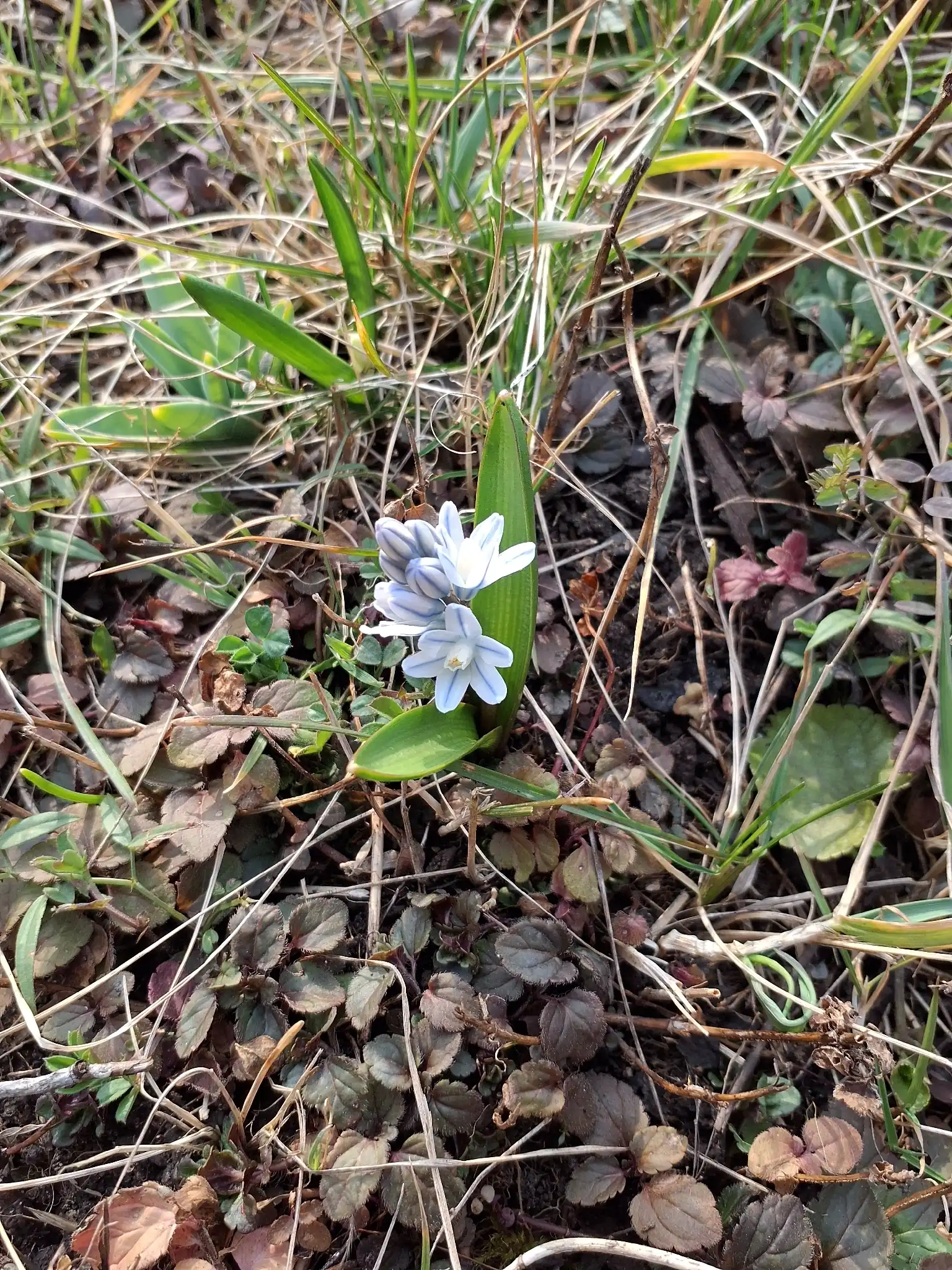
Puschkinia scilloides, the striped squill, is a small, clumping herbaceous perennial bulb that forms neat low patches in late winter and early spring. The foliage consists of narrow, strap-shaped basal dark green leaves that widen slightly toward the tips, providing a simple backdrop for the early blooms.
The star-shaped flowers are pale silvery-blue or white, each tepal marked by a distinct darker blue center stripe that gives the plant its striped appearance. The fragrant blooms are clustered in loose terminal racemes, each featuring a small, fused central cup surrounding the stamens.
Uses & Benefits:
Essentials
At a Glance
Plant Type
Bulb Corm Tuber
Height
6"
Width
6"
Light
Full Sun, Partial Sun
Zones
4, 5, 6, 7, 8
Water
Low to moderate
Humidity
Moderate
Lifespan
Perennial
Native To
Western Asia, Caucasus
Toxicity
Toxic if ingested
Bloom period
Late winter – Early spring
In flower about 2 months of the year
Planting
How to Grow
- Select a planting site with well-drained, sandy or gritty soil in full sun to partial shade.
- Plant bulbs in fall at a depth of three inches, spacing them approximately three inches apart.
- Water thoroughly after planting to settle the soil, then withhold water during the summer dormant period.
- Allow the foliage to die back naturally after spring flowering to recharge the bulb for the next season.
Pro Tip
Leave the green foliage intact after flowering until it completely yellows and dies back naturally; cutting it early deprives the bulb of the energy needed to bloom the following spring.
Keep It Thriving
Care Guide
Do
- Plant in sharply drained soil to prevent bulb rot.
- Allow foliage to yellow and wither completely before removing it.
- Top-dress with organic matter or low-nitrogen fertilizer in fall if soil is poor.
Don't
- Do not plant in heavy, waterlogged soils that retain summer moisture.
- Do not cut back green leaves immediately after flowering.
- Do not overwater during the summer dormancy period.
Seasonal Care Calendar
| Task | Jan | Feb | Mar | Apr | May | Jun | Jul | Aug | Sep | Oct | Nov | Dec |
|---|---|---|---|---|---|---|---|---|---|---|---|---|
| Divide | ||||||||||||
| Fertilize | ||||||||||||
| Plant | ||||||||||||
| Spring Cleanup |
Watch Out For
Pests & Diseases
Common Pests
Common Diseases
In the Garden
Landscape Uses & Companions
Landscape Uses
Companion Plants
Multiply
Propagation Methods
Good to Know
Common Questions
Striped Squill questions
What zones can Striped Squill grow in?
Striped Squill is hardy in USDA Zones 4–8. Inside that range it survives winter in the ground; outside it, grow it as an annual or a container plant you protect.
Is Striped Squill deer resistant?
Yes — Striped Squill is rated deer-resistant. Deer typically pass it over, though extreme hunger can override any plant's defenses.
When does Striped Squill bloom?
Striped Squill typically blooms in late winter through early spring. Exact timing shifts a week or two with your zone — Sow's bloom calendar maps it to your garden.
Does Striped Squill need full sun?
Striped Squill does best in full sun to part shade. In hot climates, afternoon shade keeps blooms fresher longer.
Is Striped Squill drought tolerant?
Yes — once established (usually after the first full season), Striped Squill handles dry spells with minimal watering. Water deeply its first year to build the root system that makes that possible.
Keep exploring
Explore the genus
Hardy in your zone?
Grow Striped Squill with confidence
See it in a design of your actual yard, get zone-matched care reminders, and track it season by season in your garden journal.