The Story
Plant Bio
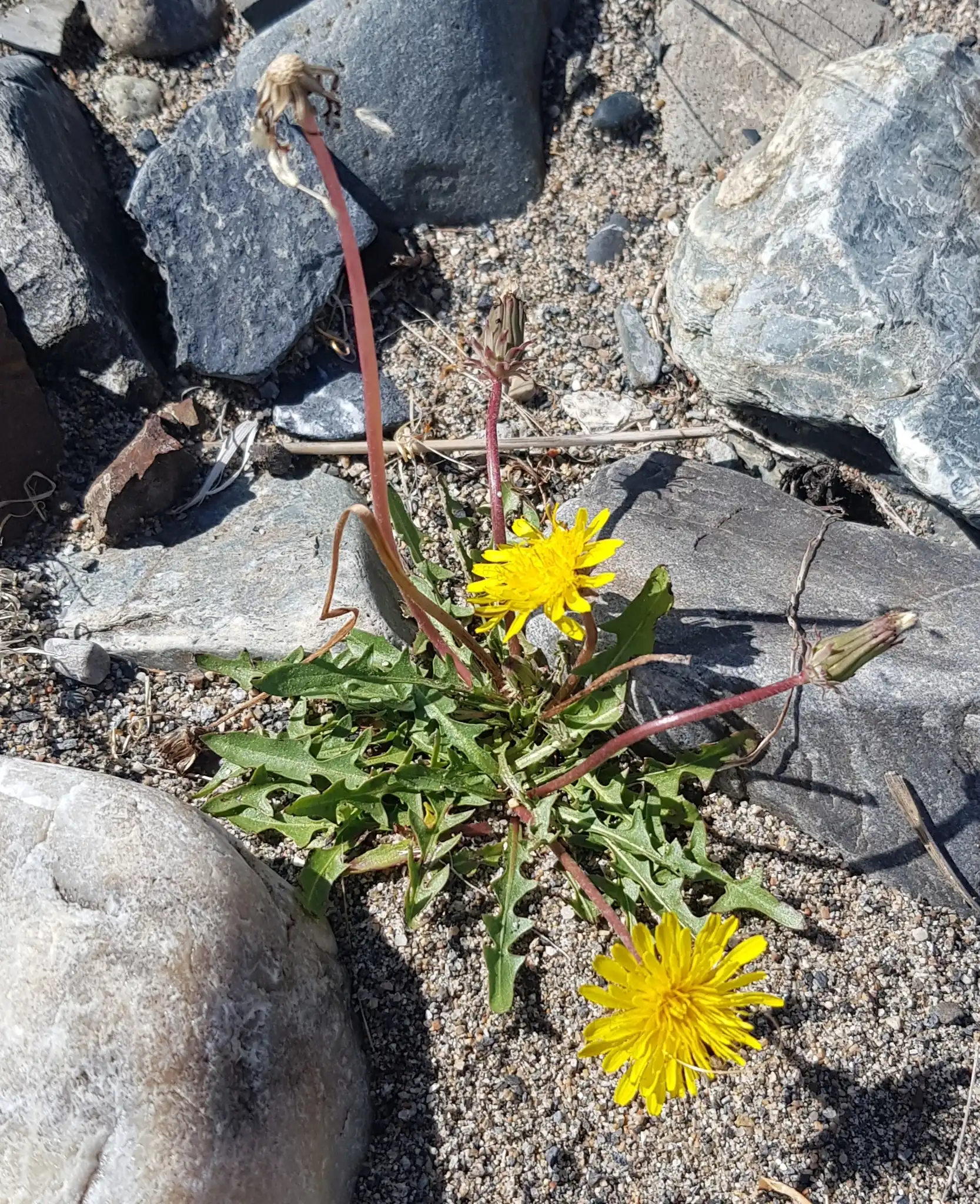
Taraxacum dissectum is a low-growing, taprooted perennial native to the cold alpine regions of Central and Eastern Asia. It forms a tight, ground-hugging rosette of deeply cut, runcinate leaves that remain highly compact compared to common weedy dandelions.
The solitary yellow flower heads emerge on short, upright scapes in spring and summer, composed entirely of ray florets. Its deeply dissected, fern-like foliage provides a delicate, structural texture suited specifically to mineral-rich rock crevices.
Uses & Benefits:
Essentials
At a Glance
Plant Type
Perennial
Height
6"
Width
10"
Light
Full Sun
Zones
4, 5, 6, 7, 8
Water
Low
Humidity
Low to Moderate
Lifespan
Perennial
Native To
Central and Eastern Asia
Toxicity
Skin Irritant
Bloom period
Spring – Summer
In flower about 6 months of the year
Planting
How to Grow
- Select a site in full sun with exceptionally sharp drainage, such as a rock garden, scree bed, or alpine trough.
- Prepare a planting medium consisting primarily of coarse sand, grit, and fine gravel, minimizing organic matter.
- Excavate a deep, narrow hole to accommodate the long taproot without bending or crowding it.
- Position the crown slightly above the soil line and top-dress with a thick layer of clean stone grit to prevent moisture retention around the collar.
Pro Tip
Plant in pure scree or a highly porous sand-and-gravel mix; any organic-rich soil that retains winter moisture triggers rapid, fatal crown rot.
Keep It Thriving
Care Guide
Do
- Water sparingly during the active growing season, allowing the soil to dry out completely between applications.
- Remove spent flower heads before they set seed if you wish to prevent localized self-sowing.
- Protect the plant from excess winter wet by using a rain cover or planting on a sloped rock face.
Don't
- Do not apply nitrogen-rich fertilizers, which cause weak, bloated growth and invite rot.
- Do not plant in heavy clay or poorly drained garden loam.
- Do not disturb or transplant the established specimen, as the deep taproot resents root damage.
Seasonal Care Calendar
| Task | Jan | Feb | Mar | Apr | May | Jun | Jul | Aug | Sep | Oct | Nov | Dec |
|---|---|---|---|---|---|---|---|---|---|---|---|---|
| Deadhead | ||||||||||||
| Pest Check | ||||||||||||
| Propagate | ||||||||||||
| Spring Cleanup | ||||||||||||
| Winter Prep |
Watch Out For
Pests & Diseases
Common Pests
Common Diseases
In the Garden
Landscape Uses & Companions
Landscape Uses
Companion Plants
Multiply
Propagation Methods
Good to Know
Common Questions
Cut-Leaved Dandelion questions
What zones can Cut-Leaved Dandelion grow in?
Cut-Leaved Dandelion is hardy in USDA Zones 4–8. Inside that range it survives winter in the ground; outside it, grow it as an annual or a container plant you protect.
Is Cut-Leaved Dandelion deer resistant?
Not reliably. Deer may browse Cut-Leaved Dandelion, especially tender spring growth — plan on repellents or fencing where pressure is high.
When does Cut-Leaved Dandelion bloom?
Cut-Leaved Dandelion typically blooms in spring through summer. Exact timing shifts a week or two with your zone — Sow's bloom calendar maps it to your garden.
Does Cut-Leaved Dandelion need full sun?
Cut-Leaved Dandelion does best in full sun (6+ hours).
Is Cut-Leaved Dandelion drought tolerant?
Yes — once established (usually after the first full season), Cut-Leaved Dandelion handles dry spells with minimal watering. Water deeply its first year to build the root system that makes that possible.
More Taraxacum to compare
Keep exploring
Explore the genus
Hardy in your zone?
Grow Cut-Leaved Dandelion with confidence
See it in a design of your actual yard, get zone-matched care reminders, and track it season by season in your garden journal.