The Story
Plant Bio
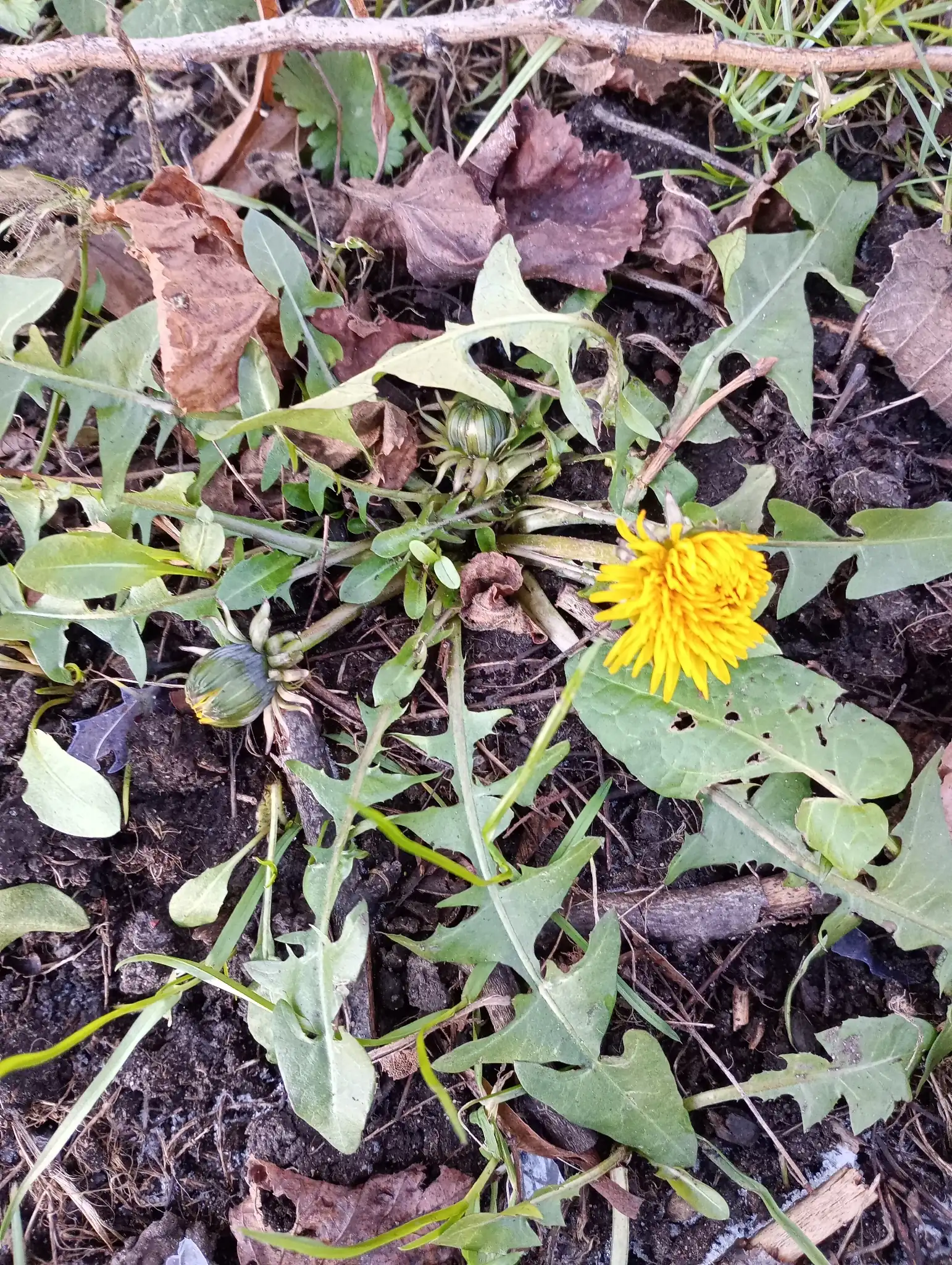
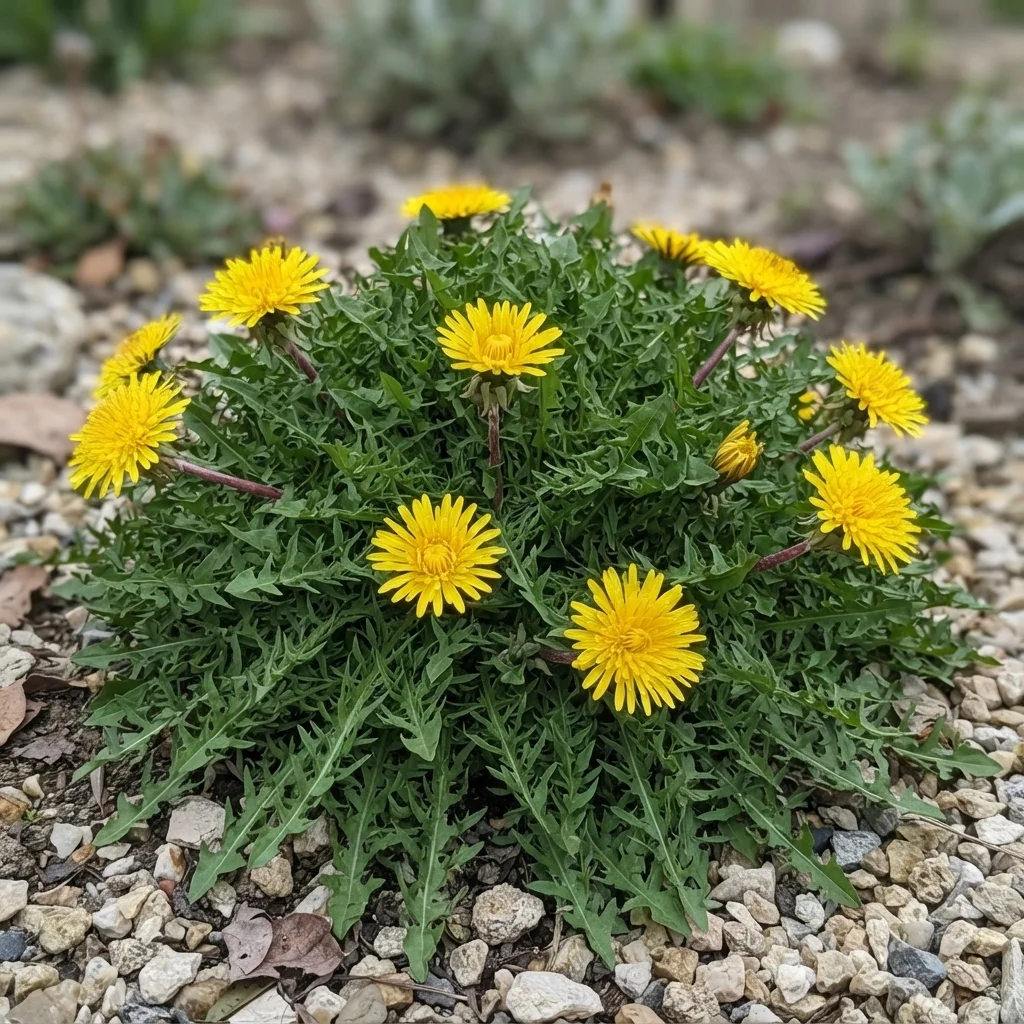
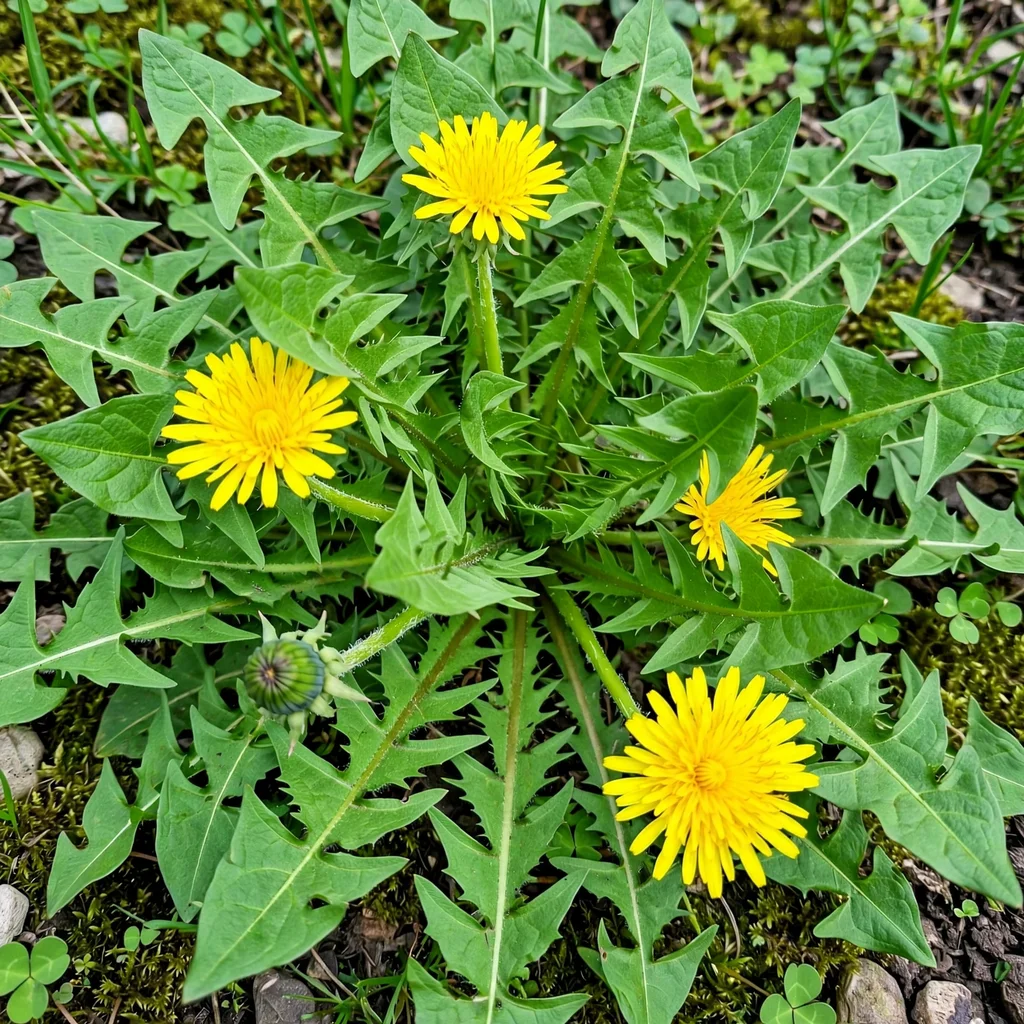
Taraxacum officinale is a highly adaptable, acaulescent perennial forming a flat-topped or slightly mounded basal rosette from a deep, fleshy taproot. The deeply lobed, runcinate-pinnatifid leaves produce hollow, leafless scapes bearing solitary golden-yellow flower heads that mature into globose, white-to-cream seed heads.
This species is characterized by its exceptional tolerance to soil compaction and drought, driven by its deep root system. Extensive apomixis allows the plant to produce viable seed without pollination, leading to rapid colonization of disturbed soils.
Uses & Benefits:
Essentials
At a Glance
Plant Type
Perennial
Height
12"
Width
12"
Light
Full Sun, Partial Sun
Zones
4, 5, 6, 7, 8, 9
Water
Low to moderate
Humidity
High tolerance
Lifespan
Perennial
Native To
Eurasia
Toxicity
Non-toxic (sap may cause mild contact dermatitis)
Bloom period
Spring – Summer
In flower about 6 months of the year
Planting
How to Grow
- Select a site with full sun to partial shade in almost any well-drained or compacted soil type.
- Sow seeds directly on the soil surface, as light is required to trigger germination.
- Maintain moderate soil moisture during establishment, though mature plants tolerate prolonged dry spells.
- Extract the entire taproot manually if population control is required, ensuring no crown tissue remains.
Pro Tip
To eradicate dandelions, extract the taproot at least two to four inches below the crown node; simply pulling the foliage leaves the crown intact, triggering rapid resprouting from the remaining root tissue.
Keep It Thriving
Care Guide
Do
- Dig deeply to extract the entire taproot when weeding to prevent vegetative regeneration.
- Harvest young, tender leaves in early spring before flowering for culinary use to avoid bitterness.
- Apply potassium bicarbonate or horticultural oils at the first sign of powdery mildew on the foliage.
Don't
- Do not over-fertilize surrounding turf, as excess nitrogen encourages rapid rosette establishment.
- Do not leave severed crowns in the soil, as they will quickly regenerate new foliage.
- Do not allow seed heads to mature and disperse if you wish to contain the plant within a specific area.
Seasonal Care Calendar
| Task | Jan | Feb | Mar | Apr | May | Jun | Jul | Aug | Sep | Oct | Nov | Dec |
|---|---|---|---|---|---|---|---|---|---|---|---|---|
| Deadhead | ||||||||||||
| Harvest | ||||||||||||
| Pest Check | ||||||||||||
| Propagate |
Watch Out For
Pests & Diseases
Common Pests
Common Diseases
In the Garden
Landscape Uses & Companions
Landscape Uses
Companion Plants
Multiply
Propagation Methods
Good to Know
Common Questions
Dandelion questions
What zones can Dandelion grow in?
Dandelion is hardy in USDA Zones 4–9. Inside that range it survives winter in the ground; outside it, grow it as an annual or a container plant you protect.
When does Dandelion bloom?
Dandelion typically blooms in spring through summer. Exact timing shifts a week or two with your zone — Sow's bloom calendar maps it to your garden.
Does Dandelion need full sun?
Dandelion does best in full sun to part shade. In hot climates, afternoon shade keeps blooms fresher longer.
Is Dandelion drought tolerant?
Yes — once established (usually after the first full season), Dandelion handles dry spells with minimal watering. Water deeply its first year to build the root system that makes that possible.
More Taraxacum to compare
Keep exploring
Explore the genus
Grow Dandelion with confidence
See it in a design of your actual yard, get zone-matched care reminders, and track it season by season in your garden journal.