Native plant gardens are having a moment for good reasons: plants adapted to your region need less water and fuss, support dramatically more pollinators and birds, and still deliver serious beauty — little bluestem, coneflowers, asters and sweetspire are design-grade plants by any standard. The hard part has always been logistics: knowing which plants are native near you, and designing with them instead of just collecting them.
Sow handles both. Its 10,000+ plant library carries Native and Butterfly Host traits alongside zone, sun and size, and its design tools compose those plants into real layouts on a photo of your yard.
What makes a pollinator garden actually work
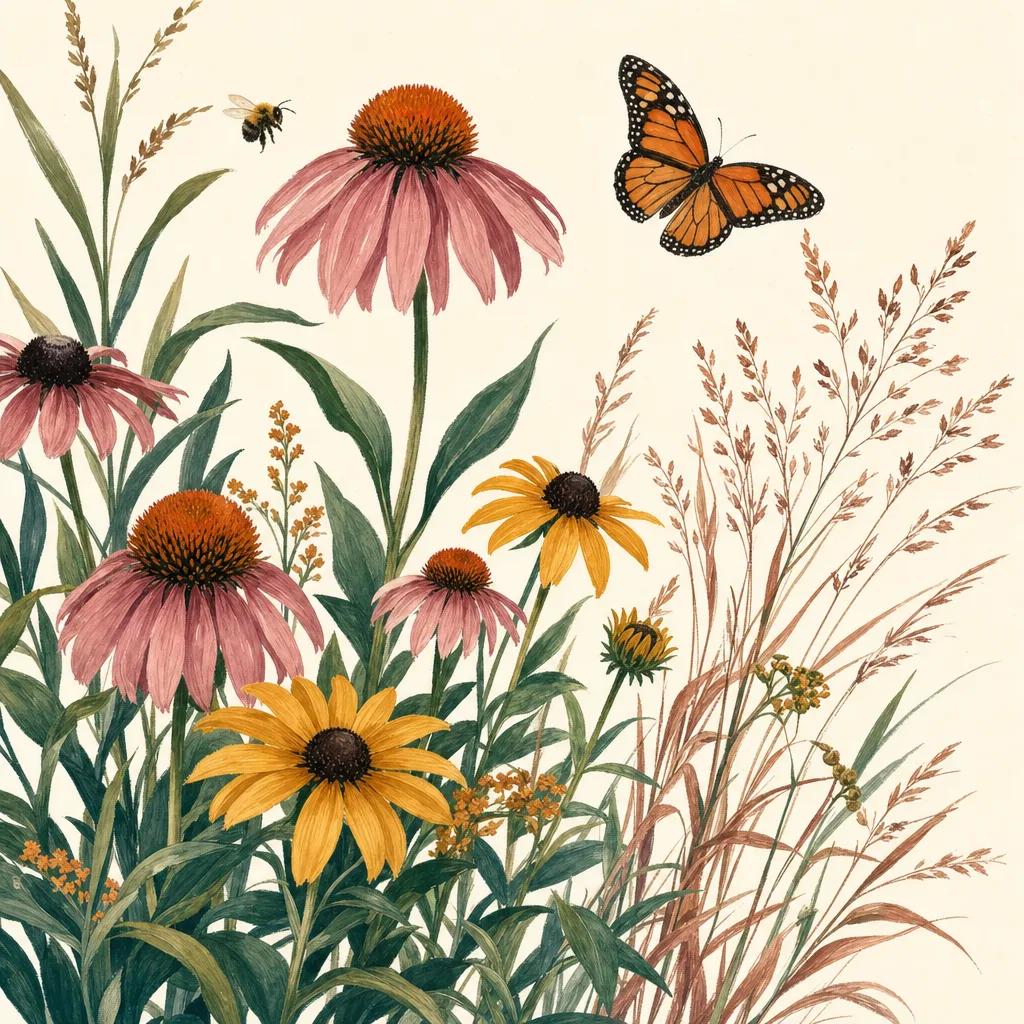
Three ingredients matter most. Bloom succession: pollinators need nectar from early spring through fall, so build a relay of bloom times rather than one July crescendo. Host plants: butterflies need specific plants for their caterpillars (the famous example is monarchs and milkweed) — nectar alone is not enough, which is why Sow's Butterfly Host filter exists. Drifts: plant in generous groups so foragers can work efficiently, and skip pesticides.
Design with natives, not just a native plant list
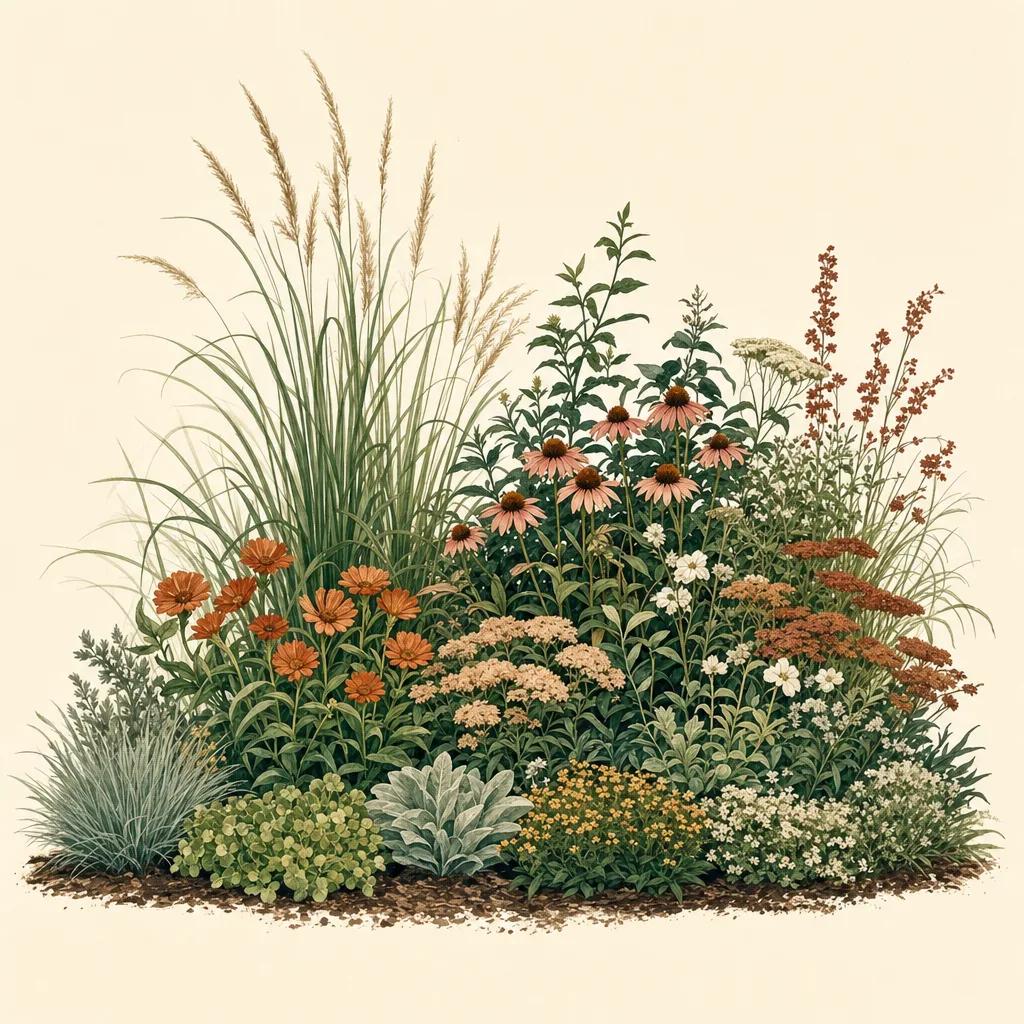
A pile of native plants is a meadow accident; a designed native bed uses the same rules as any good bed — layered heights, repeated drifts, contrasting forms, year-round structure from grasses and seed heads. Generate a native-leaning design in Sow on a photo of your space, and every suggestion arrives pre-filtered for your zone with its mature size and sun needs attached.
Start small and let it spread
You do not need to rewild the whole yard at once. Convert one bed or a strip of lawn, keep clean edges so it reads as intentional, and expand as plants prove themselves. Sow's yard map is handy here — mark the conversion area, track what you plant, and watch the bed's value and coverage grow year over year.