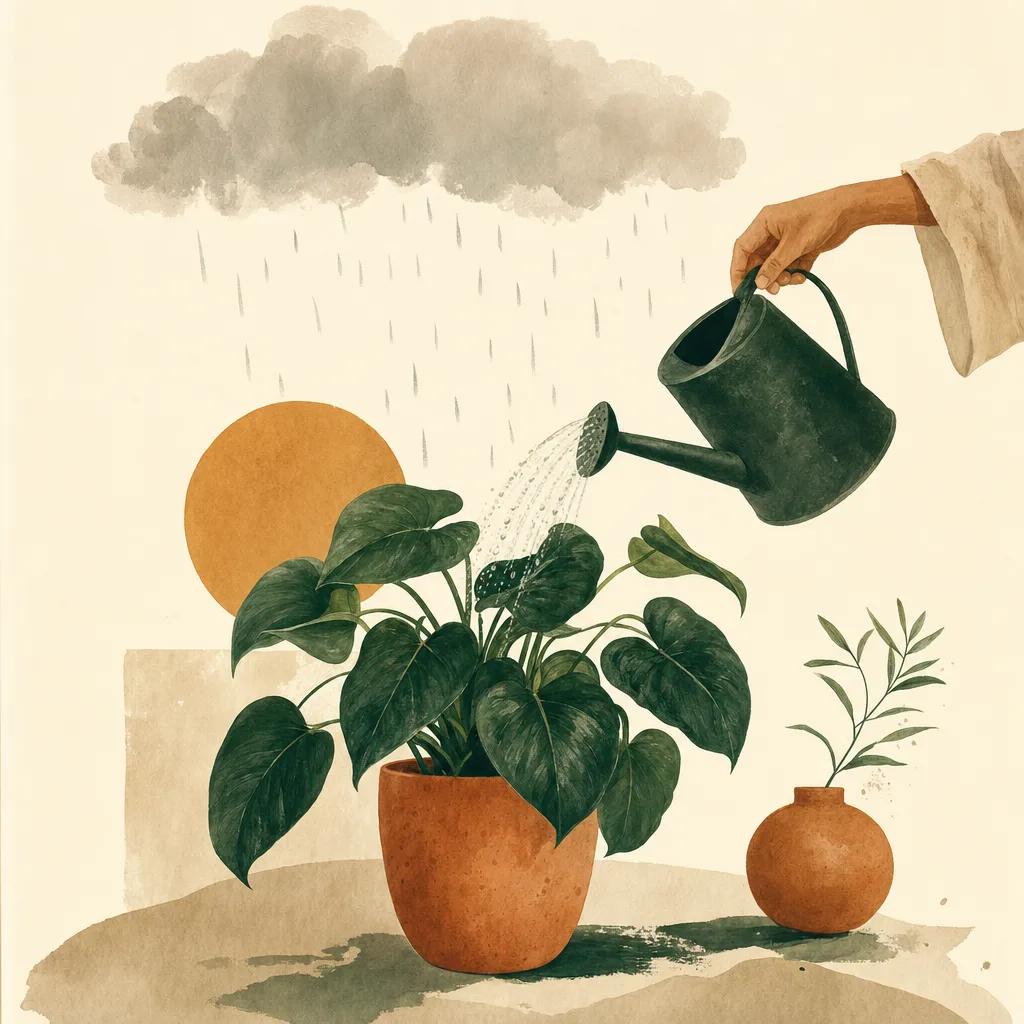
Most watering apps are repeating alarms: "water every 3 days," rain or shine. That is how plants drown in April and fry in July. Sow schedules watering from the thing that actually matters — your local weather. It tracks rainfall at your location, compares it to what your plants need, watches the 10-day forecast for heat and storms, and turns the result into concrete tasks: which beds to water, and when to skip because rain already did the job.
How much water do plants really need?
The old rule of thumb — about an inch of water a week for established beds and lawns — is a starting point, not a schedule. Real demand swings with temperature, wind, soil and plant maturity: new plantings need frequent shallow water while roots establish; established natives may need none; vegetable beds and containers dry out fastest. Deep, infrequent watering beats daily sprinkles because it pushes roots down.
Sow's Water Budget chart shows actual rainfall against the historical average for your spot and flags dry spells as they develop, so "has it rained enough this week?" has a data answer.
Weather alerts that change what you do today
Watering is only one output. Sow's weather engine issues garden-specific alerts: heat waves ("highs to 95°F — water early, watch containers and seedlings"), incoming wind and storms ("stake tall plants, shelter lightweight pots"), frost dates in spring and fall. Instead of interpreting a generic weather app, you get the gardening implication directly.
Per-plant care, not one-size-fits-all
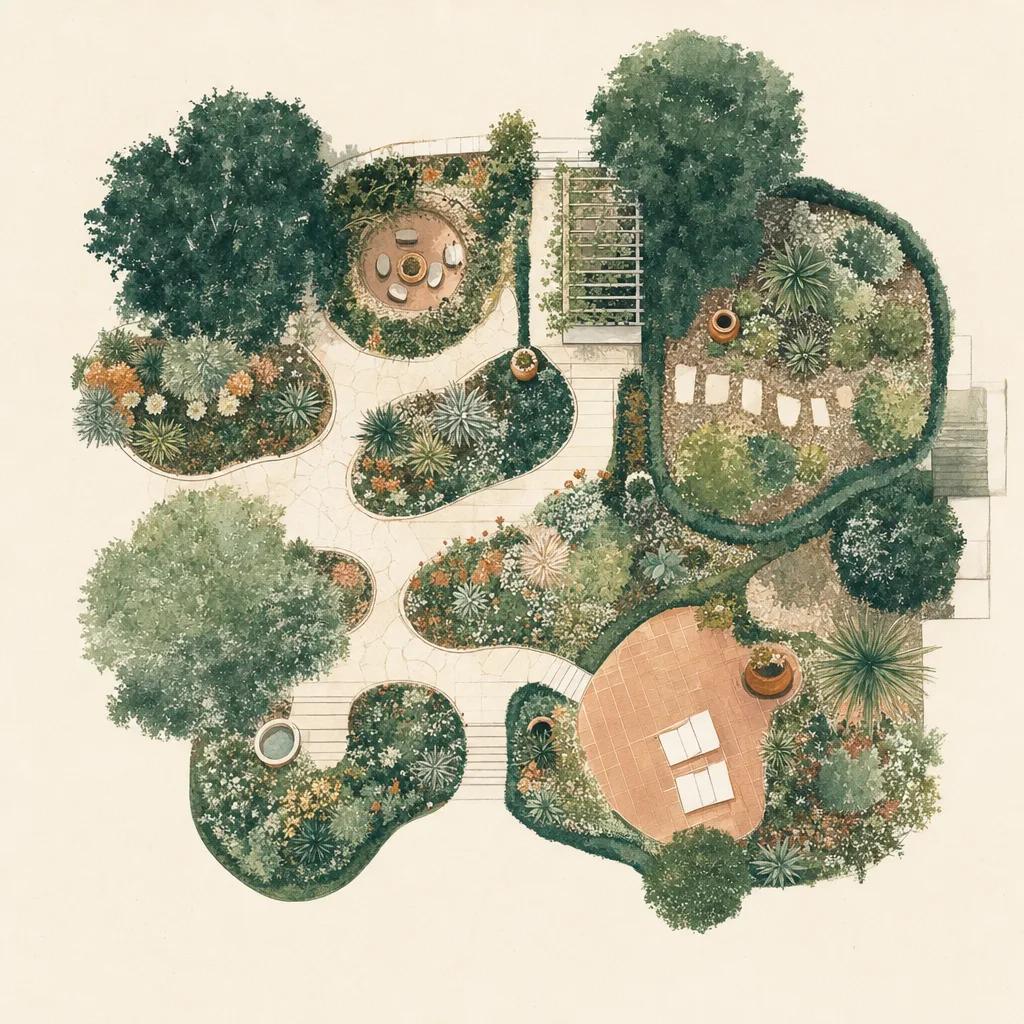
Because Sow knows which plants you grow and where (from your collections and yard map), guidance is specific: drought-tolerant grasses stay off the list while thirsty hydrangeas and new transplants get priority. Seasonal tasks — prune, pinch, deadhead, fertilize — ride along on each plant's card.