Also known as Pineapple Guava · 22 saves
Acca
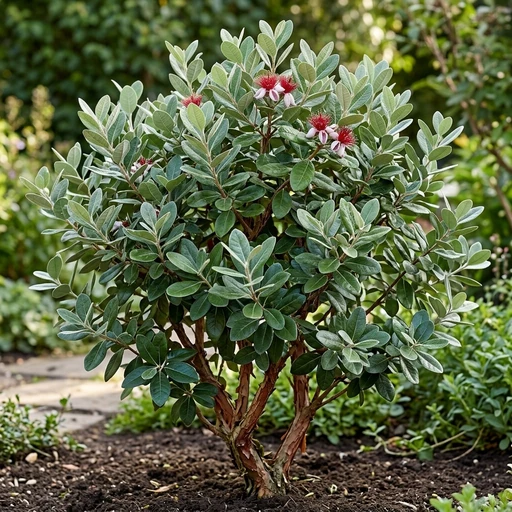
Acca, the genus most gardeners know as pineapple guava. We track 5 varieties; the ones most used by real gardeners.
The 1 most-saved Acca varieties
Track your Acca in Sow
Save the Acca you grow and get care reminders timed to your zone.
How to grow Acca
Whats common across all Acca varieties in our catalog — drawn from the care records of the 5 most-grown of them.
The Acca year
- PruneJuly and November100% of varieties
Prune lightly after the fall harvest to shape the canopy and remove crowded branches.
- HarvestOctober and November100% of varieties
Harvest ripe fruit as it falls or when it yields slightly to gentle thumb pressure.
- FertilizeMarch and September100% of varieties
Apply a balanced general-purpose fertilizer in early spring and mid-summer to support cropping.
- Check for PestsMay–July100% of varieties
Monitor foliage for scale insects, aphids, and spider mites during hot, dry summer weather.
- MulchApril40% of varieties
Apply a layer of organic mulch to conserve soil moisture and protect roots.


Do
- Water regularly during hot, dry summer spells to prevent premature fruit drop.
- Mulch around the base of the shrub to conserve soil moisture and protect roots.
- Plant a second cross-compatible cultivar nearby to maximize fruit size and yield.
- Water regularly during hot, dry summer periods to ensure proper fruit development.
- Tip-prune young plants to encourage a dense, bushy branching structure.
Avoid
- Do not plant in poorly drained sites or low spots prone to prolonged waterlogging.
- Avoid heavy pruning into old, bare wood inside the canopy, as it fails to regenerate easily.
- Do not allow the soil to dry out completely while the fruit is actively developing.
- Do not prune harshly into old, leafless wood, as it may fail to regenerate.
What goes wrong with Acca
| Problem | What you'll see | What to do |
|---|---|---|
| Spider mites | Stippled, fine-webbed, dull or bronze foliage during hot, dry spells. | Increase moisture, apply miticides or insecticidal soap. |
| Scale insects | Small, immobile bump-like insects on stems and leaves causing yellowing and unvigerous growth. | Apply horticultural oil during the dormant season or systemic treatments for heavy infestations. |
| Aphids | Curled, distorted leaves and sticky honeydew residue on foliage. | Spray with insecticidal soap or a strong jet of water. |
| Deer and rabbits | Browsing damage to lower foliage and bark stripping. | Use physical fencing or commercial animal repellents. |
| Powdery mildew | White, powdery fungal growth on leaves during humid conditions. | Ensure good air circulation, prune crowded branches, and apply appropriate fungicides if severe. |
| Root rot (Phytophthora spp.) | Wilting, yellowing foliage, branch dieback, and dark, decaying roots. | Improve soil drainage, avoid overwatering, and apply fungicides if caught early. |
| Root rot | Wilting foliage, yellowing leaves, and dieback in waterlogged soils. | Plant in well-draining soil and avoid overwatering or standing water. |
Making more Acca
Semi-hardwood cuttings
- Take 4- to 6-inch semi-hardwood cuttings in late summer from the current season's growth.
- Remove the lower leaves and dip the cut end in a rooting hormone powder.
- Insert the cuttings into a well-draining medium of perlite and peat moss.
- Maintain high humidity and warmth until roots establish, then pot up individually.
Seed
- Extract seeds from a ripe fruit and clean them.
- Sow immediately in a sterile seed-starting mix.
- Keep warm and moist; germination occurs in about 3 weeks.
- Note: Seed-grown plants will not be true to type.
Acca questions
How many types of Acca are there?
The Sow catalog tracks 5 distinct Acca varieties. The most popular — ranked by 22 real gardeners — are shown first above.
What zones does Acca grow in?
Across its varieties, Acca covers USDA Zones 8–10. Individual varieties differ — each plant page lists its exact range, and Sow filters the catalog to your zone automatically.
When does Acca bloom?
Most Acca varieties bloom in late spring. Staggering early, mid, and late varieties extends the genus's season in one bed.
Which Acca should I choose?
Start from the most-saved varieties above — popularity across thousands of gardens is a strong signal of reliability — then filter by your zone and sun. In the Sow app you can preview any of them in a photo of your actual yard before you buy.