Also known as Firethorn · 15 saves
Pyracantha
Pyracantha, the genus most gardeners know as firethorn. We track 6 varieties; the ones most used by real gardeners.
The 5 most-saved Pyracantha varieties
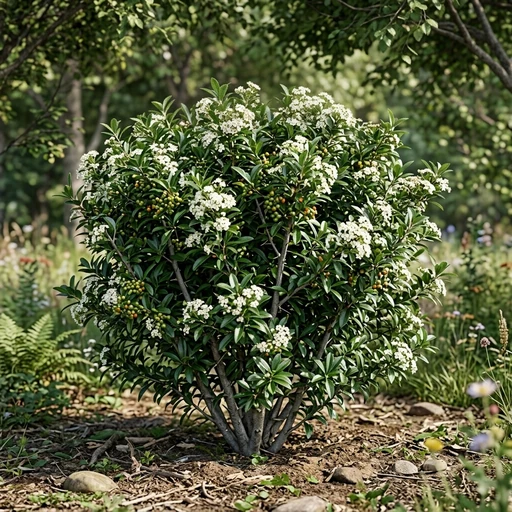
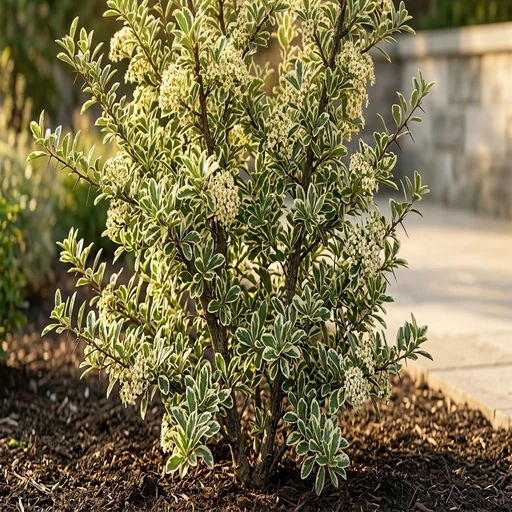
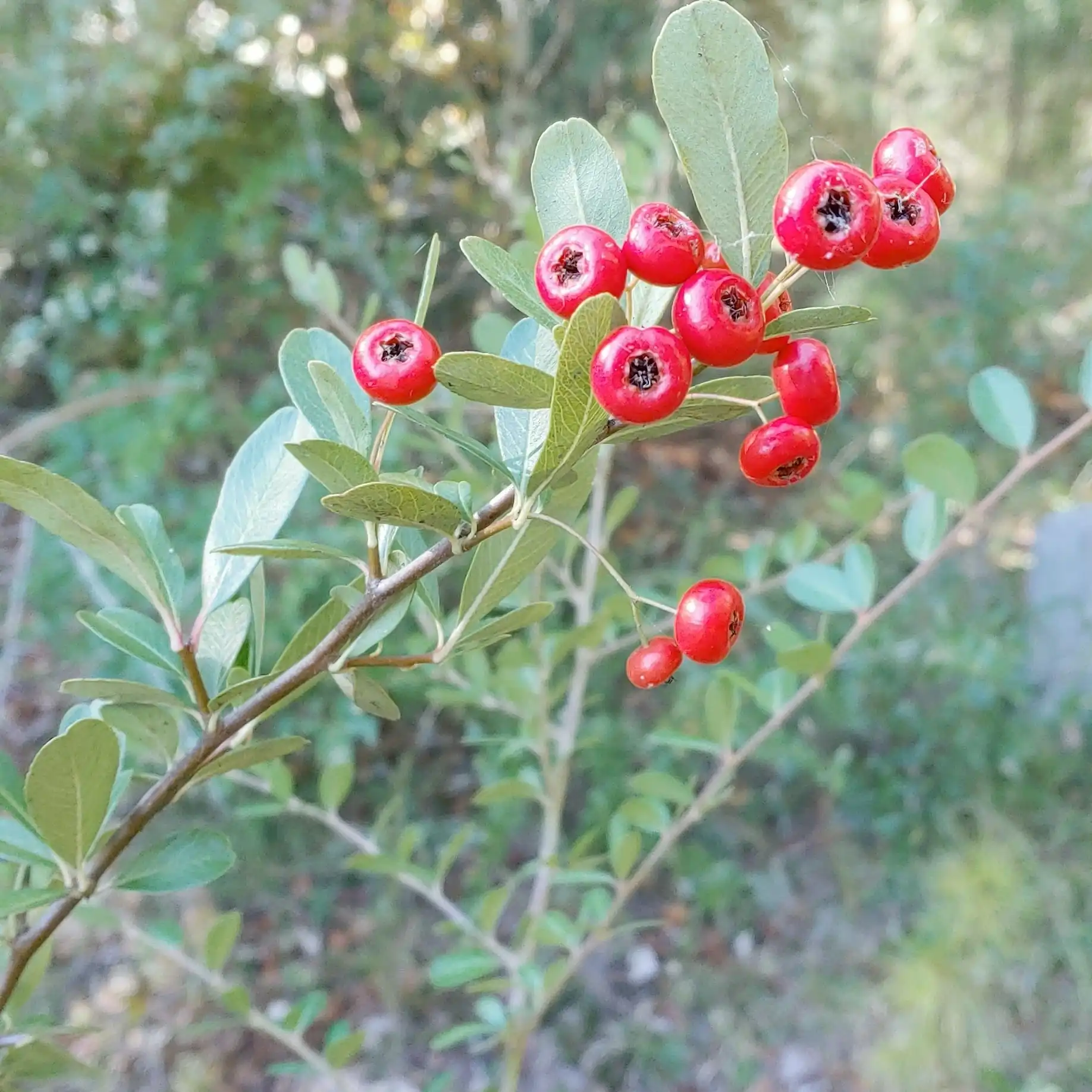
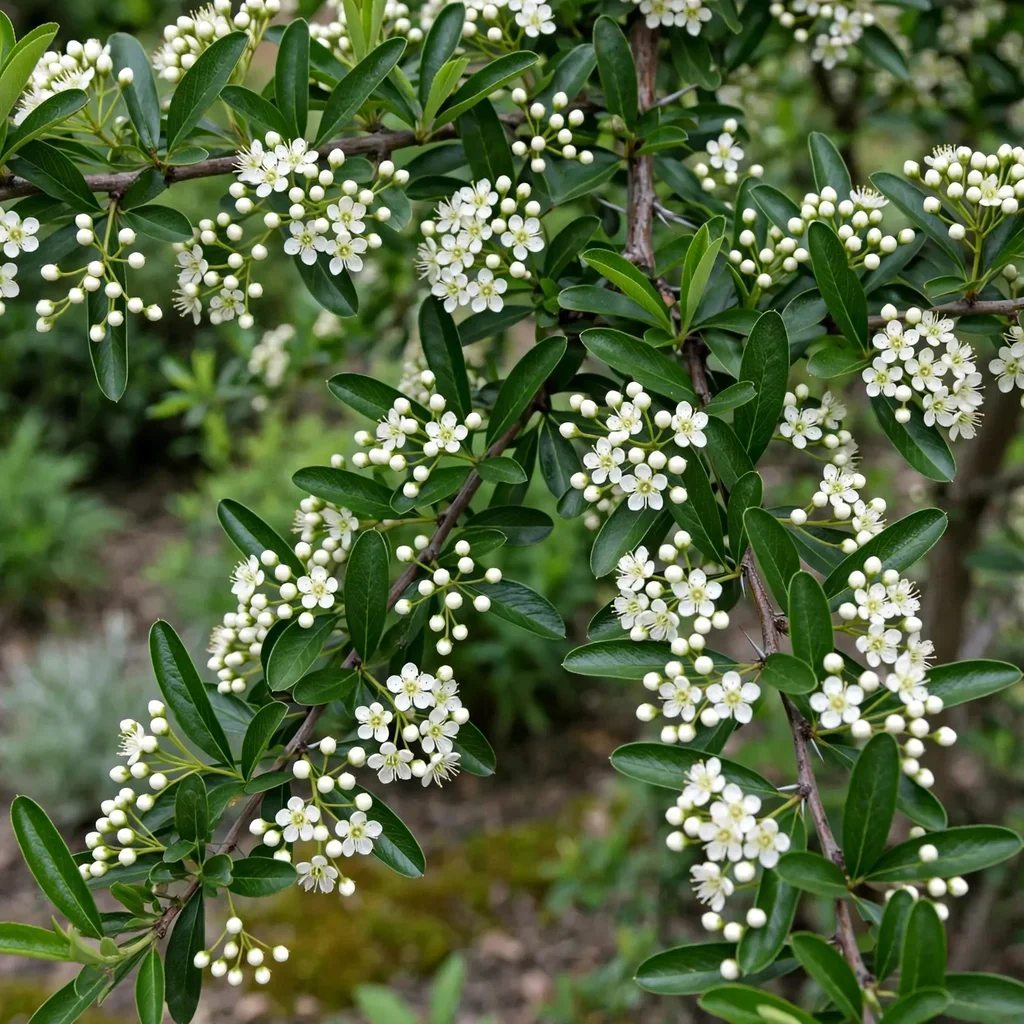
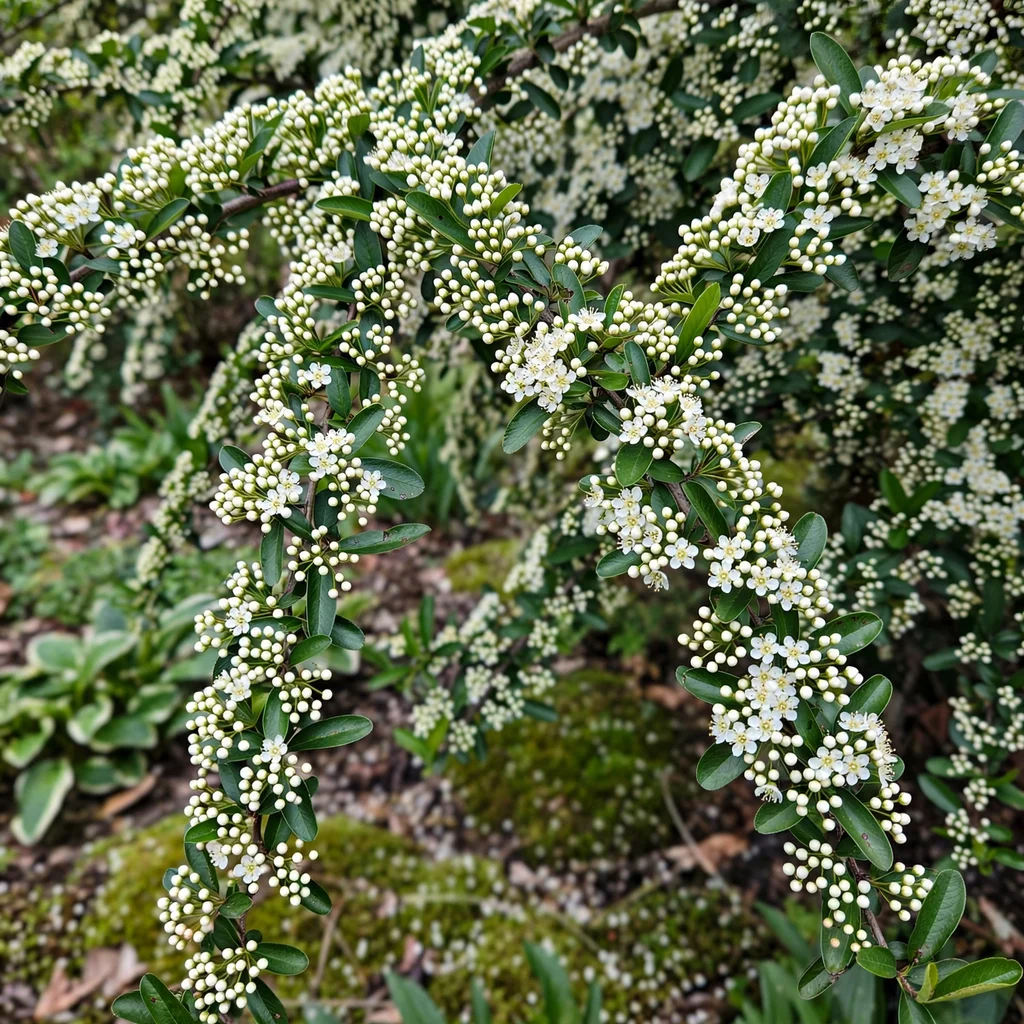
Browse all 6 Pyracantha varieties →
2 species of Pyracantha
Each one is a parent of the varieties above.
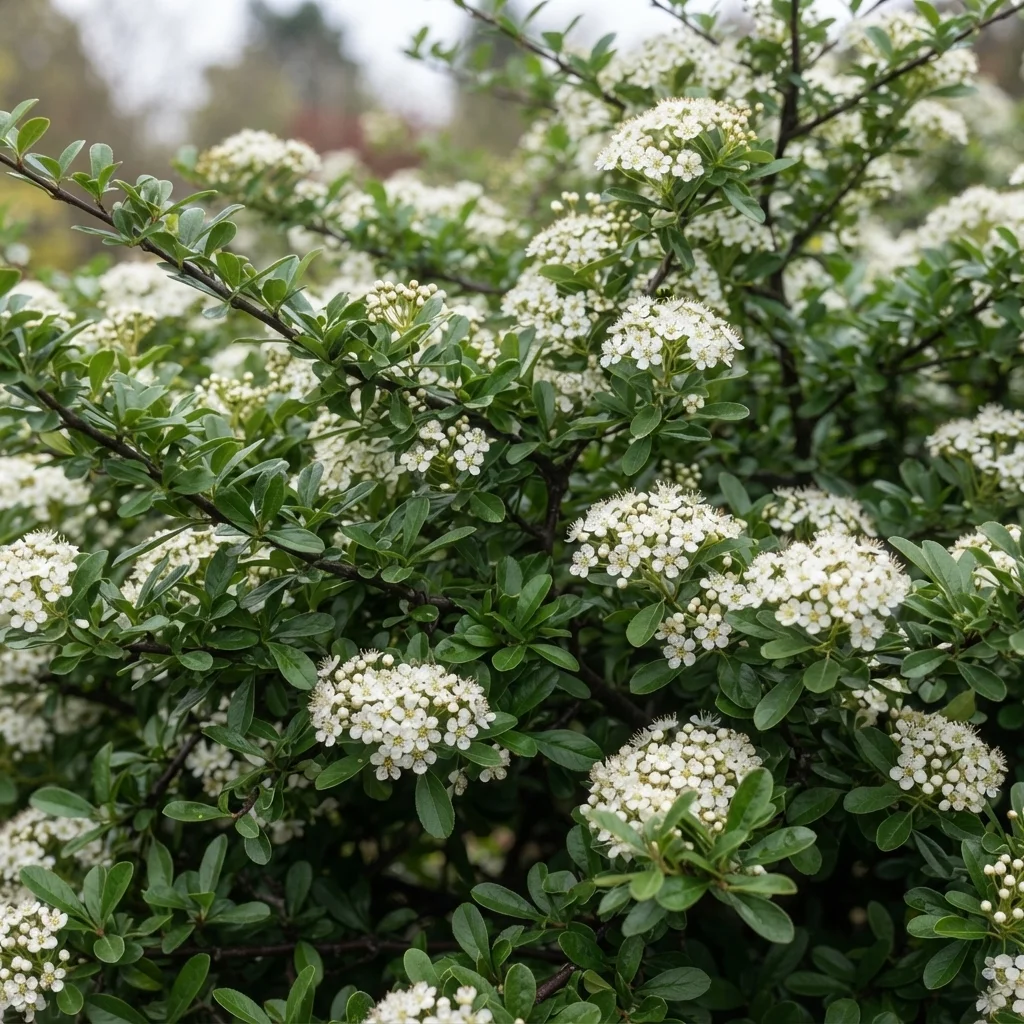
Track your Pyracantha in Sow
Save the Pyracantha you grow and get care reminders timed to your zone.
How to grow Pyracantha
Whats common across all Pyracantha varieties in our catalog — drawn from the care records of the 6 most-grown of them.
The Pyracantha year
- PruneJune and July100% of varieties
Prune after flowering to shape. Avoid heavy pruning which removes berry-producing wood.
- Check for PestsMay–July83% of varieties
Check for aphids and lace bugs on new growth.
- FertilizeMarch33% of varieties
Apply a balanced, slow-release granular fertilizer in early spring, avoiding high-nitrogen formulas.
- Winter PrepNovember33% of varieties
Prune out any dead or diseased wood, especially fire blight cankers, during dry winter dormancy.


Do
- Provide good air circulation to minimize disease risk.
- Plant in full sun for the most flowers and fruit.
- Prune selectively to maintain a natural shape or train as an espalier.
- Water deeply but infrequently once established.
- Wear thick gloves when pruning due to sharp thorns.
Avoid
- Do not plant in poorly drained or waterlogged soils.
- Avoid heavy shearing, which can remove all the flowering wood.
- Do not over-fertilize, which can lead to lush growth and fewer berries.
- Avoid planting near high-traffic walkways due to the sharp thorns.
What goes wrong with Pyracantha
| Problem | What you'll see | What to do |
|---|---|---|
| Aphids | Clusters of small insects on new growth. | A strong jet of water can dislodge them. Introduce beneficial insects like ladybugs. |
| Lace Bugs | Stippled, bleached-looking leaves. | Spray with insecticidal soap or horticultural oil, ensuring good coverage of leaf undersides. |
| Spider mites | Fine stippling and webbing under leaves during hot, dry periods. | Spray with strong water jets or apply miticides. |
| Lace bugs | Chlorotic stippling on the upper leaf surfaces. | Treat with horticultural oils or systemic insecticides. |
| Scab | Olive-green spots on leaves and fruit, which can become cracked. ('Mohave' is resistant). | Rake up and destroy fallen leaves. Apply preventative fungicides in spring. |
| Fire blight | Sudden blackening and wilting of blossoms and young twigs, often forming a shepherd's crook. | Prune infected branches 4 to 9 inches below the visible canker during dry winter dormancy, sterilizing tools between cuts. |
| Root rot | Marginal leaf burn, branch dieback, and plant collapse. | Ensure sharp soil drainage and avoid overwatering. |
Making more Pyracantha
Semi-hardwood cuttings
- Take 4-6 inch cuttings in mid-summer.
- Remove lower leaves and dip in rooting hormone.
- Stick in a mix of peat and perlite.
- Keep humid; roots form in 6-8 weeks.
Semi-hardwood Cuttings
- Take 6-inch cuttings in late summer or early fall
- Remove lower leaves and dip in rooting hormone
- Insert into a well-drained rooting medium
- Keep moist and provide bottom heat for best results
Pyracantha questions
How many types of Pyracantha are there?
The Sow catalog tracks 6 distinct Pyracantha varieties. The most popular — ranked by 15 real gardeners — are shown first above.
What zones does Pyracantha grow in?
Across its varieties, Pyracantha covers USDA Zones 6–9. Individual varieties differ — each plant page lists its exact range, and Sow filters the catalog to your zone automatically.
When does Pyracantha bloom?
Most Pyracantha varieties bloom in late spring, spring. Staggering early, mid, and late varieties extends the genus's season in one bed.
Which Pyracantha should I choose?
Start from the most-saved varieties above — popularity across thousands of gardens is a strong signal of reliability — then filter by your zone and sun. In the Sow app you can preview any of them in a photo of your actual yard before you buy.