
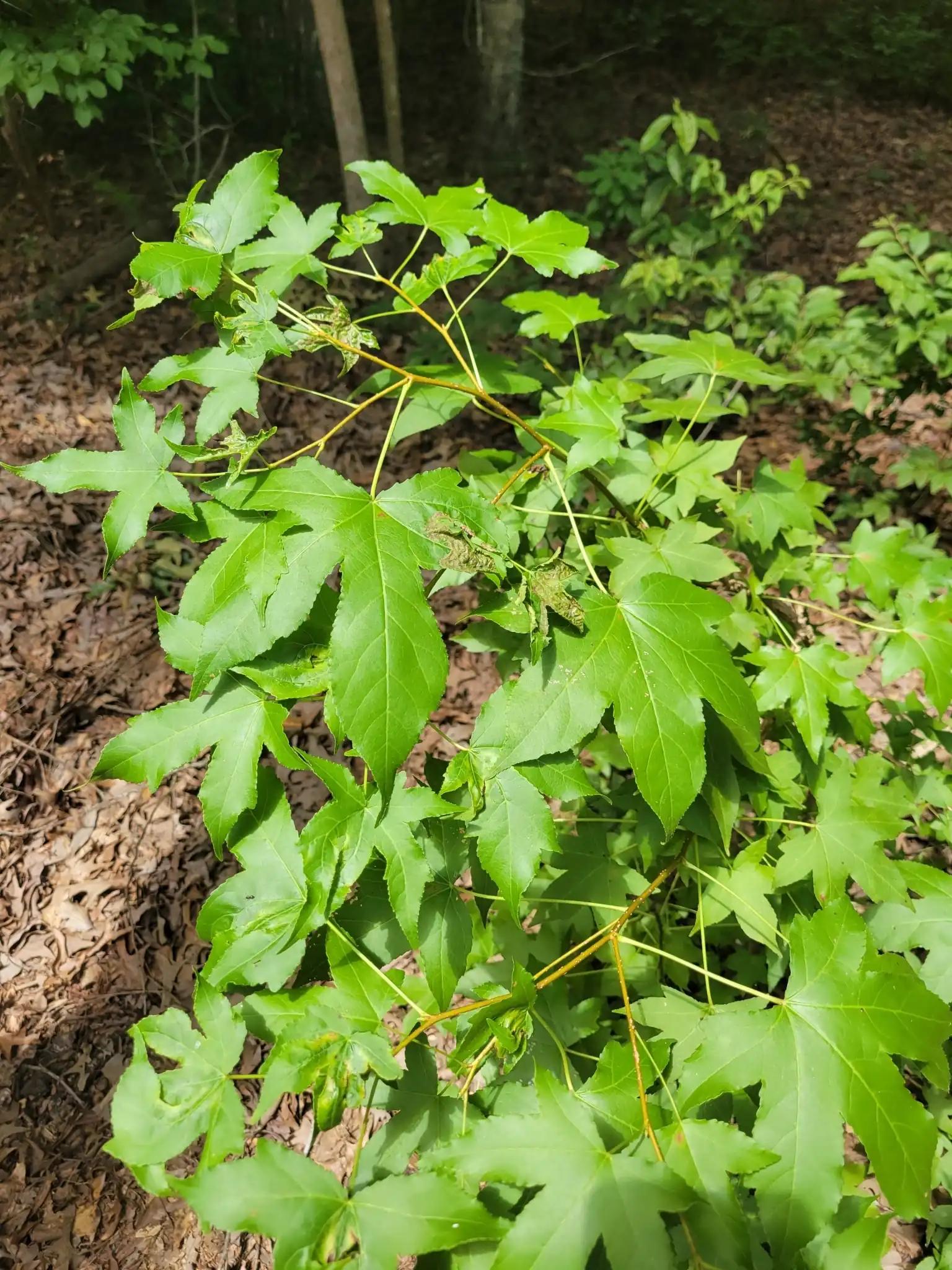


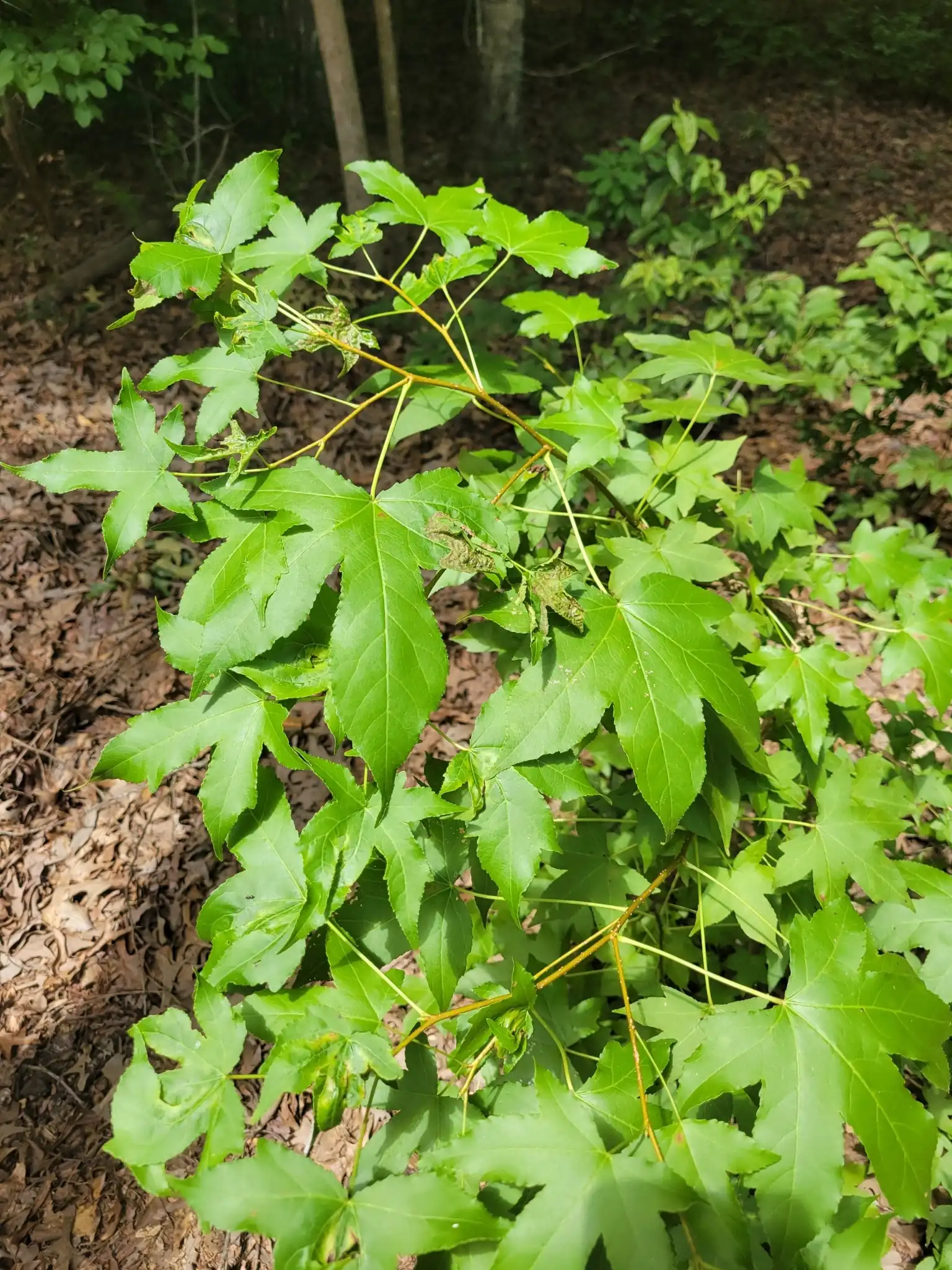
The Story
Plant Bio
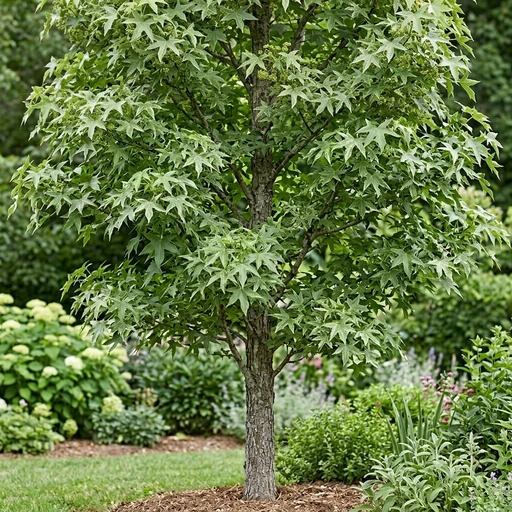
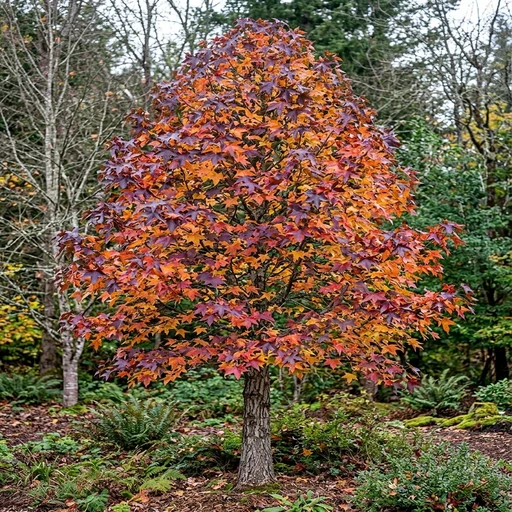
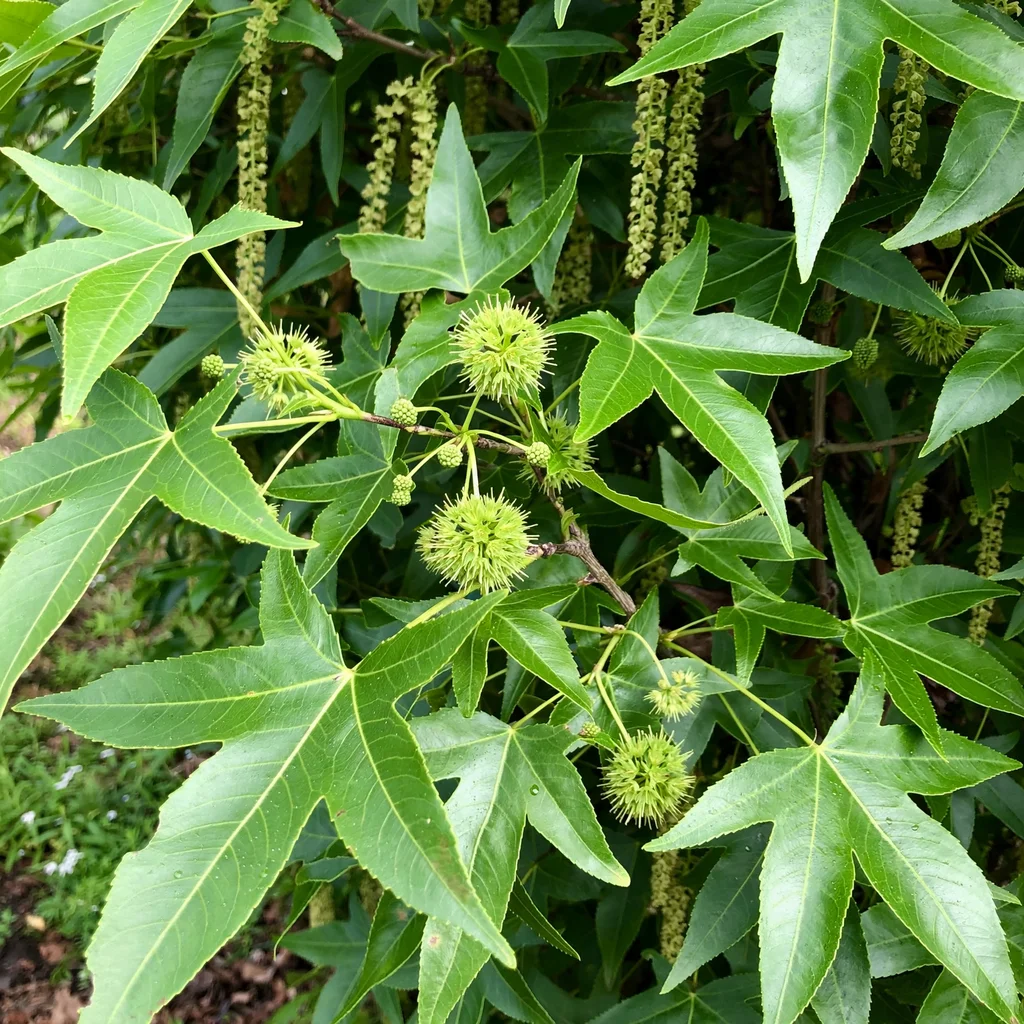
Liquidambar styraciflua is a large, deciduous tree native to North America, prized for its star-shaped leaves and spectacular, long-lasting fall color. The species is known for its spiky, gumball-like fruit.
'Rotundiloba' is a unique, sterile (fruitless) cultivar with distinctive rounded lobes on its leaves instead of the typical pointed ones. It offers the same brilliant fall color without the messy fruit.
Uses & Benefits:
Essentials
At a Glance
Plant Type
Tree
Height
840"
Width
360"
Light
Full Sun
Zones
6, 7, 8, 9
Water
Medium
Humidity
Average to high
Lifespan
150+ years
Native To
Southeastern United States, Mexico, Central America
Toxicity
Non-toxic
Bloom period
Mid-spring – Late spring
In flower about 2 months of the year
Planting
How to Grow
- Select a site in full sun with deep, moist, fertile, acidic soil.
- Dig a hole two to three times the width of the root ball.
- Set the tree in the hole so the root flare is at or just above soil level.
- Backfill with native soil, watering as you go to settle it.
- Water deeply and apply a 3-inch layer of mulch.
- Keep consistently moist for the first few years to establish.
Pro Tip
Plant this fruitless variety to enjoy all the benefits of a sweetgum without the hazard of spiky gumballs on walkways.
Keep It Thriving
Care Guide
Do
- Provide ample space for its large, mature size.
- Water during prolonged dry spells, even on mature trees.
- Plant in acidic soil for the best fall color.
- Appreciate the unique leaf shape and clean, fruitless nature.
Don't
- Do not plant in highly alkaline soils, which can cause chlorosis.
- Avoid planting in confined spaces or under power lines.
- Don't plant in dry, sandy soils without providing supplemental irrigation.
- Avoid major pruning, as it can spoil the natural pyramidal form.
Seasonal Care Calendar
| Task | Jan | Feb | Mar | Apr | May | Jun | Jul | Aug | Sep | Oct | Nov | Dec |
|---|---|---|---|---|---|---|---|---|---|---|---|---|
| Fertilize | ||||||||||||
| Prune |
Watch Out For
Pests & Diseases
Common Pests
Common Diseases
In the Garden
Landscape Uses & Companions
Landscape Uses
Multiply
Propagation Methods
Good to Know
Common Questions
Rotundiloba Sweetgum questions
What zones can Rotundiloba Sweetgum grow in?
Rotundiloba Sweetgum is hardy in USDA Zones 6–9. Inside that range it survives winter in the ground; outside it, grow it as an annual or a container plant you protect.
Is Rotundiloba Sweetgum deer resistant?
Yes — Rotundiloba Sweetgum is rated deer-resistant. Deer typically pass it over, though extreme hunger can override any plant's defenses.
When does Rotundiloba Sweetgum bloom?
Rotundiloba Sweetgum typically blooms in mid-spring through late spring. Exact timing shifts a week or two with your zone — Sow's bloom calendar maps it to your garden.
Does Rotundiloba Sweetgum need full sun?
Rotundiloba Sweetgum does best in full sun (6+ hours).
More Liquidambar to compare
Keep exploring
Explore the genus
Hardy in your zone?
Grow Rotundiloba Sweetgum with confidence
See it in a design of your actual yard, get zone-matched care reminders, and track it season by season in your garden journal.