

The Story
Plant Bio
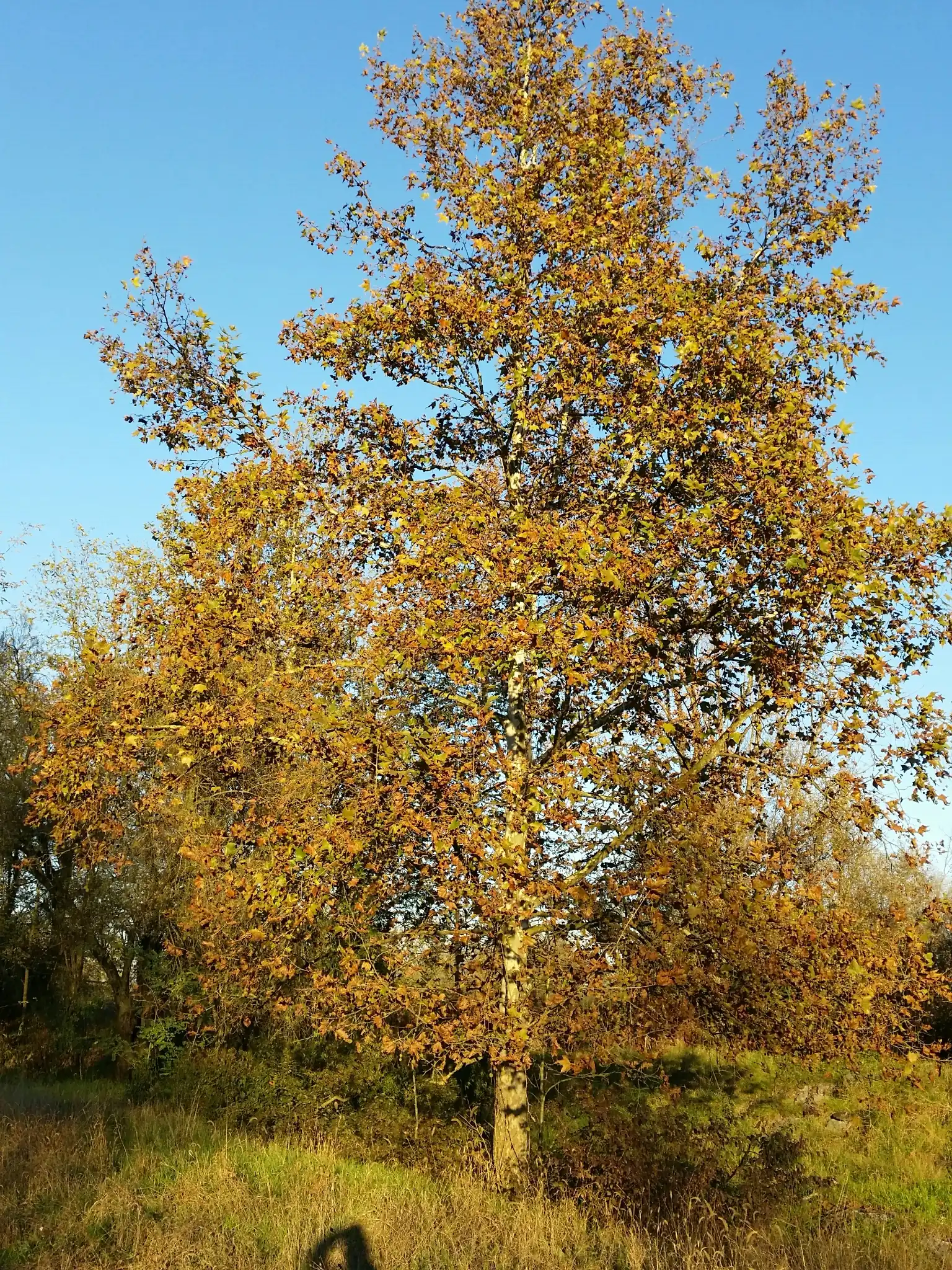
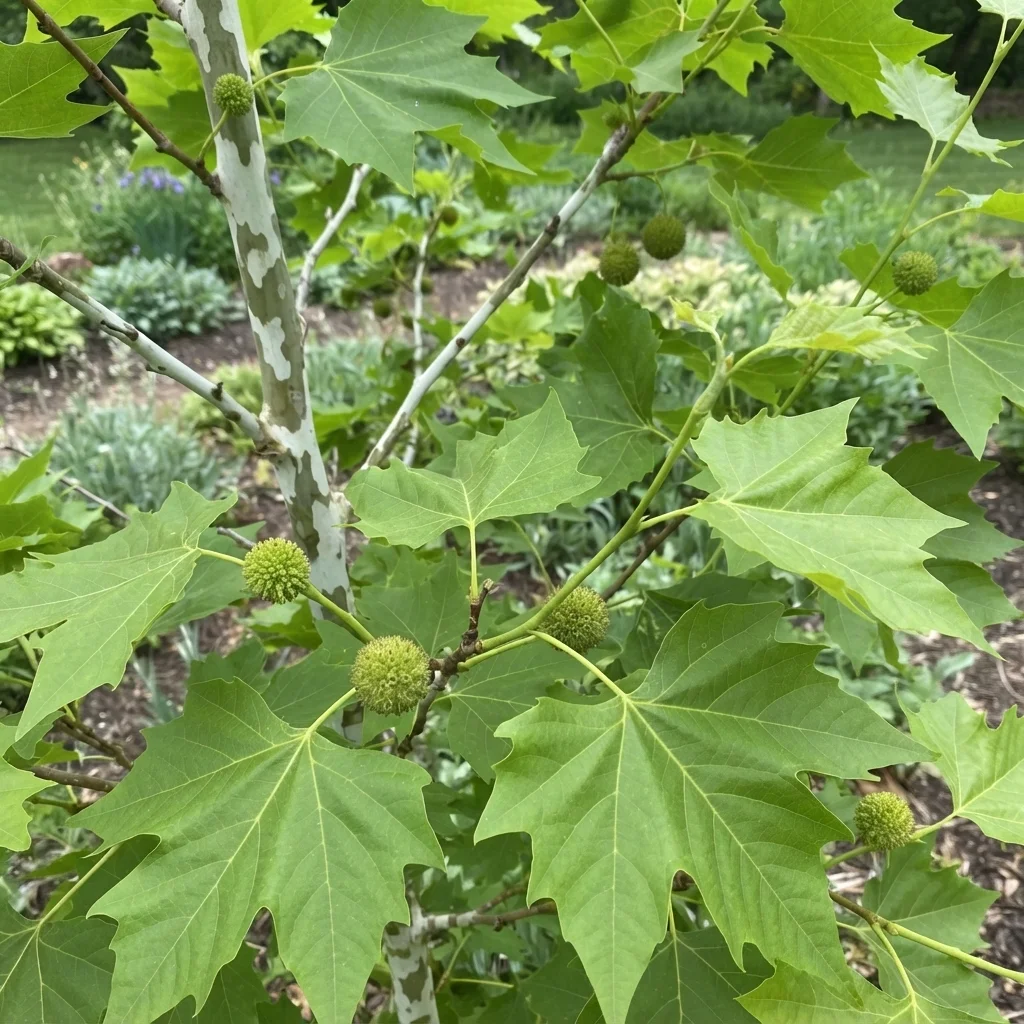
Platanus x acerifolia, the London plane, is a very large deciduous tree of hybrid origin, reaching seventy to a hundred feet with a spread of sixty to seventy-five. Its defining feature is the bark, which flakes away in irregular plates to reveal creamy olive inner wood, and it carries large maple-like leaves on zigzagging grey-green stems.
It is the classic city tree because it tolerates compacted soil, root restriction and polluted air better than almost anything else, and sheds its bark along with accumulated grime. Against that, it is enormous — seventy-five feet across at maturity — and the fine hairs shed from young leaves and seed balls are a recognised irritant to eyes and airways.
Uses & Benefits:
Essentials
At a Glance
Plant Type
Tree
Height
960"
Width
780"
Light
Full Sun
Zones
4, 5, 6, 7, 8
Water
Moderate
Humidity
Moderate
Lifespan
Perennial
Native To
Garden hybrid, probably raised in Europe
Toxicity
Non-toxic; leaf hairs can irritate airways
Planting
How to Grow
- Allow at least sixty feet of spread before planting.
- Plant in full sun in moist, well-drained soil.
- Keep it well away from buildings and drains.
- Water deeply through the first several summers.
- Expect substantial leaf and bark litter each year.
- Prune structurally when young, in winter.
Pro Tip
It is a park and street tree, not a garden one — at seventy-five feet across, most residential plots cannot house it without regret.
Keep It Thriving
Care Guide
Do
- Allow sixty feet or more of spread 📏
- Use it where pollution defeats other trees 🏙️
- Water deeply while establishing 💧
- Prune structurally when young ✂️
Don't
- Plant it in a small garden ❌
- Site it near drains or foundations ❌
- Underestimate the annual litter ❌
Seasonal Care Calendar
| Task | Jan | Feb | Mar | Apr | May | Jun | Jul | Aug | Sep | Oct | Nov | Dec |
|---|---|---|---|---|---|---|---|---|---|---|---|---|
| Clear | ||||||||||||
| Prune |
Watch Out For
Pests & Diseases
Common Pests
Common Diseases
In the Garden
Landscape Uses & Companions
Landscape Uses
Companion Plants
Multiply
Propagation Methods
Good to Know
Common Questions
London Plane questions
What zones can London Plane grow in?
London Plane is hardy in USDA Zones 4–8. Inside that range it survives winter in the ground; outside it, grow it as an annual or a container plant you protect.
Is London Plane deer resistant?
Yes — London Plane is rated deer-resistant. Deer typically pass it over, though extreme hunger can override any plant's defenses.
When does London Plane bloom?
London Plane typically blooms in mid spring through mid-spring. Exact timing shifts a week or two with your zone — Sow's bloom calendar maps it to your garden.
Does London Plane need full sun?
London Plane does best in full sun (6+ hours).
Is London Plane drought tolerant?
Yes — once established (usually after the first full season), London Plane handles dry spells with minimal watering. Water deeply its first year to build the root system that makes that possible.
More Platanus to compare
Keep exploring
Explore the genus
Hardy in your zone?
Grow London Plane with confidence
See it in a design of your actual yard, get zone-matched care reminders, and track it season by season in your garden journal.