The Story
Plant Bio
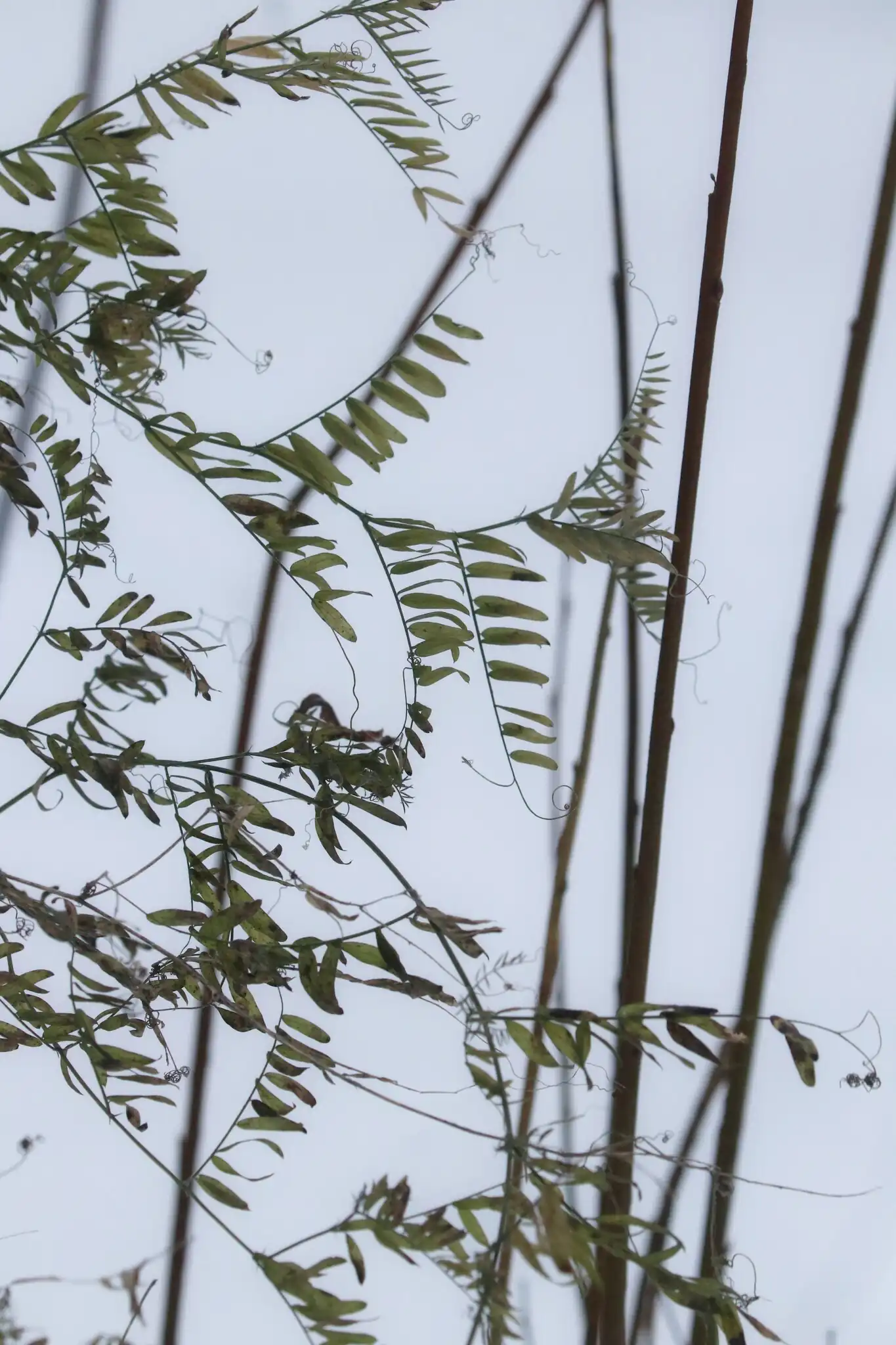
Vicia cracca is a climbing herbaceous perennial legume native to Europe and Asia, characterized by weak, angled stems that scramble over adjacent vegetation using branched leaf-tip tendrils. The pinnately compound foliage consists of narrow, linear leaflets, providing a fine-textured backdrop for the dense, one-sided racemes of purple-blue flowers.
This species is distinguished by its highly vigorous scrambling habit and its ability to establish a deep taproot extending up to one meter into the soil. The drooping, pea-like blossoms appear in dense clusters of up to seventy flowers, blooming continuously from late spring through late summer.
Uses & Benefits:
Essentials
At a Glance
Plant Type
Vine
Height
80"
Width
60"
Light
Full Sun, Partial Sun
Zones
4, 5, 6, 7, 8
Water
Moderate
Humidity
Moderate
Lifespan
Perennial
Native To
Europe and Asia
Toxicity
Generally non-toxic to humans; can cause issues in livestock if ingested in excess
Bloom period
Late spring – Late summer
In flower about 4 months of the year
Planting
How to Grow
- Select a planting site in full sun to partial shade with well-drained sandy, loamy, or clay soil.
- Ensure the soil pH is neutral, mildly acidic, or slightly alkaline, avoiding highly acidic conditions.
- Provide a trellis, fence, or sturdy neighboring plants for the branched tendrils to climb.
- Water moderately during the establishment phase until the deep taproot system is fully developed.
Pro Tip
Grow this species with physical support or allow it to sprawl only where its aggressive, smothering habit will not overwhelm neighboring plants; cut the entire vine back to the ground in autumn to manage its spread.
Keep It Thriving
Care Guide
Do
- Monitor the climbing stems regularly to prevent them from smothering nearby desirable vegetation.
- Cut the foliage back hard at the end of the growing season to control its footprint.
- Ensure excellent soil drainage to prevent fungal root issues.
Don't
- Do not plant in waterlogged or poorly drained soils where the root system is prone to rot.
- Do not allow the plant to self-seed or spread unchecked near native prairie restorations or natural areas.
Seasonal Care Calendar
| Task | Jan | Feb | Mar | Apr | May | Jun | Jul | Aug | Sep | Oct | Nov | Dec |
|---|---|---|---|---|---|---|---|---|---|---|---|---|
| Pest Check | ||||||||||||
| Propagate | ||||||||||||
| Prune | ||||||||||||
| Spring Cleanup |
Watch Out For
Pests & Diseases
Common Pests
Common Diseases
In the Garden
Landscape Uses & Companions
Landscape Uses
Companion Plants
Multiply
Propagation Methods
Good to Know
Common Questions
Cow Vetch questions
What zones can Cow Vetch grow in?
Cow Vetch is hardy in USDA Zones 4–8. Inside that range it survives winter in the ground; outside it, grow it as an annual or a container plant you protect.
Is Cow Vetch deer resistant?
Not reliably. Deer may browse Cow Vetch, especially tender spring growth — plan on repellents or fencing where pressure is high.
When does Cow Vetch bloom?
Cow Vetch typically blooms in late spring through late summer. Exact timing shifts a week or two with your zone — Sow's bloom calendar maps it to your garden.
Does Cow Vetch need full sun?
Cow Vetch does best in full sun to part shade. In hot climates, afternoon shade keeps blooms fresher longer.
Is Cow Vetch drought tolerant?
Yes — once established (usually after the first full season), Cow Vetch handles dry spells with minimal watering. Water deeply its first year to build the root system that makes that possible.
More Vicia to compare
Keep exploring
Explore the genus
Hardy in your zone?
Grow Cow Vetch with confidence
See it in a design of your actual yard, get zone-matched care reminders, and track it season by season in your garden journal.