The Story
Plant Bio
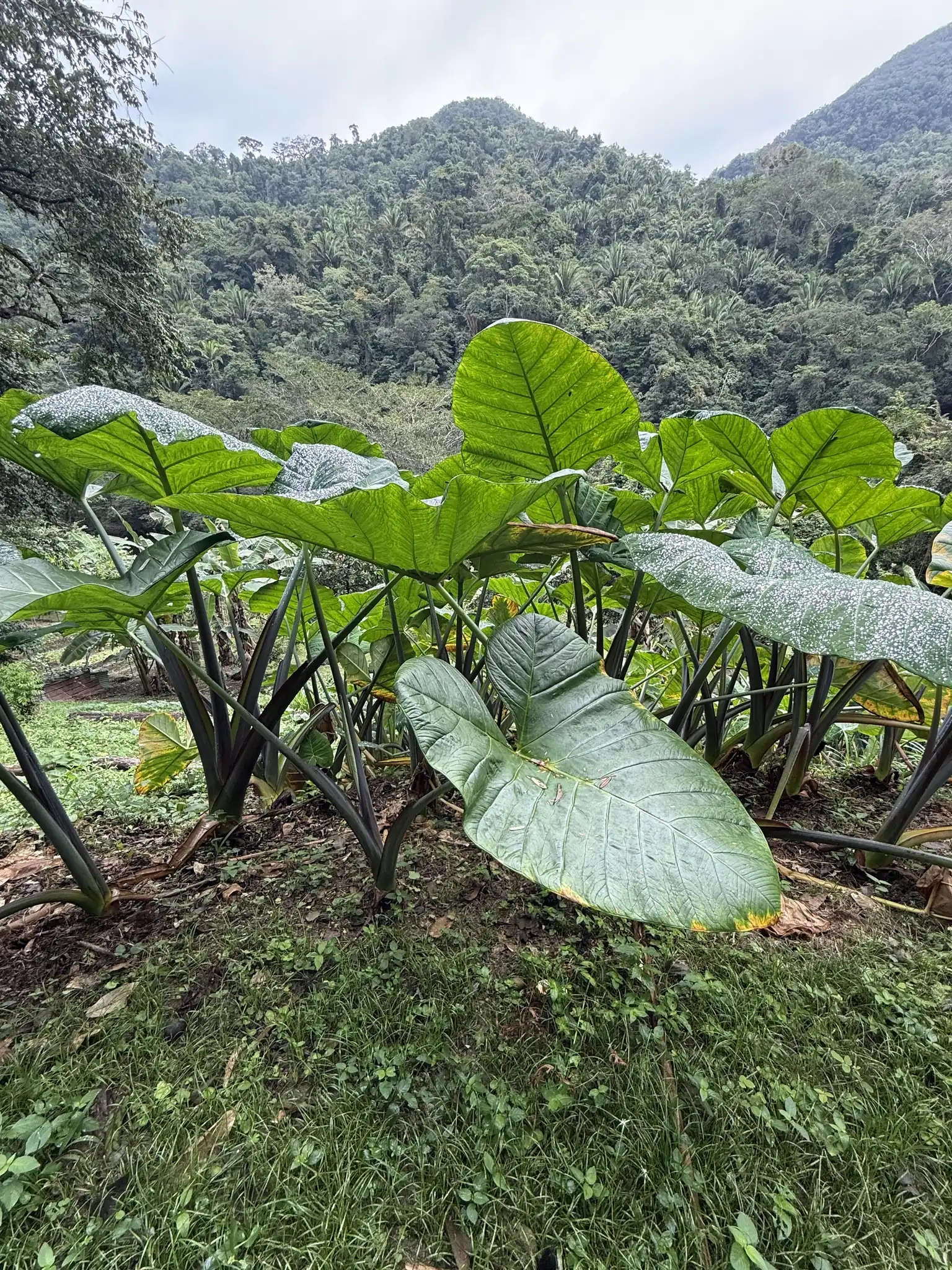
Xanthosoma sagittifolium is a robust, clumping herbaceous perennial distinguished by its massive, glossy, arrow-shaped leaves that can reach up to four feet in length. Emerging from a large underground corm, the upright, arching stems form a dense architectural clump that thrives in warm, humid conditions.
Unlike Colocasia, the leaf petioles of this species attach directly at the margin notch rather than being peltate, and the plant requires well-drained soil rather than waterlogged bogs. New foliage emerges tightly rolled with distinct purple or bronze tints on the petioles and veins before maturing to deep green.
Uses & Benefits:
Essentials
At a Glance
Plant Type
Tropical
Height
108"
Width
98"
Light
Full Sun, Partial Sun
Zones
8, 9, 10
Water
High
Humidity
High (60%–85%)
Lifespan
Perennial
Native To
Tropical America
Toxicity
Toxic if ingested raw; contains calcium oxalate crystals
Bloom period
Summer
In flower about 3 months of the year
Planting
How to Grow
- Plant corms in deep, fertile, organic-rich loam with an acidic to neutral pH between 5.5 and 6.5.
- Position in full sun to partial shade, ensuring protection from harsh afternoon direct sun to prevent leaf scorch.
- Maintain consistently moist soil through regular watering, avoiding stagnant, waterlogged conditions.
- Apply a balanced slow-release or organic liquid fertilizer monthly throughout the active spring and summer growing season.
Pro Tip
Do not submerge the root system permanently in water features or bog gardens, as this species requires significantly better soil drainage than true taro to prevent corm rot.
Keep It Thriving
Care Guide
Do
- Remove yellowed or damaged lower leaves cleanly at the base as they age.
- Dig up and store underground corms indoors before the first hard freeze in USDA Zones 7 and colder.
- Maintain high humidity levels between 60% and 85% for optimal foliage development.
Don't
- Do not plant in permanently waterlogged bogs or standing water.
- Do not cut back into old, leafless woody stock unnecessarily.
- Do not handle or ingest any part of the plant raw, as calcium oxalate crystals cause severe irritation.
Seasonal Care Calendar
| Task | Jan | Feb | Mar | Apr | May | Jun | Jul | Aug | Sep | Oct | Nov | Dec |
|---|---|---|---|---|---|---|---|---|---|---|---|---|
| Fertilize | ||||||||||||
| Lift Store | ||||||||||||
| Pest Check | ||||||||||||
| Propagate | ||||||||||||
| Prune |
Watch Out For
Pests & Diseases
Common Pests
Common Diseases
In the Garden
Landscape Uses & Companions
Landscape Uses
Companion Plants
Multiply
Propagation Methods
Good to Know
Common Questions
Arrowleaf Elephant's Ear questions
What zones can Arrowleaf Elephant's Ear grow in?
Arrowleaf Elephant's Ear is hardy in USDA Zones 8–10. Inside that range it survives winter in the ground; outside it, grow it as an annual or a container plant you protect.
Is Arrowleaf Elephant's Ear deer resistant?
Not reliably. Deer may browse Arrowleaf Elephant's Ear, especially tender spring growth — plan on repellents or fencing where pressure is high.
When does Arrowleaf Elephant's Ear bloom?
Arrowleaf Elephant's Ear typically blooms in summer through summer. Exact timing shifts a week or two with your zone — Sow's bloom calendar maps it to your garden.
Does Arrowleaf Elephant's Ear need full sun?
Arrowleaf Elephant's Ear does best in full sun to part shade. In hot climates, afternoon shade keeps blooms fresher longer.
More Xanthosoma to compare
Keep exploring
Explore the genus
Hardy in your zone?
Grow Arrowleaf Elephant's Ear with confidence
See it in a design of your actual yard, get zone-matched care reminders, and track it season by season in your garden journal.