Also known as Taro · 9 saves
Xanthosoma
Xanthosoma, the genus most gardeners know as taro. We track 3 varieties; the ones most used by real gardeners.
The 3 most-saved Xanthosoma varieties
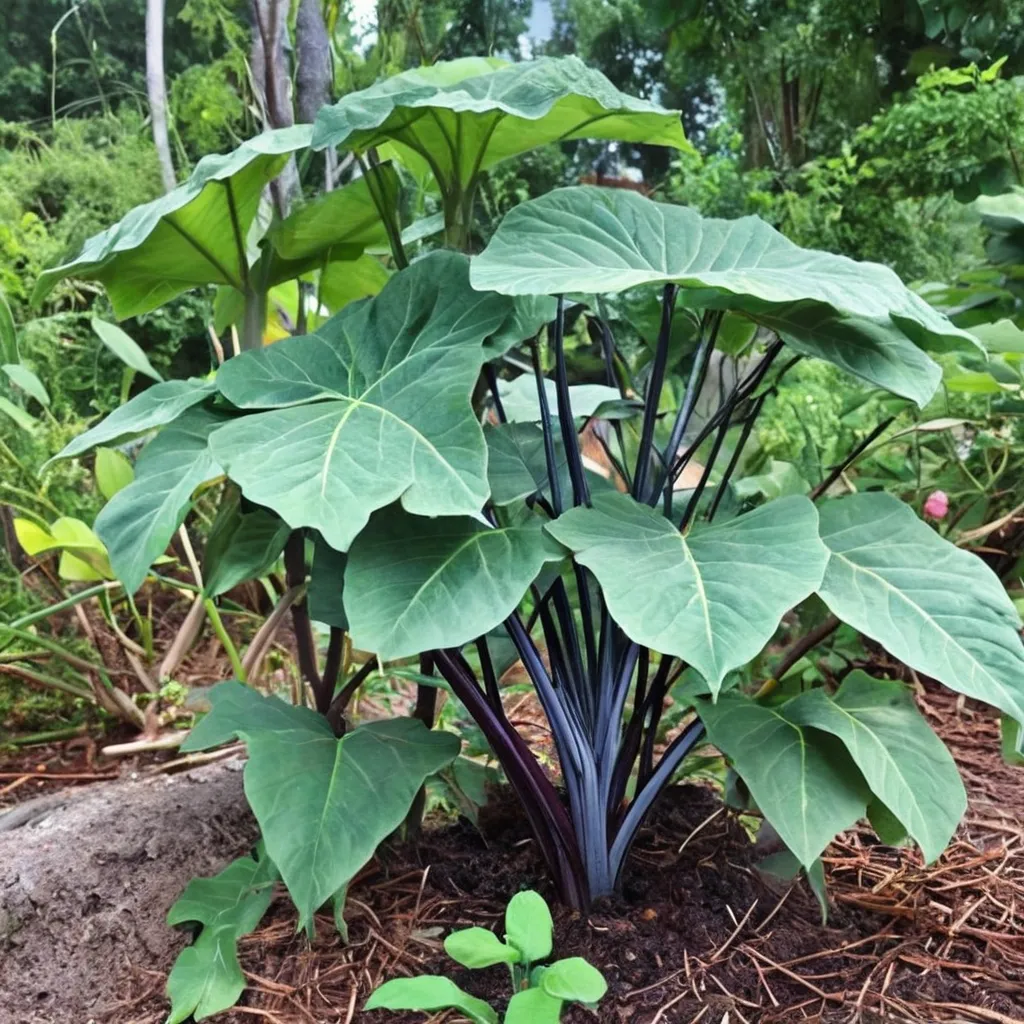
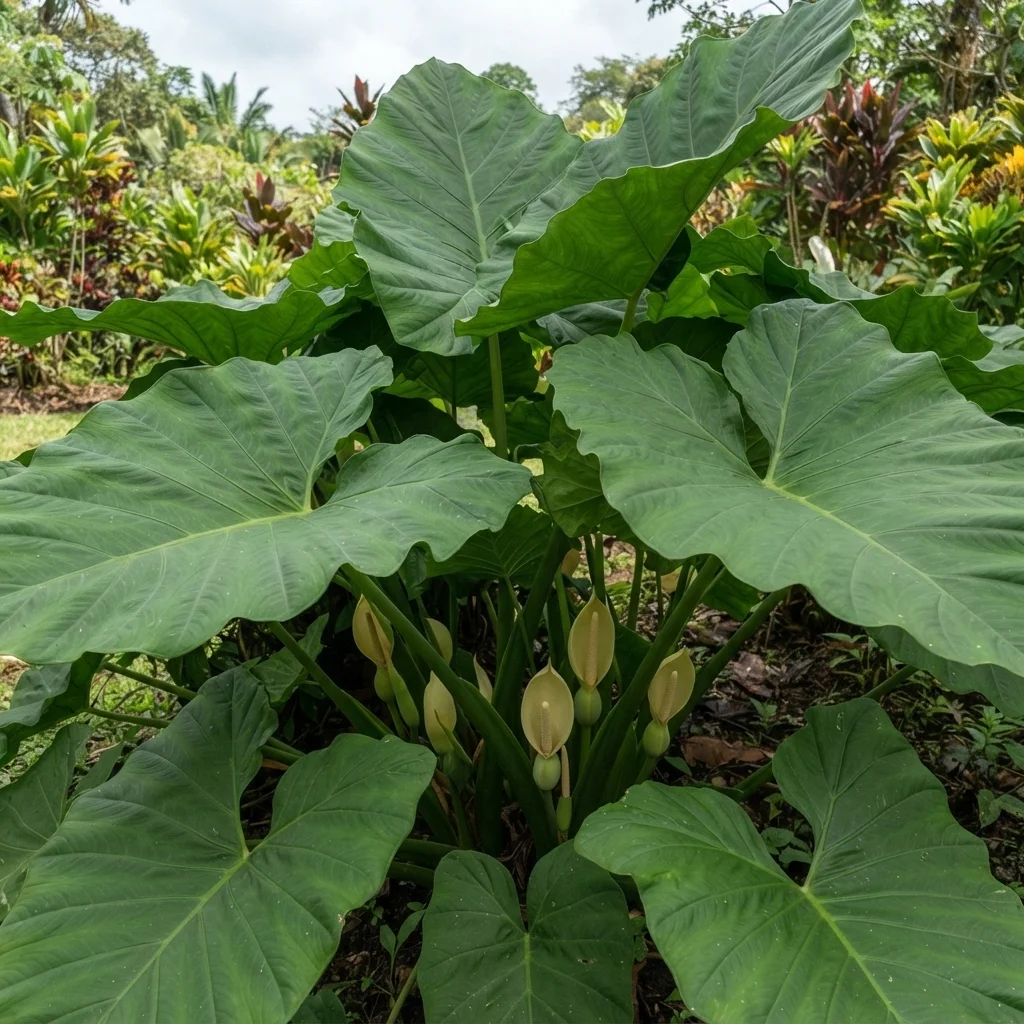
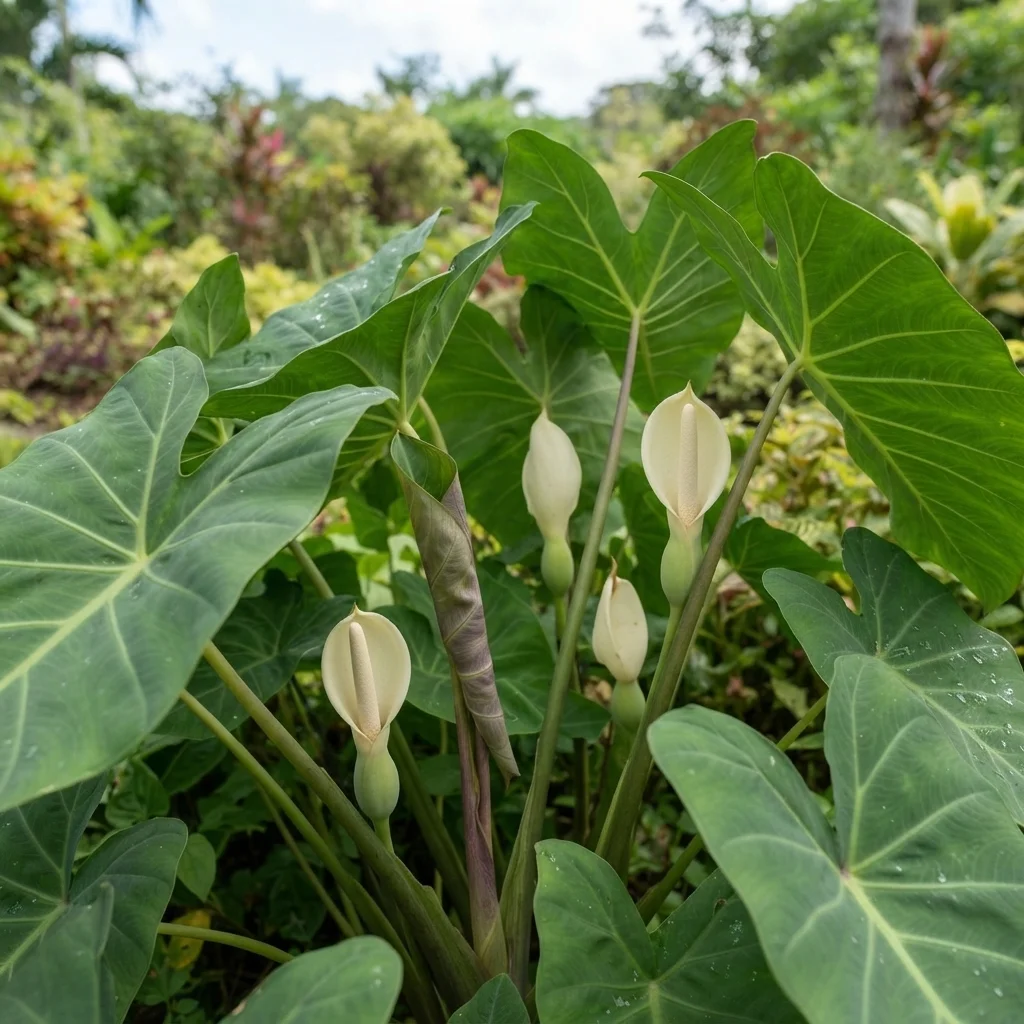
2 species of Xanthosoma
Each one is a parent of the varieties above.
Track your Xanthosoma in Sow
Save the Xanthosoma you grow and get care reminders timed to your zone.
How to grow Xanthosoma
Whats common across all Xanthosoma varieties in our catalog — drawn from the care records of the 3 most-grown of them.
The Xanthosoma year
- FertilizeApril–August100% of varieties
Apply a balanced organic liquid fertilizer monthly during active growth.
- PruneMay–September67% of varieties
Cleanly remove yellowing or damaged lower leaves at the base.
- PropagateApril67% of varieties
Divide cormels or offsets in spring to produce new plants.
- Lift & StoreOctober and November67% of varieties
Dig up corms in Zones 7 and colder before hard freezes and store indoors.
- Check for PestsJune–August67% of varieties
Inspect leaf undersides for spider mites and aphids during hot, dry periods.


Do
- Remove yellowed or damaged lower leaves cleanly at the base as they age.
- Dig up and store underground corms indoors before the first hard freeze in USDA Zones 7 and colder.
- Maintain high humidity levels between 60% and 85% for optimal foliage development.
- Water regularly to keep the soil evenly moist during active growth.
- Apply a balanced, water-soluble liquid fertilizer monthly in spring and summer.
Avoid
- Do not plant in permanently waterlogged bogs or standing water.
- Do not cut back into old, leafless woody stock unnecessarily.
- Do not handle or ingest any part of the plant raw, as calcium oxalate crystals cause severe irritation.
- Do not allow the soil to dry out completely, which causes immediate leaf drop.
What goes wrong with Xanthosoma
| Problem | What you'll see | What to do |
|---|---|---|
| Spider mites | Fine stippling and webbing on leaves | Increase humidity and apply insecticidal soap or neem oil. |
| Aphids | Curled new growth and sticky honeydew | Knock off with a strong water jet or apply insecticidal soap. |
| Deer and rabbits | Browsing damage on foliage | Install physical fencing or apply repellents. |
| Mealybugs | White, cottony masses in the leaf joints and crevices. | Dab pests with an alcohol-soaked cotton swab or apply a targeted horticultural oil. |
| Root rot | Yellowing leaves, stunting, and mushy roots | Improve soil drainage and avoid overwatering. |
| Powdery mildew | White powdery patches on leaves | Apply fungicide and improve air circulation around the foliage. |
| Root and stem rot | Wilting leaves, soft stems, and black, mushy roots from Pythium or Phytophthora. | Improve soil drainage immediately, reduce watering, and discard severely infected plants. |
Making more Xanthosoma
Corm Division
- Lift the plant in spring to expose the underground corm and tuberous offshoots.
- Carefully detach the small cormels or offsets from the main parent corm.
- Plant the divided offsets into individual pots filled with fertile, well-draining potting mix.
- Keep the soil consistently moist and warm until new growth emerges.
Division of offsets
- Locate young offsets or pups growing at the base of the mature stem in spring.
- Carefully excavate the soil around the pup to expose its connection to the parent plant.
- Sever the offset using a sharp, sterile knife, ensuring it retains some roots.
- Pot the division in a rich, free-draining organic mix and keep it warm and humid until established.
Xanthosoma questions
How many types of Xanthosoma are there?
The Sow catalog tracks 3 distinct Xanthosoma varieties. The most popular — ranked by 9 real gardeners — are shown first above.
What zones does Xanthosoma grow in?
Across its varieties, Xanthosoma covers USDA Zones 8–10. Individual varieties differ — each plant page lists its exact range, and Sow filters the catalog to your zone automatically.
When does Xanthosoma bloom?
Most Xanthosoma varieties bloom in late summer, summer. Staggering early, mid, and late varieties extends the genus's season in one bed.
Which Xanthosoma should I choose?
Start from the most-saved varieties above — popularity across thousands of gardens is a strong signal of reliability — then filter by your zone and sun. In the Sow app you can preview any of them in a photo of your actual yard before you buy.