The Story
Plant Bio
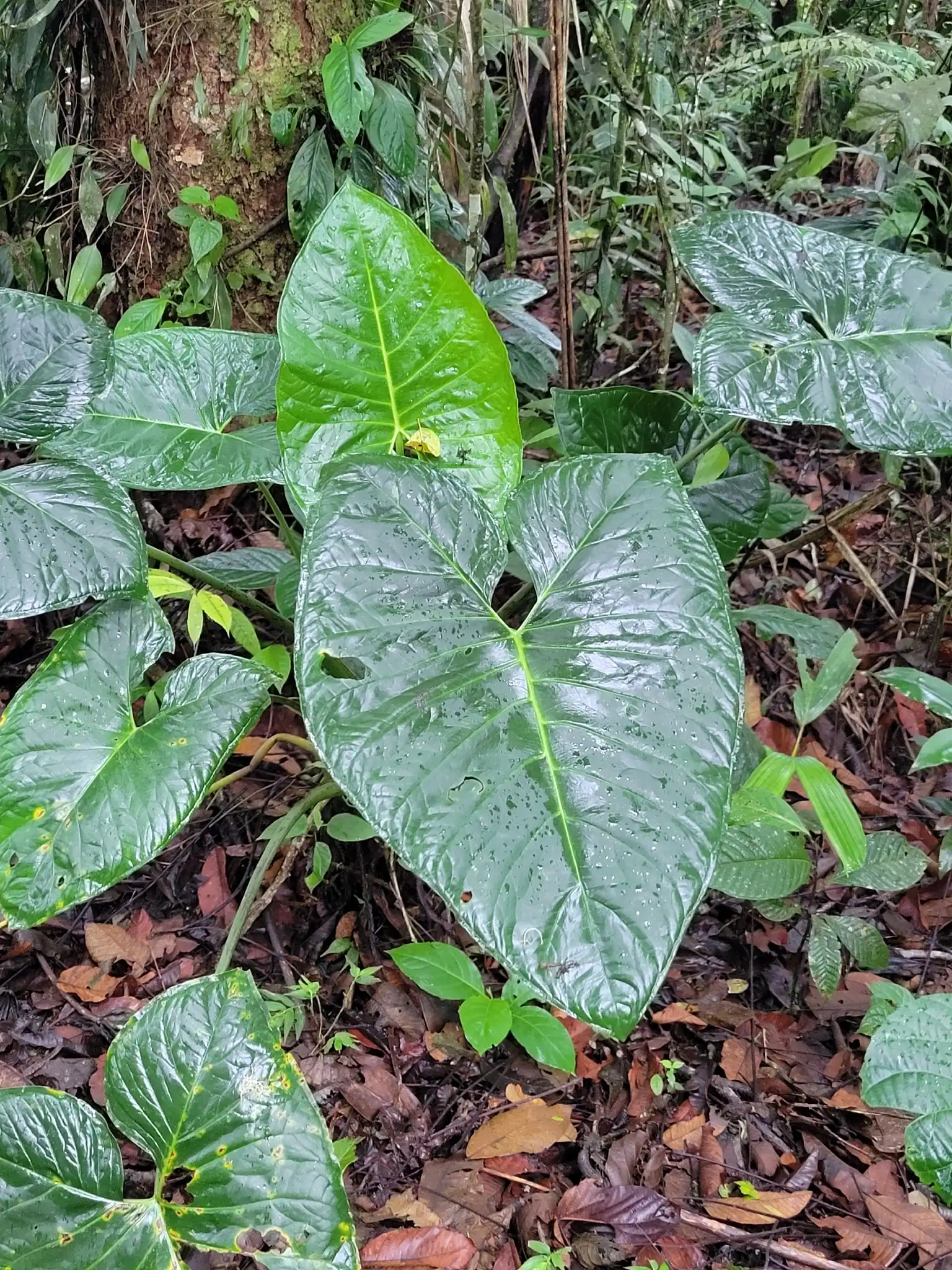
Xanthosoma undipes, the tall elephant's ear, is a robust, upright evergreen perennial that develops a thick, trunk-like stem over time in warm climates. The massive, glossy green leaves feature prominent veins and deep basal lobes resembling Mickey Mouse ears, held aloft on stout stalks.
This species is distinguished by its impressive mature stature and the unique ear-like shape of its foliage. The pale yellowish-cream to greenish spathes are tucked beneath the massive leaves on short stalks during summer and fall.
Uses & Benefits:
Essentials
At a Glance
Plant Type
Tropical
Height
98"
Width
71"
Light
Partial Sun, Shade
Zones
9, 10
Water
High
Humidity
High
Lifespan
Perennial
Native To
Central America, tropical South America
Toxicity
Toxic if ingested; skin irritant
Bloom period
Summer – Fall
In flower about 6 months of the year
Planting
How to Grow
- Select a planting site with bright indirect light or partial shade, protected from harsh midday sun.
- Amend the soil with rich organic matter to create a moisture-retentive, slightly acidic to neutral loam.
- Plant the root ball at the same depth as its nursery container and water thoroughly to settle the soil.
- Maintain consistent moisture throughout the growing season, ensuring the soil drains freely.
Pro Tip
Unlike Colocasia, Xanthosoma leaves attach directly at the notch rather than inside the leaf margin; keep the soil consistently moist but free-draining, as dry soil triggers rapid leaf drop while stagnant water causes fatal root rot.
Keep It Thriving
Care Guide
Do
- Water regularly to keep the soil evenly moist during active growth.
- Apply a balanced, water-soluble liquid fertilizer monthly in spring and summer.
- Provide high humidity or shelter the plant from dry, sweeping winds.
Don't
- Do not allow the soil to dry out completely, which causes immediate leaf drop.
- Do not let the plant sit in waterlogged, stagnant soil.
- Do not cut into the clean, healthy wood of the main stem when removing old leaves.
Seasonal Care Calendar
| Task | Jan | Feb | Mar | Apr | May | Jun | Jul | Aug | Sep | Oct | Nov | Dec |
|---|---|---|---|---|---|---|---|---|---|---|---|---|
| Fertilize | ||||||||||||
| Pest Check | ||||||||||||
| Propagate | ||||||||||||
| Prune | ||||||||||||
| Winter Prep |
Watch Out For
Pests & Diseases
Common Pests
Common Diseases
In the Garden
Landscape Uses & Companions
Landscape Uses
Companion Plants
Multiply
Propagation Methods
Good to Know
Common Questions
Tall Elephant's Ear questions
What zones can Tall Elephant's Ear grow in?
Tall Elephant's Ear is hardy in USDA Zones 9–10. Inside that range it survives winter in the ground; outside it, grow it as an annual or a container plant you protect.
When does Tall Elephant's Ear bloom?
Tall Elephant's Ear typically blooms in summer through fall. Exact timing shifts a week or two with your zone — Sow's bloom calendar maps it to your garden.
Does Tall Elephant's Ear need full sun?
Tall Elephant's Ear does best in part shade.
More Xanthosoma to compare
Keep exploring
Explore the genus
Hardy in your zone?
Grow Tall Elephant's Ear with confidence
See it in a design of your actual yard, get zone-matched care reminders, and track it season by season in your garden journal.