The Story
Plant Bio
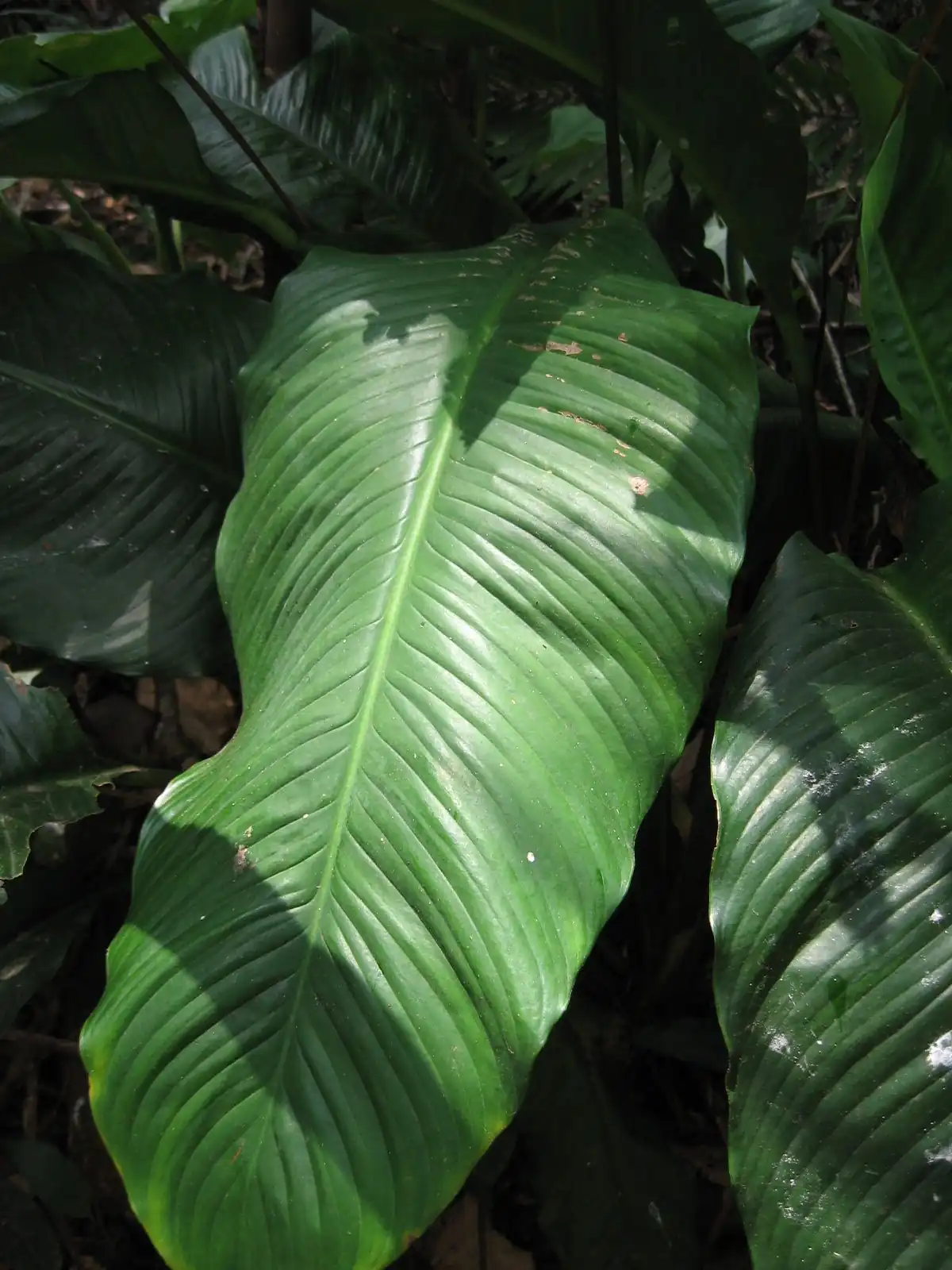
Spathiphyllum blandum, commonly known as the peace lily, is an evergreen tropical perennial native to the rainforest understories of Central and South America. It forms dense, upright clumps of glossy, deep green leaves that emerge from short underground rhizomes.
This species is distinguished by its lanceolate to ovate foliage with prominent parallel veins and long, slender petioles. The inflorescence features a greenish-white modified spathe that surrounds a creamy-yellow spadix and gradually ages to a pale green color.
Uses & Benefits:
Essentials
At a Glance
Plant Type
Tropical
Height
71"
Width
59"
Light
Partial Sun, Shade
Water
Medium
Humidity
High
Lifespan
Perennial
Native To
Central and South America
Toxicity
Toxic to humans, cats, and dogs
Bloom period
Spring – Autumn
In flower about 9 months of the year
Planting
How to Grow
- Select a rich, highly organic, peat- or bark-based potting mix with an acidic to neutral pH.
- Position the container in a location with bright, filtered indoor light, ensuring zero exposure to direct sunlight.
- Water thoroughly when the top inch of soil feels dry, allowing excess water to drain completely from the pot.
- Maintain high humidity around the foliage by misting or placing the pot on a tray filled with wet pebbles.
Pro Tip
To prevent necrotic brown leaf tips, avoid over-fertilizing and irrigate only with aged, chlorine-free water when the top layer of the potting medium begins to dry.
Keep It Thriving
Care Guide
Do
- Wipe the broad leaves periodically with a damp cloth to remove dust and improve photosynthesis.
- Leach excess salts from the potting medium by flushing it thoroughly with clean water every few months.
- Keep the plant in a warm environment above 40 degrees Fahrenheit to prevent cold damage.
Don't
- Do not allow the potting medium to become waterlogged, as soggy soil rapidly induces fatal root rot.
- Do not prune into old, leafless wood; only remove yellowed or dead leaves at their base.
- Do not use full-strength chemical fertilizers, which easily burn the sensitive root system.
Seasonal Care Calendar
| Task | Jan | Feb | Mar | Apr | May | Jun | Jul | Aug | Sep | Oct | Nov | Dec |
|---|---|---|---|---|---|---|---|---|---|---|---|---|
| Divide | ||||||||||||
| Fertilize | ||||||||||||
| Pest Check | ||||||||||||
| Prune |
Watch Out For
Pests & Diseases
Common Pests
Common Diseases
In the Garden
Landscape Uses & Companions
Landscape Uses
Companion Plants
Multiply
Propagation Methods
Good to Know
Common Questions
Peace Lily questions
Is Peace Lily deer resistant?
Not reliably. Deer may browse Peace Lily, especially tender spring growth — plan on repellents or fencing where pressure is high.
When does Peace Lily bloom?
Peace Lily typically blooms in spring through autumn. Exact timing shifts a week or two with your zone — Sow's bloom calendar maps it to your garden.
Does Peace Lily need full sun?
Peace Lily does best in part shade.
Is Peace Lily drought tolerant?
Yes — once established (usually after the first full season), Peace Lily handles dry spells with minimal watering. Water deeply its first year to build the root system that makes that possible.
More Spathiphyllum to compare
Keep exploring
Explore the genus
Grow Peace Lily with confidence
See it in a design of your actual yard, get zone-matched care reminders, and track it season by season in your garden journal.