
Garden hybrid
This is a garden hybrid, bred from more than one wild species, so it has no single species page of its own.
The Story
Plant Bio
Spathiphyllum is a genus of evergreen herbaceous perennials native to the tropical rainforest understories of Central and South America. These plants are characterized by their clumping growth habit, glossy foliage, and distinctive white spathes that enclose a central spadix.
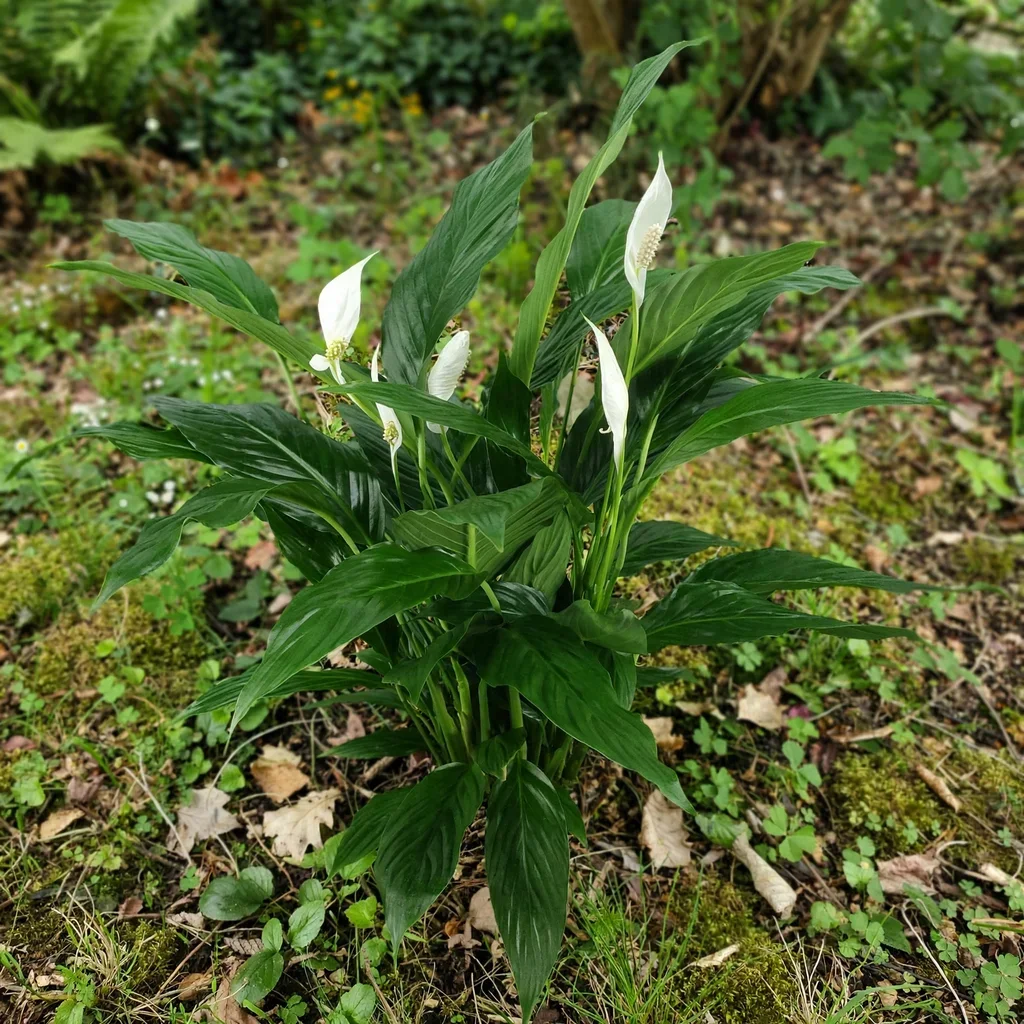
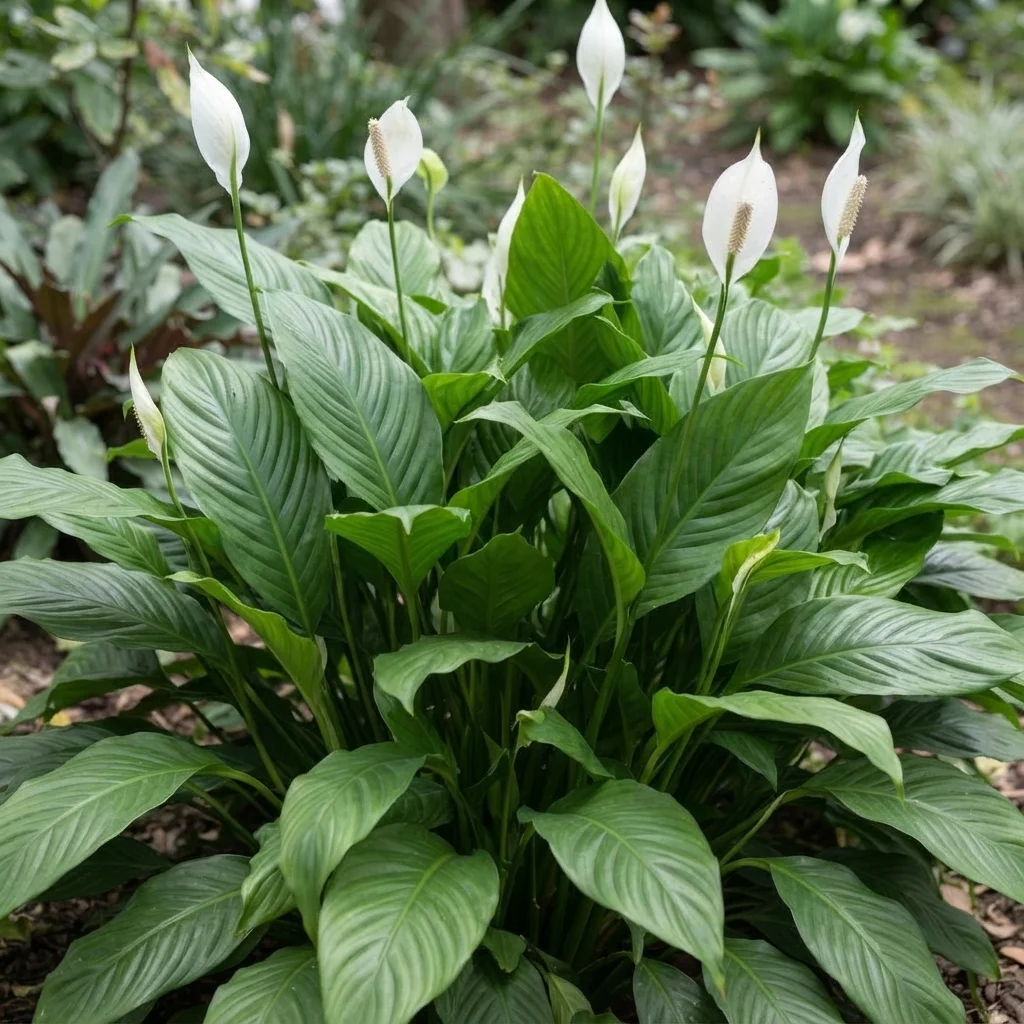
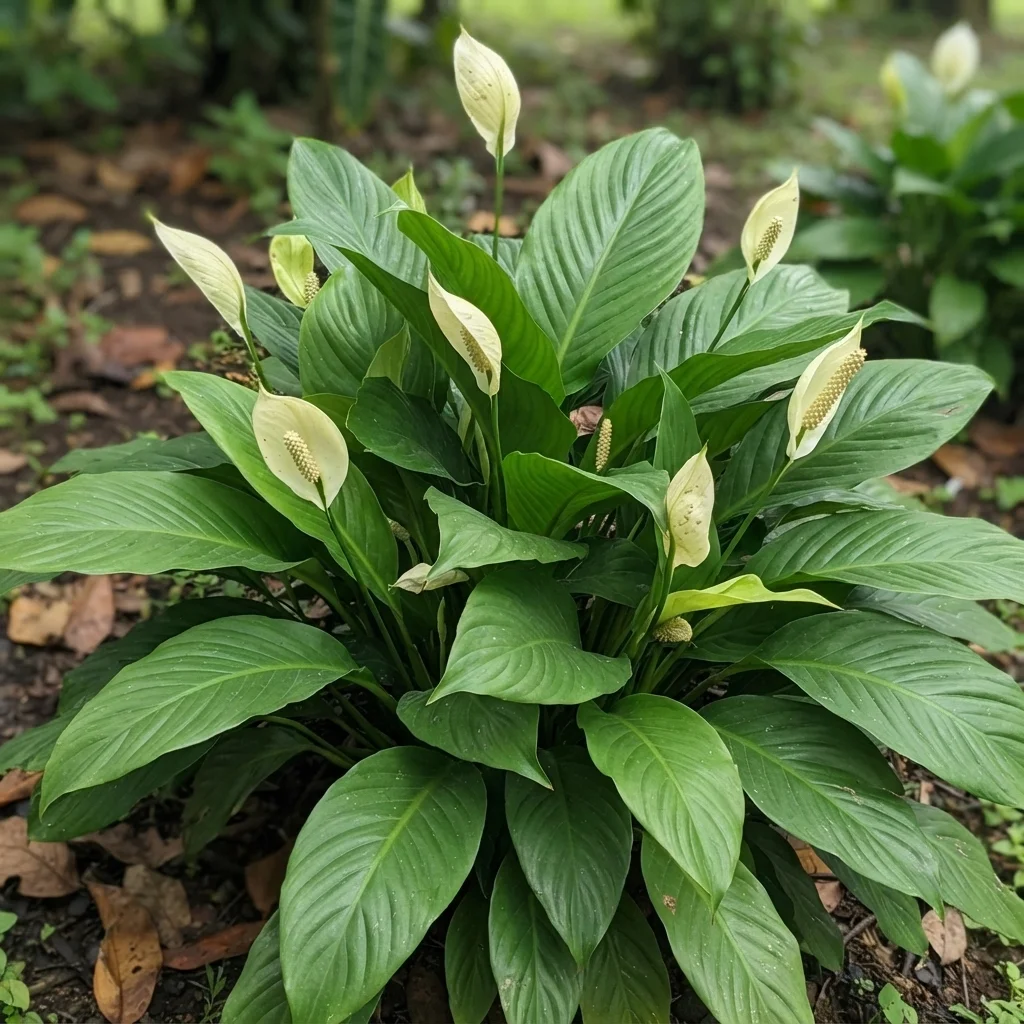
'Sensation' is a massive cultivar distinguished by its deeply ribbed, dark green leaves that can reach over 19 inches in length. This selection forms a bold, structural rosette that eventually develops a strong, trunk-like base as older leaves shed.
Uses & Benefits:
Bred from more than one wild species, so it has no species page of its own.
Essentials
At a Glance
Plant Type
Tropical
Height
72"
Width
48"
Light
Partial Sun, Shade
Zones
10
Water
Medium
Humidity
High
Lifespan
Long-lived
Native To
South America and Central America
Toxicity
Toxic to humans, cats, and dogs
Bloom period
Spring – Summer
In flower about 6 months of the year
Planting
How to Grow
- Select a heavy, stable container with excellent drainage holes and fill the base with a coarse, organic-rich potting mix.
- Position the plant in a location that receives bright indirect light, avoiding any direct sunlight which scorches the foliage.
- Water thoroughly when the top inch of soil feels dry or when the leaves show the first signs of slight drooping.
- Maintain high humidity by misting the foliage regularly or placing the container on a tray filled with wet pebbles.
Pro Tip
Use a heavy, coarse bark-and-peat potting mixture to anchor the massive rosette and prevent the tall, top-heavy plant from tipping its container.
Keep It Thriving
Care Guide
Do
- Water immediately when the broad leaves begin to droop slightly, as this indicates soil dryness.
- Wipe the massive leaves regularly with a damp cloth to remove dust and prevent spider mite infestations.
- Empty any standing water from the saucer tray immediately after watering to protect the root system.
- Apply a balanced liquid fertilizer diluted to half-strength monthly during spring and summer.
Don't
- Do not expose the plant to direct sunlight, which causes immediate foliage scorch.
- Do not overwater or allow the potting medium to remain waterlogged, as this triggers fatal root rot.
- Do not fertilize during the fall and winter months when active growth slows.
- Do not cut into the old, leafless woody tissue at the base when removing spent leaves.
Seasonal Care Calendar
| Task | Jan | Feb | Mar | Apr | May | Jun | Jul | Aug | Sep | Oct | Nov | Dec |
|---|---|---|---|---|---|---|---|---|---|---|---|---|
| Divide | ||||||||||||
| Fertilize | ||||||||||||
| Pest Check | ||||||||||||
| Prune |
Watch Out For
Pests & Diseases
Common Pests
Common Diseases
In the Garden
Landscape Uses & Companions
Landscape Uses
Companion Plants
Multiply
Propagation Methods
Good to Know
Common Questions
Giant Peace Lily questions
What zones can Giant Peace Lily grow in?
Giant Peace Lily is hardy in USDA Zone 10. Inside that range it survives winter in the ground; outside it, grow it as an annual or a container plant you protect.
When does Giant Peace Lily bloom?
Giant Peace Lily typically blooms in spring through summer. Exact timing shifts a week or two with your zone — Sow's bloom calendar maps it to your garden.
Does Giant Peace Lily need full sun?
Giant Peace Lily does best in part shade.
More Spathiphyllum to compare
Keep exploring
Explore the genus
Hardy in your zone?
Grow Giant Peace Lily with confidence
See it in a design of your actual yard, get zone-matched care reminders, and track it season by season in your garden journal.