The Story
Plant Bio
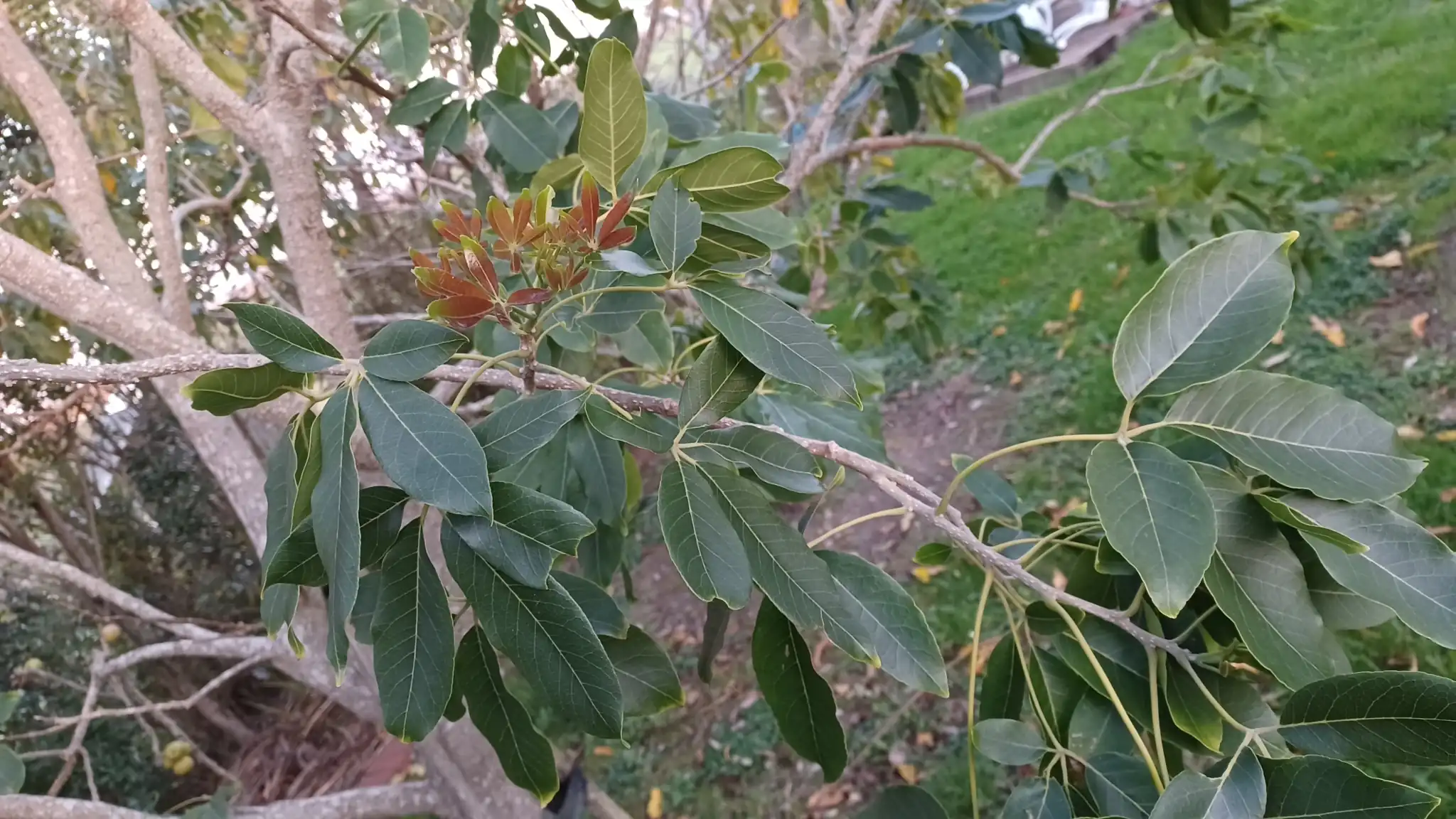
Casimiroa edulis is a large, broad-crowned evergreen tree native to the highlands of Mexico and Central America, valued for its sweet, custard-like fruit. The palmately compound leaves are glossy green with distinct translucent glands, while the small, greenish-yellow flowers open in terminal panicles from winter into spring.
This species develops a deep taproot system that requires significant soil depth but provides excellent stability and moderate drought tolerance once established. The fruit must be harvested mature-green when the skin pales slightly, as picking them entirely green results in an unpalatably bitter and astringent flesh.
Uses & Benefits:
Essentials
At a Glance
Plant Type
Tree
Height
630"
Width
630"
Light
Full Sun
Zones
9, 10
Water
Moderate
Humidity
Moderate
Lifespan
Long-lived
Native To
Mexico and Central America
Toxicity
Seeds and unripe skin are toxic
Bloom period
Winter – Spring
In flower about 6 months of the year
Planting
How to Grow
- Select a planting site in full sun with deep, well-drained soil to accommodate the extensive taproot system.
- Water young trees regularly to establish the root system, protecting them from any frost below 22°F.
- Apply a balanced fertilizer moderately during the active spring and summer growing seasons, avoiding over-fertilization of young plants.
- Harvest fruit individually by hand when they turn pale green, leaving a short segment of stem attached to prevent tearing the soft skin.
Pro Tip
Harvest the fruit when the skin transitions from dark green to a pale yellow-green and shows a slight softening at the stem end, then ripen them indoors to avoid the intense bitterness of early-picked crops.
Keep It Thriving
Care Guide
Do
- Plant in deep, well-drained soil profiles to allow the taproot to develop fully.
- Ripen harvested mature-green fruit indoors at room temperature.
- Protect young trees from freezing temperatures using frost cloth or temporary shelters.
Don't
- Do not prune heavily into old, leafless wood, as recovery and new growth will be extremely slow.
- Do not consume raw seeds or the bitter skin close to the flesh, as they contain toxic alkaloids.
- Do not overwater established trees in heavy clay soils to prevent Phytophthora root rot.
Seasonal Care Calendar
| Task | Jan | Feb | Mar | Apr | May | Jun | Jul | Aug | Sep | Oct | Nov | Dec |
|---|---|---|---|---|---|---|---|---|---|---|---|---|
| Fertilize | ||||||||||||
| Harvest | ||||||||||||
| Pest Check | ||||||||||||
| Prune |
Watch Out For
Pests & Diseases
Common Pests
Common Diseases
In the Garden
Landscape Uses & Companions
Landscape Uses
Companion Plants
Multiply
Propagation Methods
Good to Know
Common Questions
White Sapote questions
What zones can White Sapote grow in?
White Sapote is hardy in USDA Zones 9–10. Inside that range it survives winter in the ground; outside it, grow it as an annual or a container plant you protect.
When does White Sapote bloom?
White Sapote typically blooms in winter through spring. Exact timing shifts a week or two with your zone — Sow's bloom calendar maps it to your garden.
Does White Sapote need full sun?
White Sapote does best in full sun (6+ hours).
Is White Sapote drought tolerant?
Yes — once established (usually after the first full season), White Sapote handles dry spells with minimal watering. Water deeply its first year to build the root system that makes that possible.
Keep exploring
Explore the genus
Hardy in your zone?
Grow White Sapote with confidence
See it in a design of your actual yard, get zone-matched care reminders, and track it season by season in your garden journal.