The Story
Plant Bio
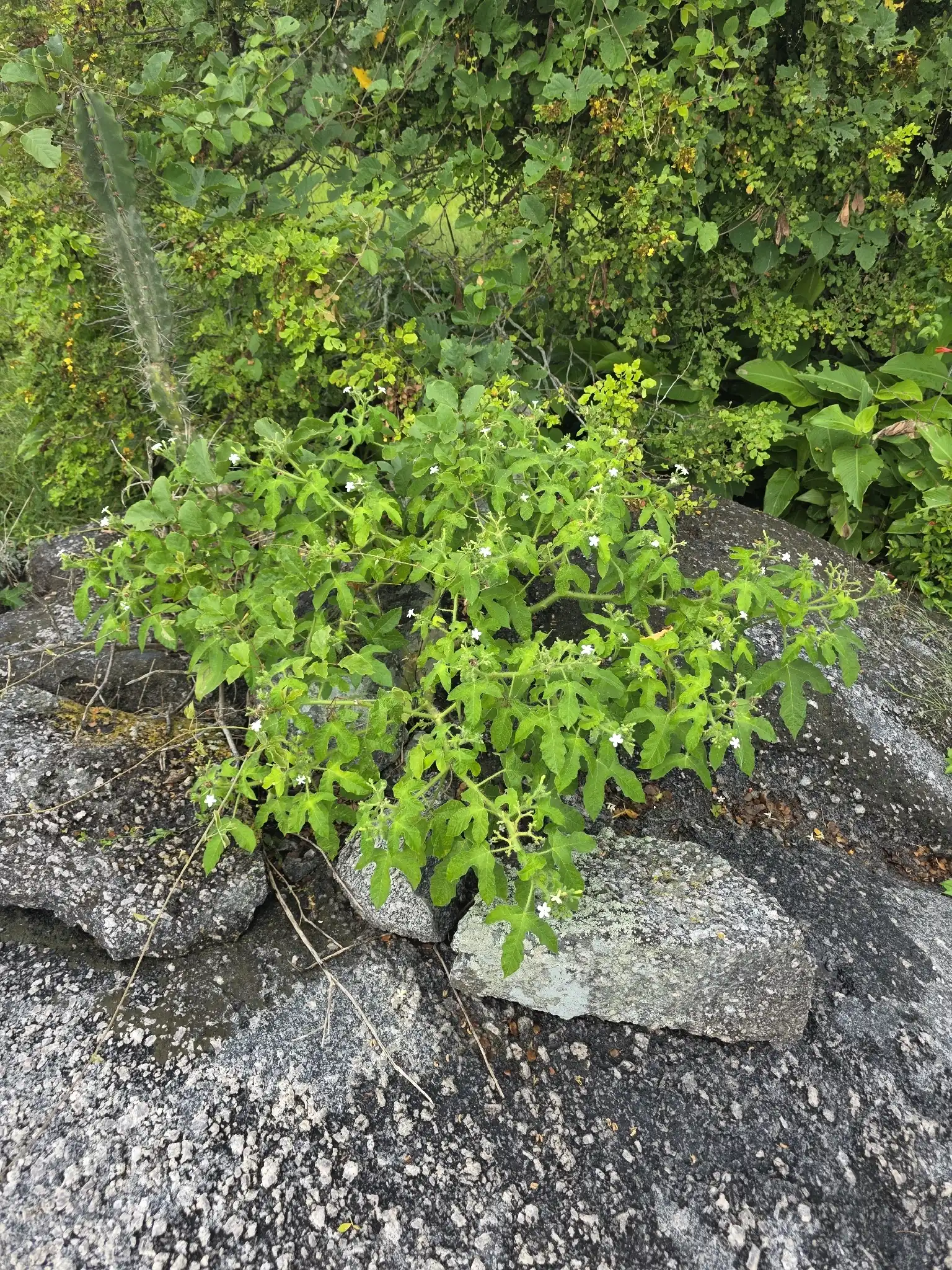
Cnidoscolus urens is an erect herbaceous perennial native to the sandy coastal plains of the southeastern United States and tropical America, eventually developing a woody base with age. The entire plant is heavily armored with stiff, needle-like stinging hairs and carries deeply lobed, hand-shaped leaves.
The small, white, star-shaped flowers lack true petals but feature five showy calyx lobes arranged in terminal clusters from spring through summer. Contact with any part of the plant triggers an immediate, severe burning sensation as the hollow hairs break to inject an irritating chemical cocktail.
Uses & Benefits:
Essentials
At a Glance
Plant Type
Perennial
Height
60"
Width
48"
Light
Full Sun, Partial Sun
Zones
8, 9, 10
Water
Low
Humidity
Low to Moderate
Lifespan
Perennial
Native To
Americas
Toxicity
Severe Skin Irritant / Toxic Sap
Bloom period
Spring – Summer
In flower about 6 months of the year
Planting
How to Grow
- Select a site in full sun to partial shade with exceptionally well-drained, sandy, or gritty soil.
- Dig a planting hole twice the width of the root ball and set the plant at its original container depth.
- Water sparingly during establishment, then withhold supplemental irrigation to prevent root rot.
- Leave the plant undisturbed once established, as it develops a deep, fleshy taproot that resents transplanting.
Pro Tip
Always wear heavy leather gloves and long sleeves when working near this plant, as the microscopic stinging hairs remain active and highly irritating even on dead, dry winter stems.
Keep It Thriving
Care Guide
Do
- Wear thick leather gloves and protective eyewear whenever handling or weeding around the plant.
- Ensure the soil dries out completely between waterings to protect the fleshy root system.
- Clear competing weeds early in the season before the stinging canopy spreads.
Don't
- Do not plant this species near walkways, play areas, or garden borders where skin contact is likely.
- Do not overwater or plant in heavy clay soils, which rapidly triggers fungal root rot.
- Do not compost the plant debris where you might later handle the mulch bare-handed.
Seasonal Care Calendar
| Task | Jan | Feb | Mar | Apr | May | Jun | Jul | Aug | Sep | Oct | Nov | Dec |
|---|---|---|---|---|---|---|---|---|---|---|---|---|
| Pest Check | ||||||||||||
| Propagate | ||||||||||||
| Spring Cleanup | ||||||||||||
| Winter Prep |
Watch Out For
Pests & Diseases
Common Pests
Common Diseases
In the Garden
Landscape Uses & Companions
Landscape Uses
Companion Plants
Multiply
Propagation Methods
Good to Know
Common Questions
Bull Nettle questions
What zones can Bull Nettle grow in?
Bull Nettle is hardy in USDA Zones 8–10. Inside that range it survives winter in the ground; outside it, grow it as an annual or a container plant you protect.
Is Bull Nettle deer resistant?
Yes — Bull Nettle is rated deer-resistant. Deer typically pass it over, though extreme hunger can override any plant's defenses.
When does Bull Nettle bloom?
Bull Nettle typically blooms in spring through summer. Exact timing shifts a week or two with your zone — Sow's bloom calendar maps it to your garden.
Does Bull Nettle need full sun?
Bull Nettle does best in full sun to part shade. In hot climates, afternoon shade keeps blooms fresher longer.
Is Bull Nettle drought tolerant?
Yes — once established (usually after the first full season), Bull Nettle handles dry spells with minimal watering. Water deeply its first year to build the root system that makes that possible.
Keep exploring
Explore the genus
Hardy in your zone?
Grow Bull Nettle with confidence
See it in a design of your actual yard, get zone-matched care reminders, and track it season by season in your garden journal.