

The Story
Plant Bio
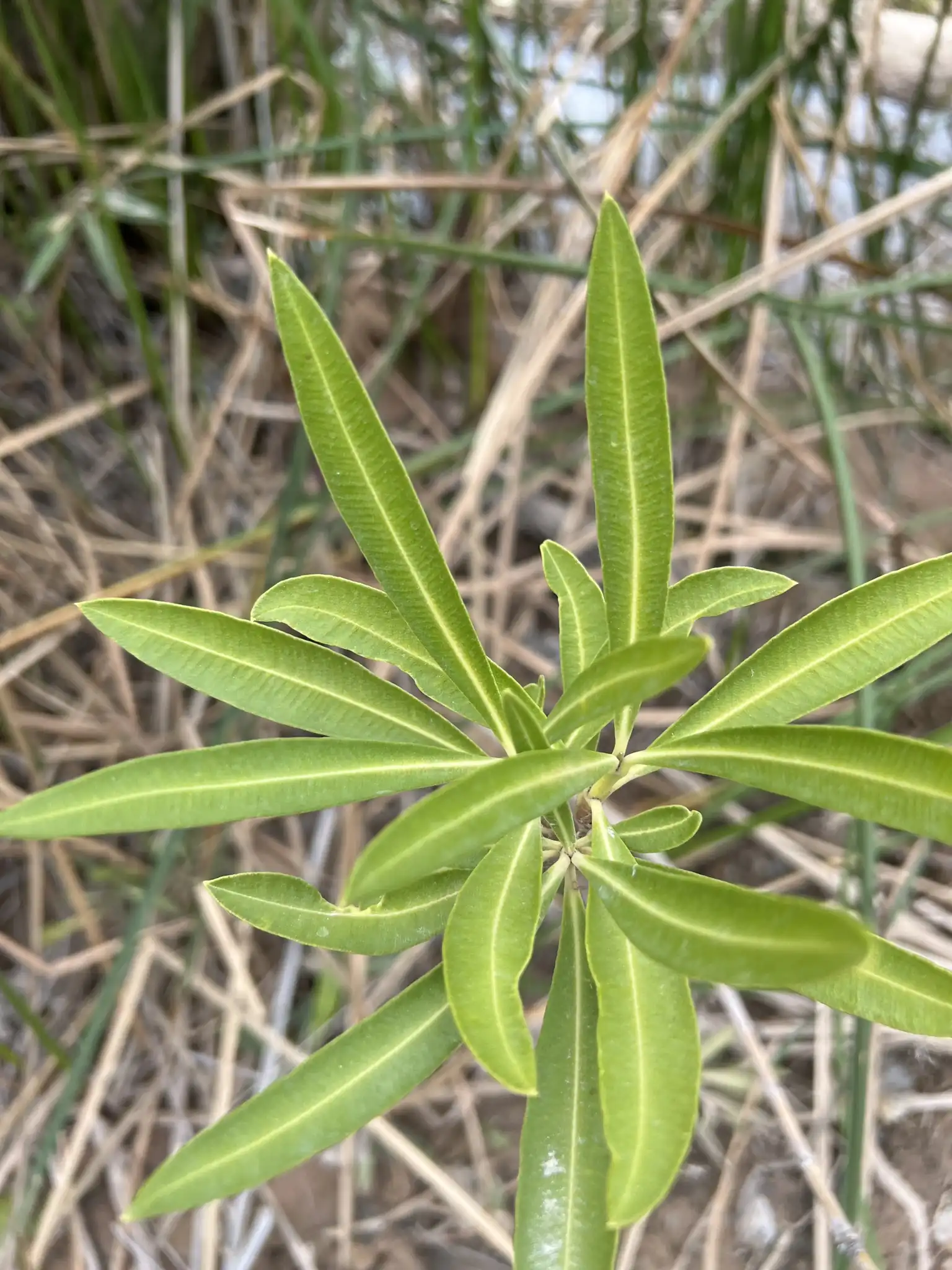
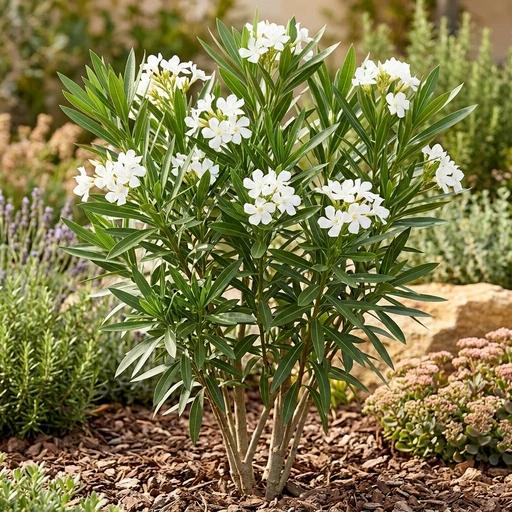
Nerium oleander is a clumping, erect broadleaf evergreen shrub from around the Mediterranean and western Asia, growing rapidly to roughly 5 to 19 ft tall and 6 to 10 ft wide. Strong cane-like stems rise from the base with stout shiny green twigs and narrow leathery leaves. Funnel-shaped flowers 1 to 3 in across open from spring into summer.
It is exceptionally tough, tolerating salt, drought, heat, wind, pollution and poor soil, which is why it lines roads across hot regions. It is also among the most poisonous garden plants: a small quantity of leaf can be fatal to livestock, and the smoke from burning prunings is itself dangerous.
Uses & Benefits:
Essentials
At a Glance
Plant Type
Shrub
Height
120"
Width
96"
Light
Full Sun
Zones
8, 9, 10
Water
Low; highly drought tolerant once established
Humidity
Tolerates dry heat and coastal salt air
Lifespan
Long-lived; decades with cane renewal
Native To
Mediterranean region and western Asia
Toxicity
Severely toxic in all parts; NCSU lists it as poisonous
Marketplace
Where to Buy
Shipping costs Year-round shipping Free shipping
Planting
How to Grow
- Choose a hot site in full sun with free-draining soil.
- Wear gloves and long sleeves whenever handling or pruning it.
- Plant with room for a 10 ft spread, or grow it in a large pot.
- Water through the first season, then only in prolonged drought.
- Prune in early autumn after flowering, cutting canes to varied heights.
- Bag prunings for disposal; never burn them or compost them.
Pro Tip
Cut whole canes to different heights rather than shearing the outline, or the plant goes woody and bare at the base.
Keep It Thriving
Care Guide
Do
- Grow it in full sun and sharply drained soil ☀️
- Wear gloves and sleeves when pruning 🧤
- Use it where salt, heat and pollution defeat other shrubs 🌊
- Bag and bin all prunings safely 🗑️
Don't
- Do not burn the prunings; the smoke is toxic ❌
- Do not plant it near livestock, children's play areas or vegetable beds ❌
- Do not use the stems as skewers, kindling or plant stakes ❌
Seasonal Care Calendar
| Task | Jan | Feb | Mar | Apr | May | Jun | Jul | Aug | Sep | Oct | Nov | Dec |
|---|---|---|---|---|---|---|---|---|---|---|---|---|
| Aphid Watch | ||||||||||||
| Prune After Flowering |
Watch Out For
Pests & Diseases
Common Pests
Common Diseases
In the Garden
Landscape Uses & Companions
Landscape Uses
Multiply
Propagation Methods
Good to Know
Common Questions
Oleander questions
What zones can Oleander grow in?
Oleander is hardy in USDA Zones 8–10. Inside that range it survives winter in the ground; outside it, grow it as an annual or a container plant you protect.
Is Oleander deer resistant?
Yes — Oleander is rated deer-resistant. Deer typically pass it over, though extreme hunger can override any plant's defenses.
When does Oleander bloom?
Oleander typically blooms in spring into summer through late fall. Exact timing shifts a week or two with your zone — Sow's bloom calendar maps it to your garden.
Does Oleander need full sun?
Oleander does best in full sun (6+ hours).
Is Oleander drought tolerant?
Yes — once established (usually after the first full season), Oleander handles dry spells with minimal watering. Water deeply its first year to build the root system that makes that possible.
More Nerium to compare
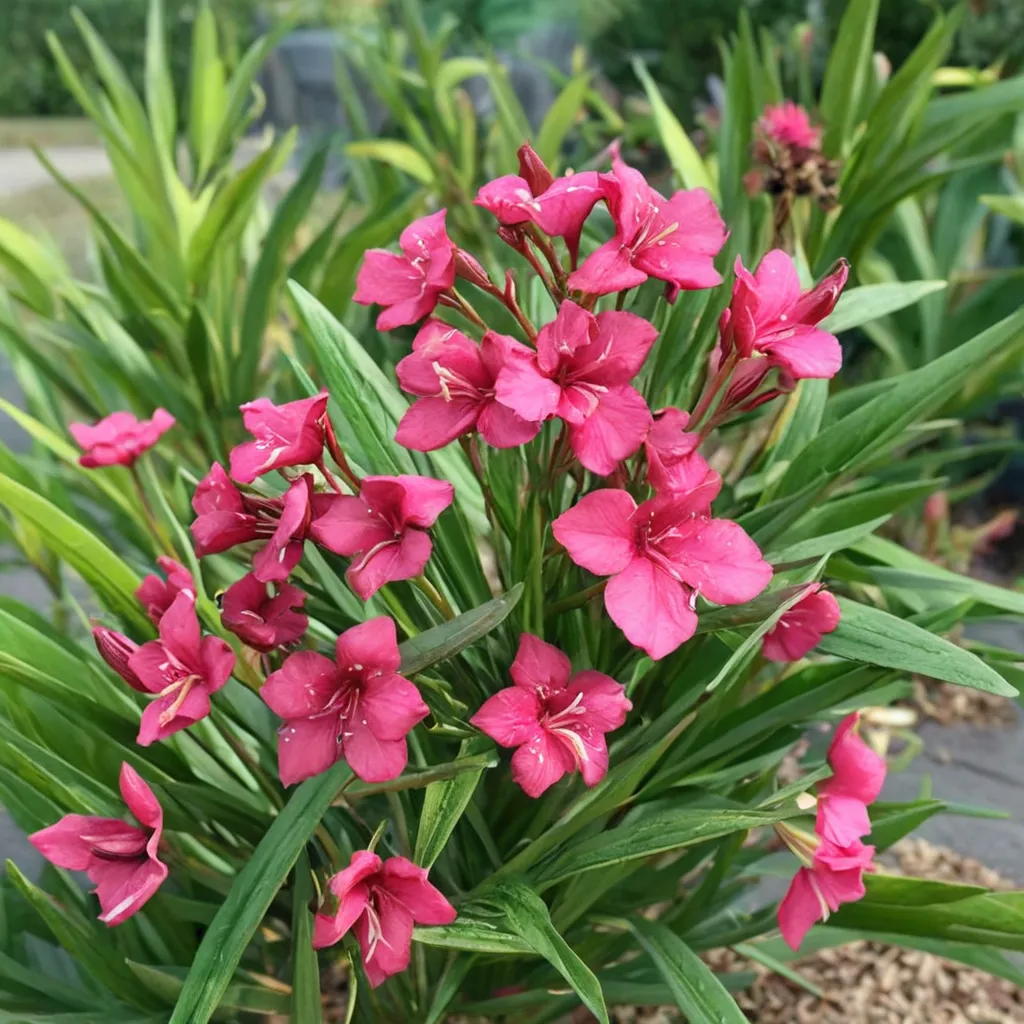
Oleander Pretty Limits
Nerium oleander 'Pretty Limits'
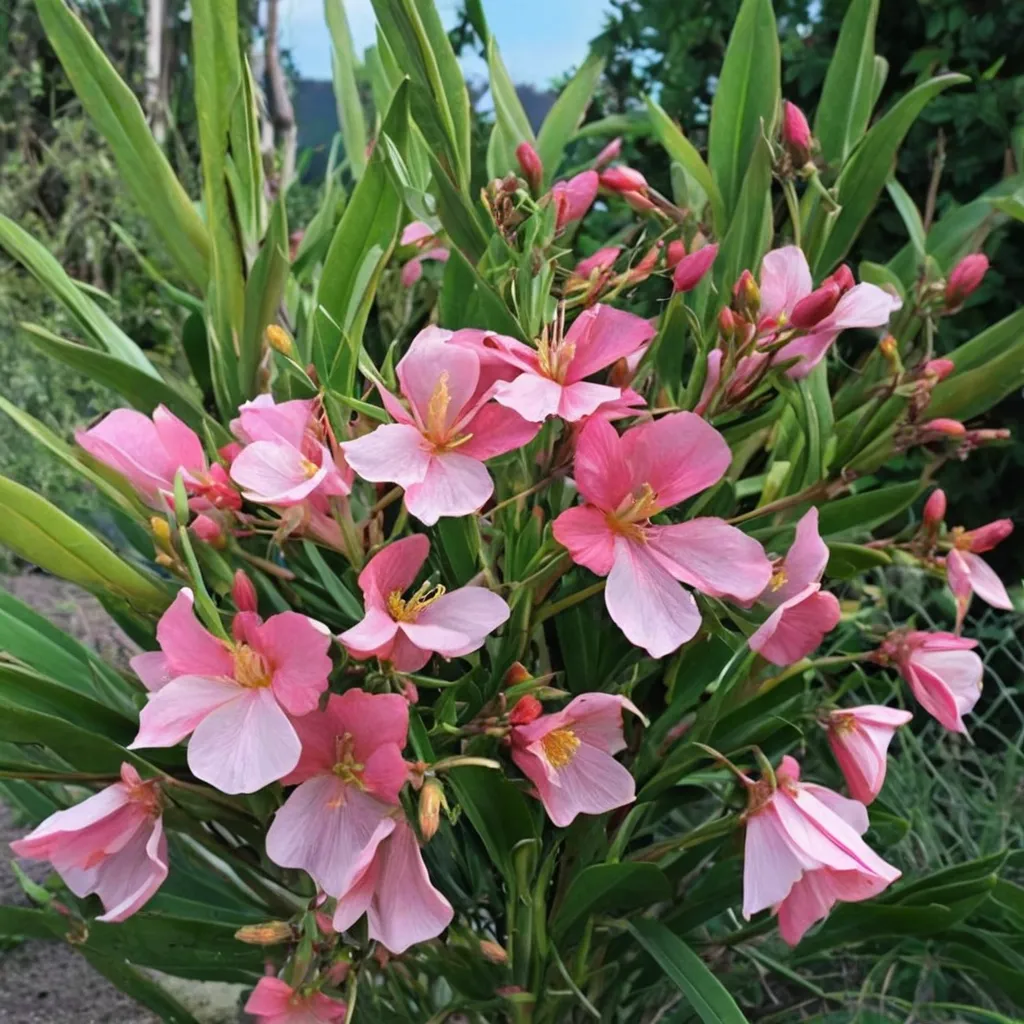
Nerium Oleander Hardy Pink
Nerium oleander 'Hardy Pink'
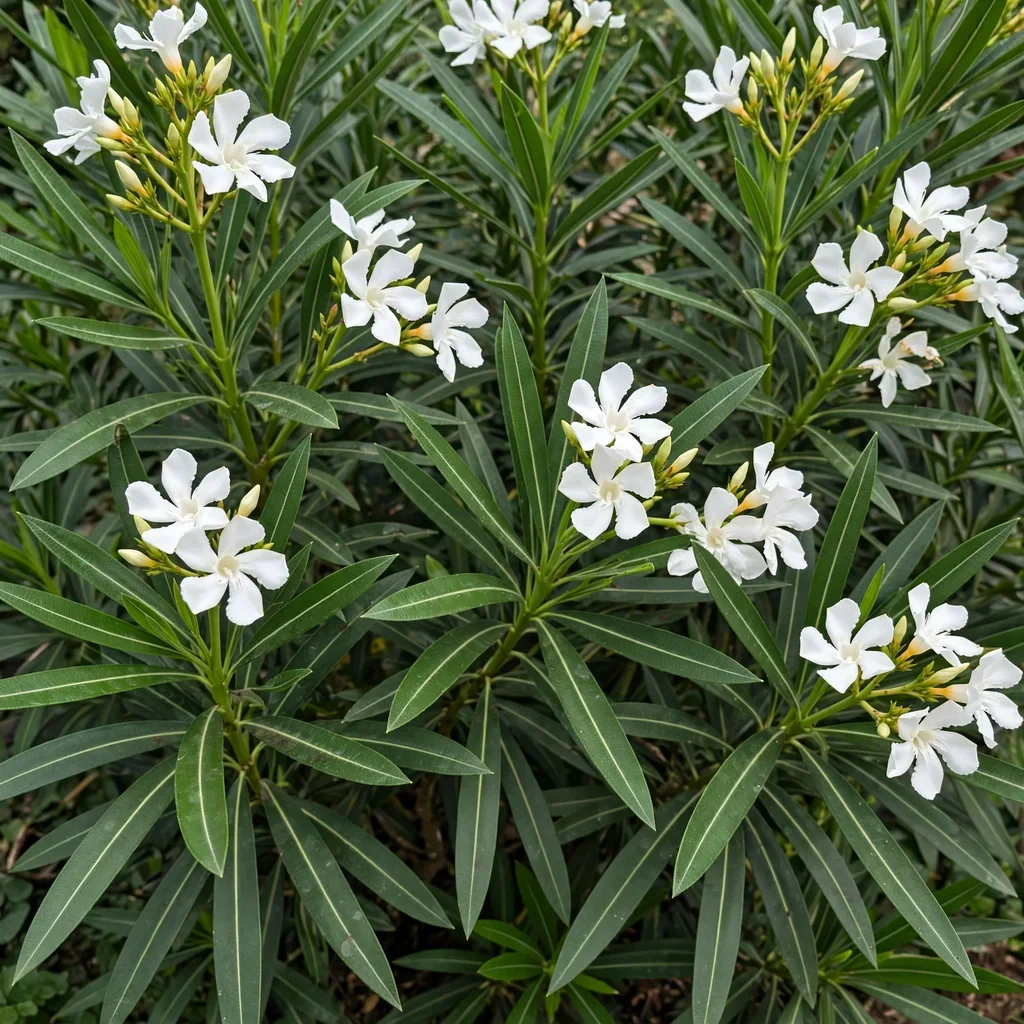
Nerium Oleander Hardy White
Nerium oleander 'Hardy White'
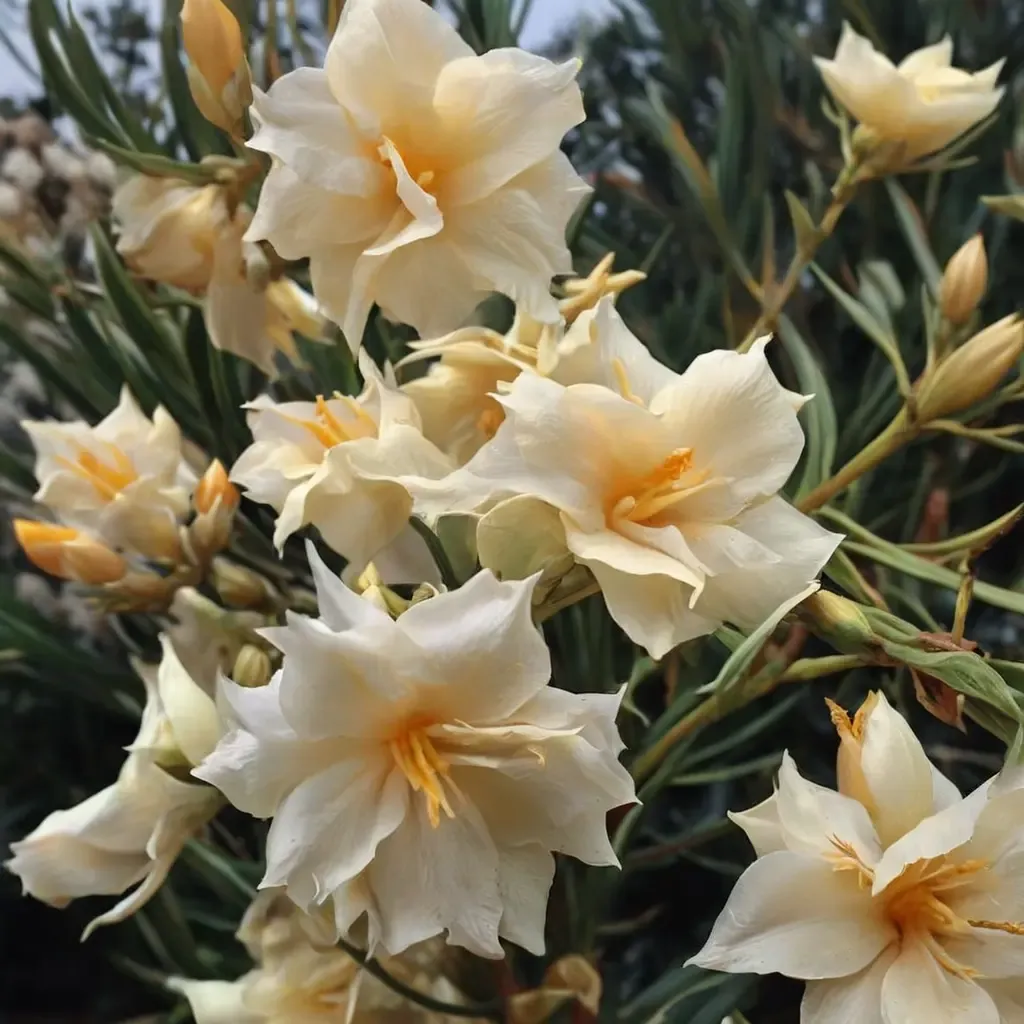
Mathilde Ferrier Oleander
Nerium oleander 'Mathilde Ferrier'
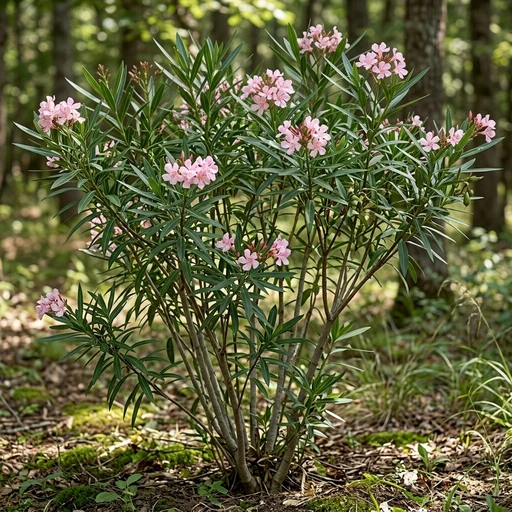
Petite Pink Oleander
Nerium oleander 'Petite Pink'
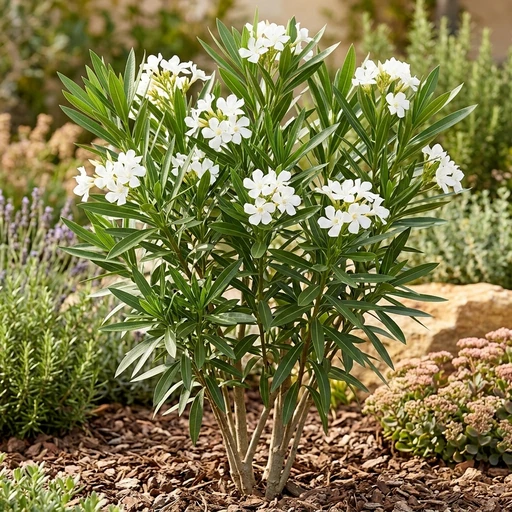
White Oleander
Nerium oleander 'White'
Keep exploring
Explore the genus
Hardy in your zone?
Grow Oleander with confidence
See it in a design of your actual yard, get zone-matched care reminders, and track it season by season in your garden journal.