The Story
Plant Bio
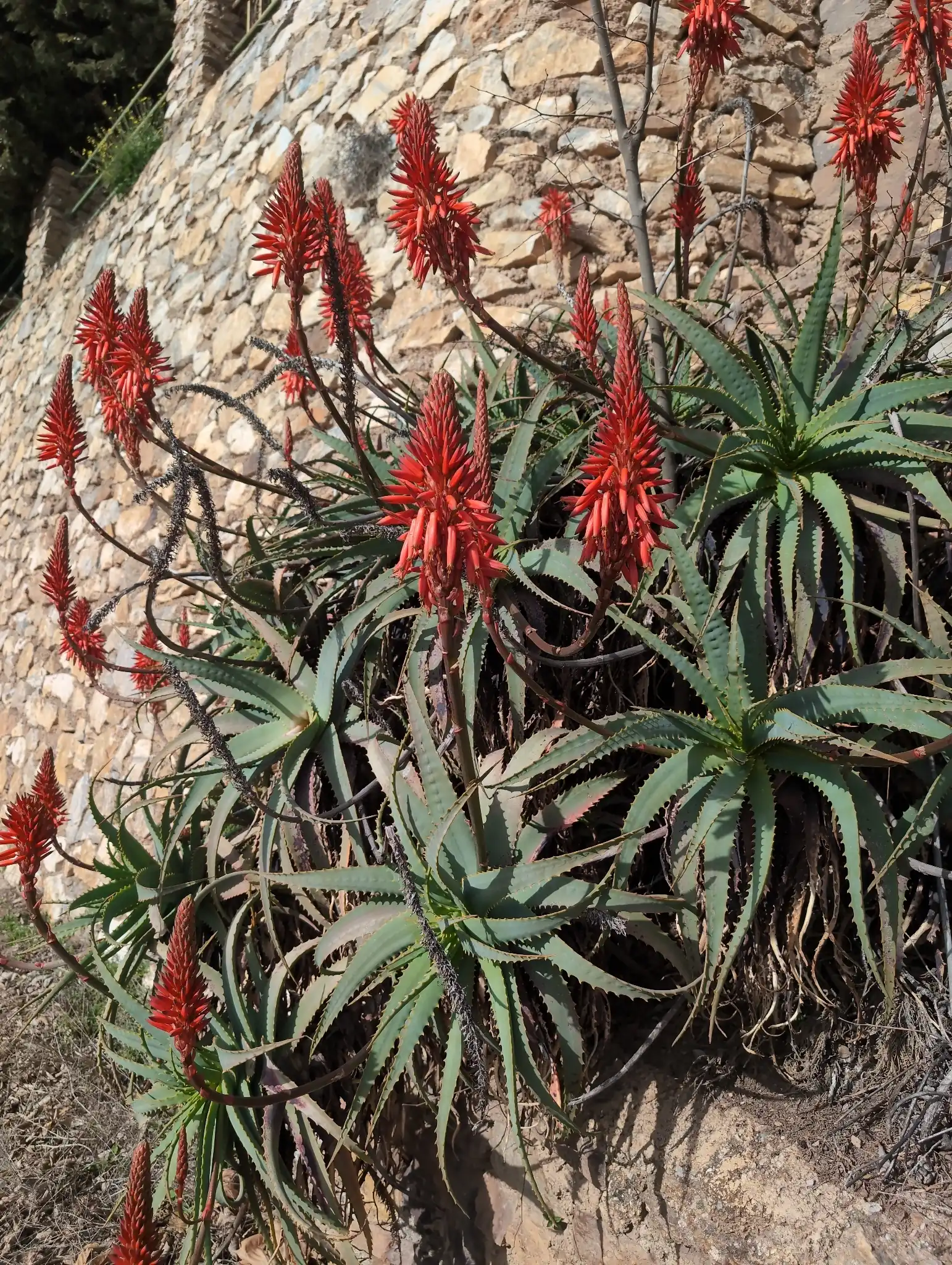
Aloe arborescens is a large, multi-stemmed succulent shrub native to southern Africa, forming dense, candelabra-like clumps up to ten feet tall and wide. Its woody stems bear rosettes of sickle-shaped, blue-green leaves armed with pale, sharp teeth along the margins.
This species is distinguished by its massive winter display of erect, conical flower spikes bearing hundreds of tubular, bright red-orange blooms. Unlike smaller herbaceous aloes, it develops a robust, branching structure that functions as a structural specimen or a formidable security hedge in frost-free climates.
Uses & Benefits:
Essentials
At a Glance
Plant Type
Cactus Succulent
Height
118"
Width
118"
Light
Full Sun, Partial Sun
Zones
9, 10
Water
Low
Humidity
Low to moderate
Lifespan
Perennial
Native To
Southern Africa
Toxicity
Toxic if ingested; skin irritant
Bloom period
Winter – Spring
In flower about 6 months of the year
Planting
How to Grow
- Select a planting site in full sun with exceptionally well-drained sandy, loamy, or gravelly soil.
- Dig a hole twice the width of the root ball but no deeper, ensuring the stem base sits slightly above the soil line.
- Water the plant thoroughly upon installation, then withhold water until the soil dries out completely.
- Establish a strict wet-dry watering cycle, reducing moisture further during the winter dormancy period to prevent root rot.
Pro Tip
Avoid pruning deeply into old, leafless woody trunk segments, as these lack active latent buds and will fail to regenerate. To maintain a tight, upright form and prevent weak, etiolated stems, plant in a position that receives uninterrupted, direct all-day sunlight.
Keep It Thriving
Care Guide
Do
- Plant in a location with excellent air circulation to minimize fungal issues.
- Allow the soil to dry out completely between waterings.
- Protect the plant from severe or prolonged freezing temperatures.
Don't
- Do not overwater or allow the plant to sit in waterlogged, soggy soil.
- Do not prune deeply into old, leafless woody trunk segments.
- Do not grow in low-light indoor conditions, which causes weak, stretched growth.
Seasonal Care Calendar
| Task | Jan | Feb | Mar | Apr | May | Jun | Jul | Aug | Sep | Oct | Nov | Dec |
|---|---|---|---|---|---|---|---|---|---|---|---|---|
| Fertilize | ||||||||||||
| Pest Check | ||||||||||||
| Prune | ||||||||||||
| Winter Prep |
Watch Out For
Pests & Diseases
Common Pests
Common Diseases
In the Garden
Landscape Uses & Companions
Landscape Uses
Multiply
Propagation Methods
Good to Know
Common Questions
Candelabra Aloe questions
What zones can Candelabra Aloe grow in?
Candelabra Aloe is hardy in USDA Zones 9–10. Inside that range it survives winter in the ground; outside it, grow it as an annual or a container plant you protect.
Is Candelabra Aloe deer resistant?
Not reliably. Deer may browse Candelabra Aloe, especially tender spring growth — plan on repellents or fencing where pressure is high.
When does Candelabra Aloe bloom?
Candelabra Aloe typically blooms in winter through spring. Exact timing shifts a week or two with your zone — Sow's bloom calendar maps it to your garden.
Does Candelabra Aloe need full sun?
Candelabra Aloe does best in full sun to part shade. In hot climates, afternoon shade keeps blooms fresher longer.
Is Candelabra Aloe drought tolerant?
Yes — once established (usually after the first full season), Candelabra Aloe handles dry spells with minimal watering. Water deeply its first year to build the root system that makes that possible.
More Aloe to compare
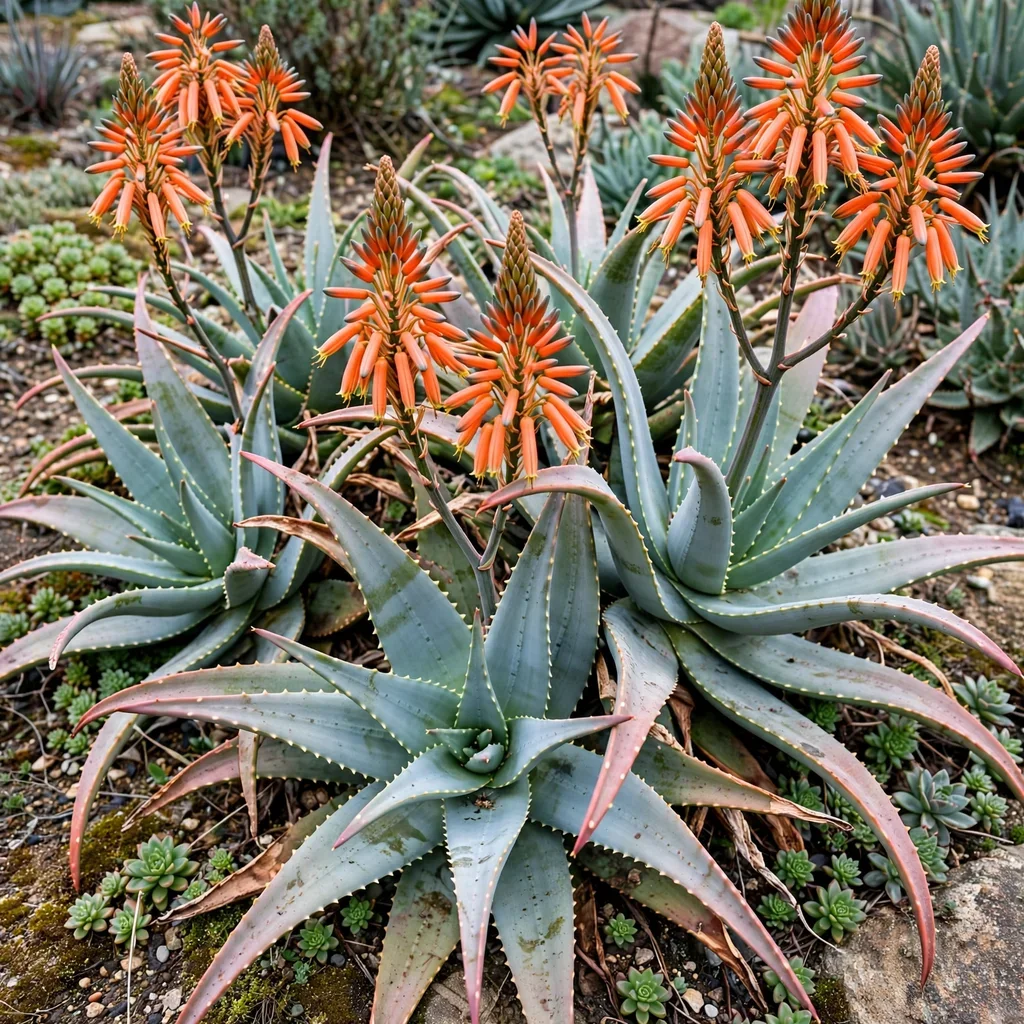
Compton's Aloe
Aloe comptonii
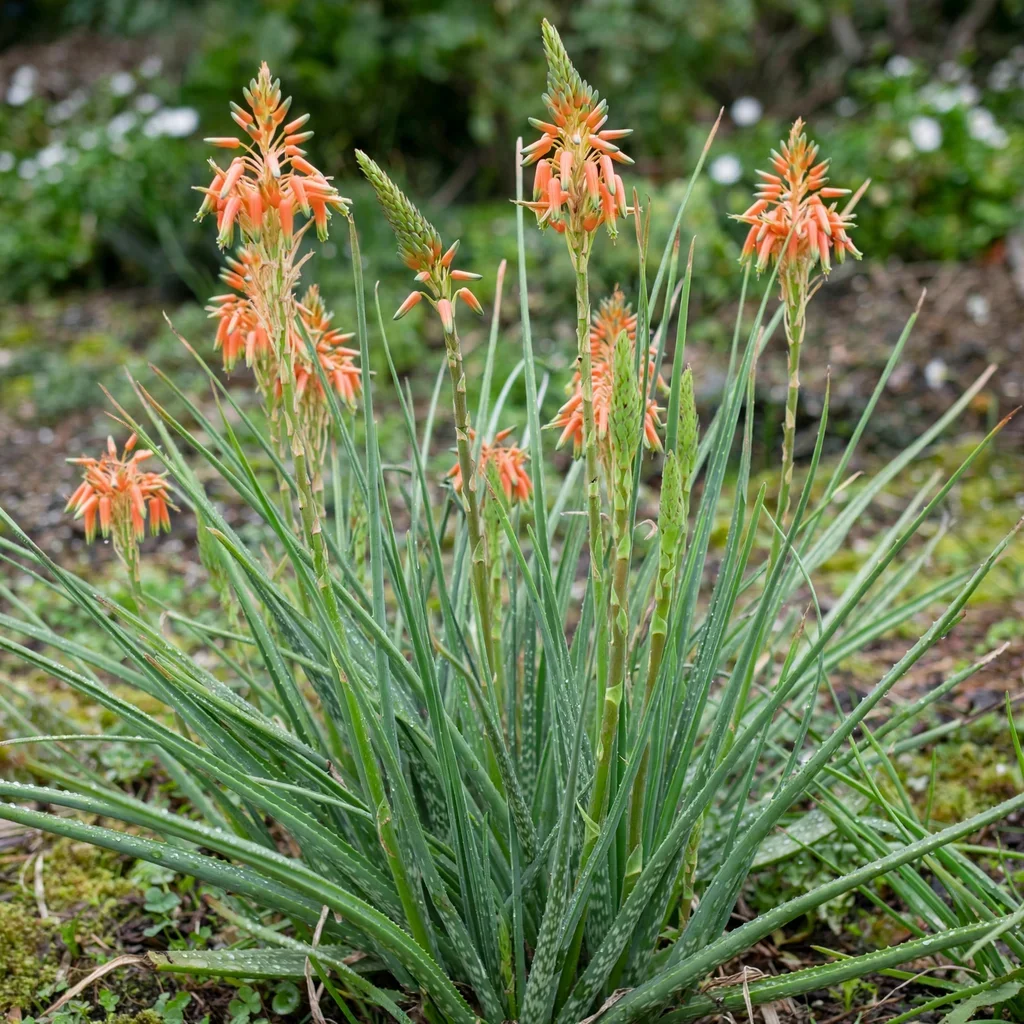
Cooper's Aloe
Aloe cooperi
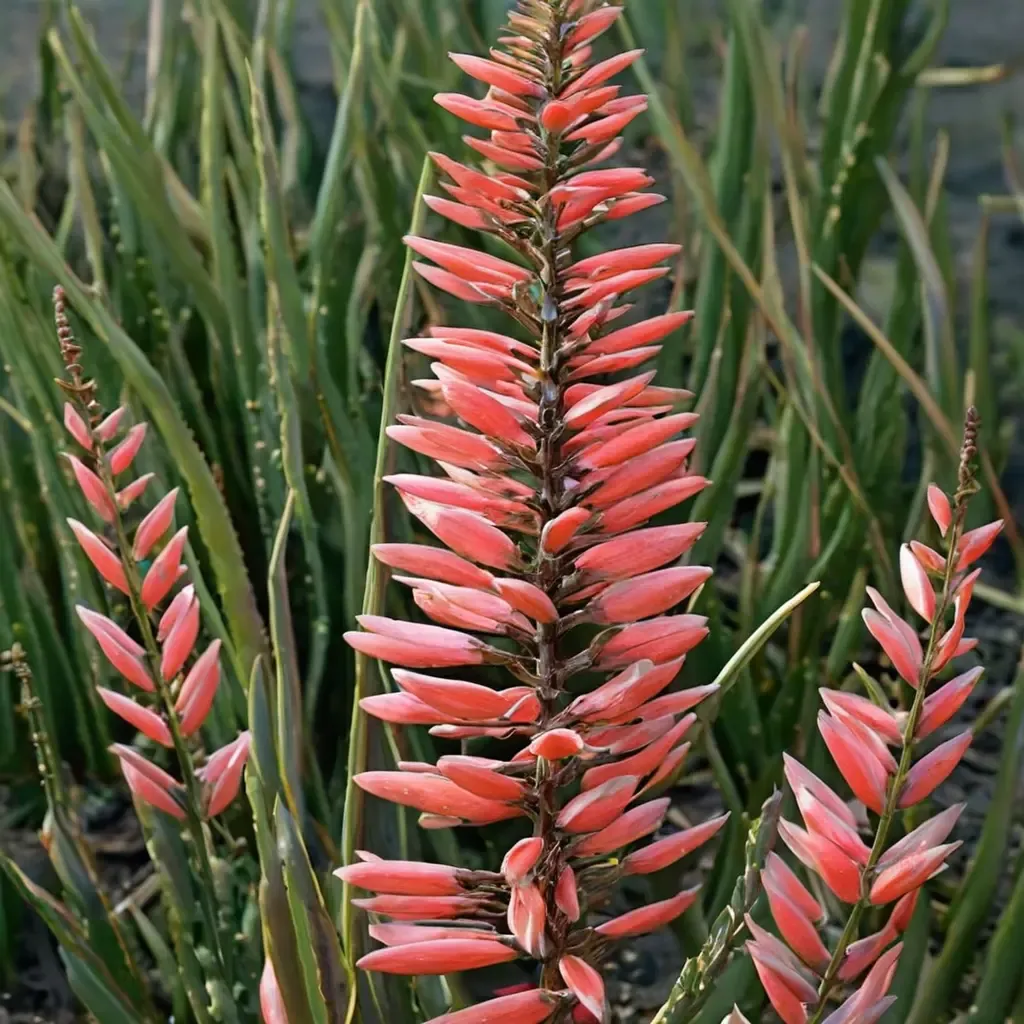
Safari Rose Aloe
Aloe vera 'Safari Rose'
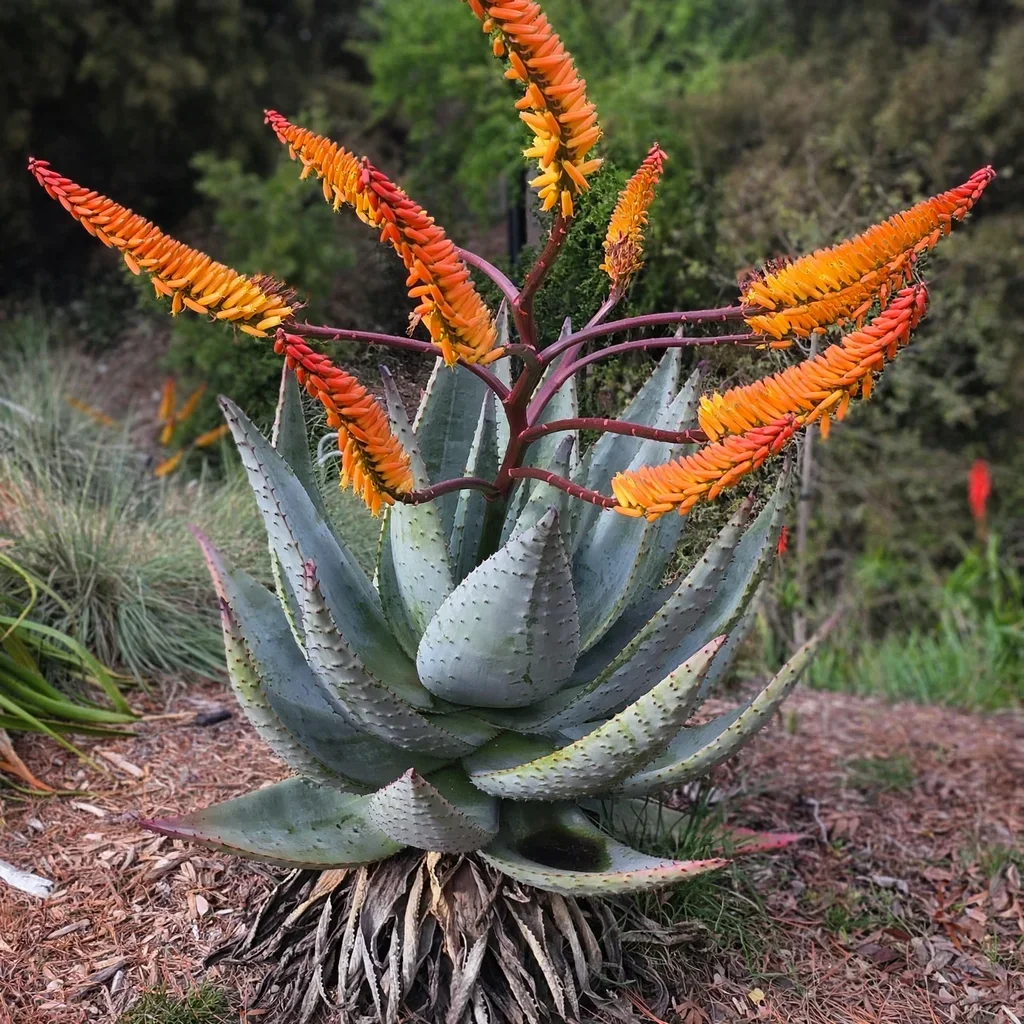
Mountain Aloe
Aloe marlothii 'Flat Flowered Aloe'
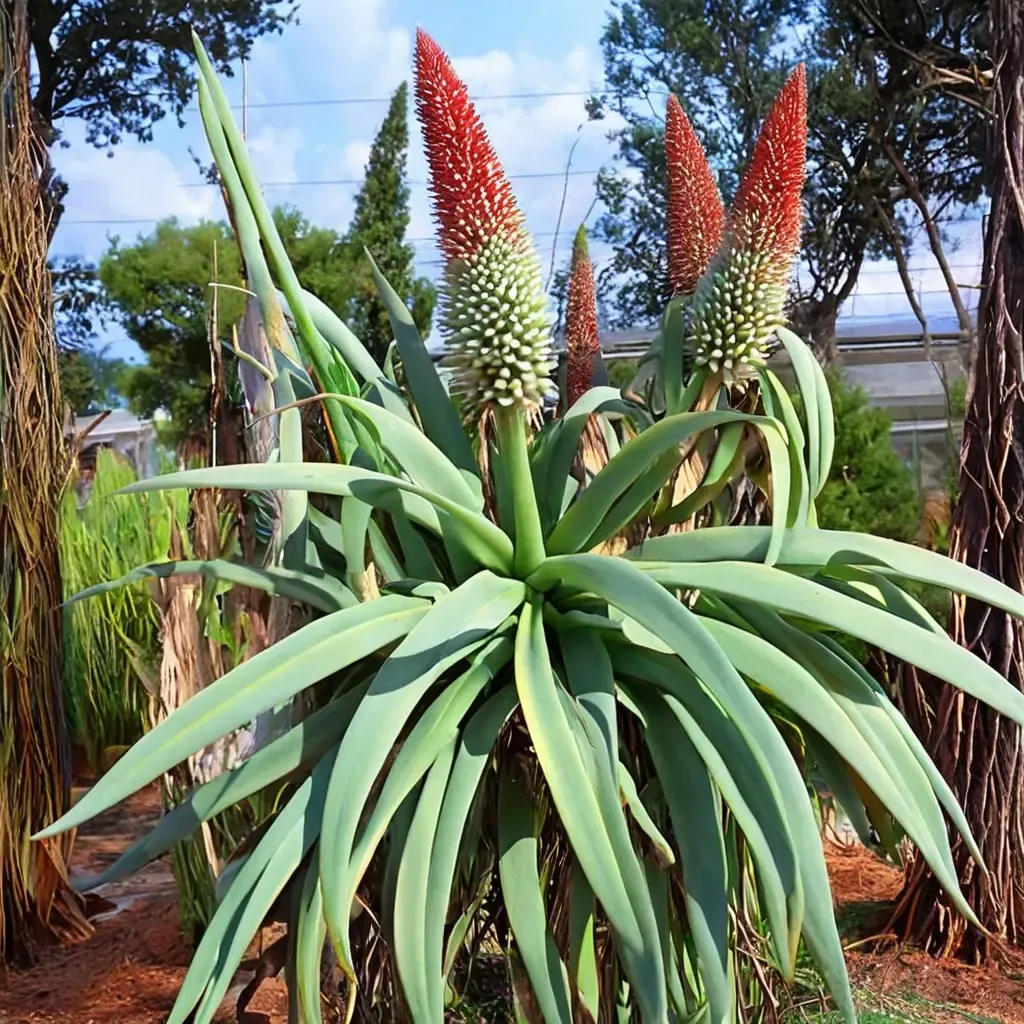
Tilt-Head Aloe
Aloe speciosa 'Tilt-Head Aloe'
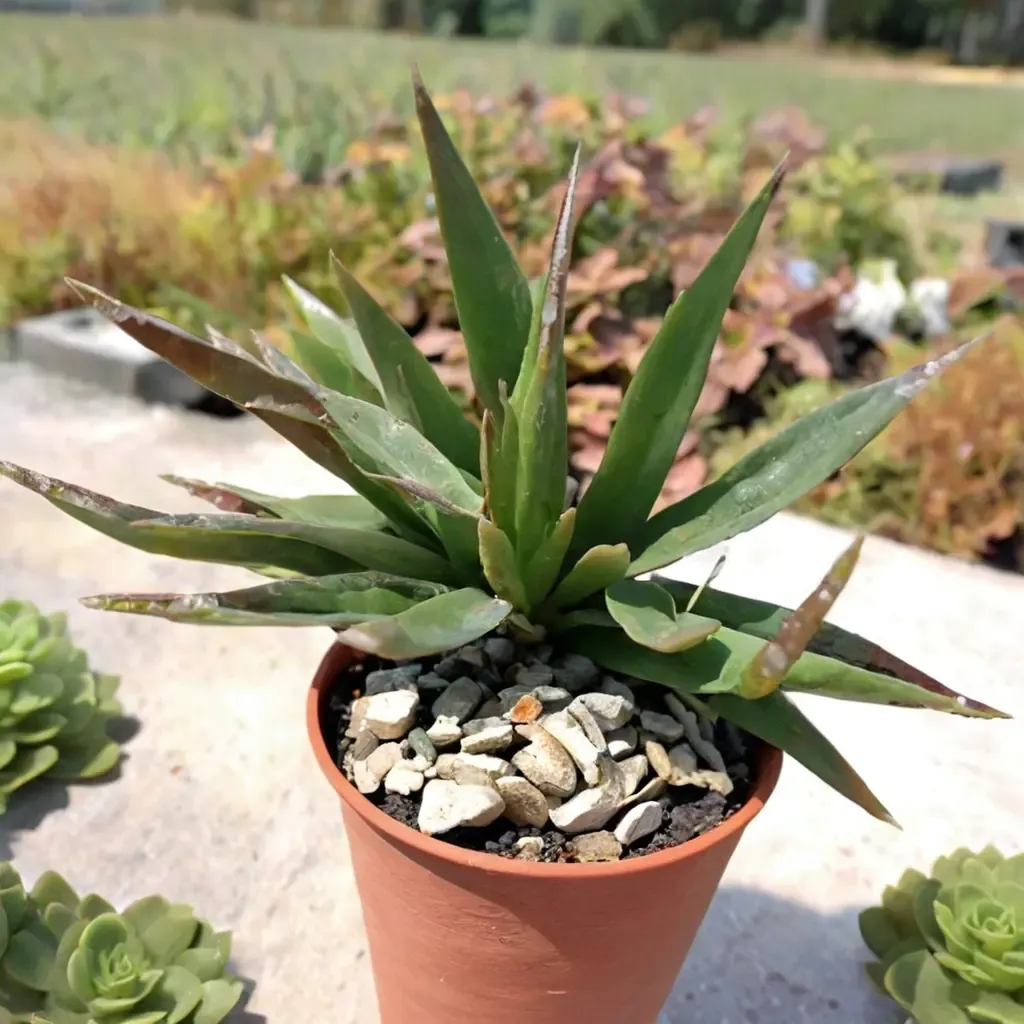
Black Gem Aloe
Aloe aethiopica 'Black Gem'
Keep exploring
Explore the genus
Hardy in your zone?
Grow Candelabra Aloe with confidence
See it in a design of your actual yard, get zone-matched care reminders, and track it season by season in your garden journal.