The Story
Plant Bio
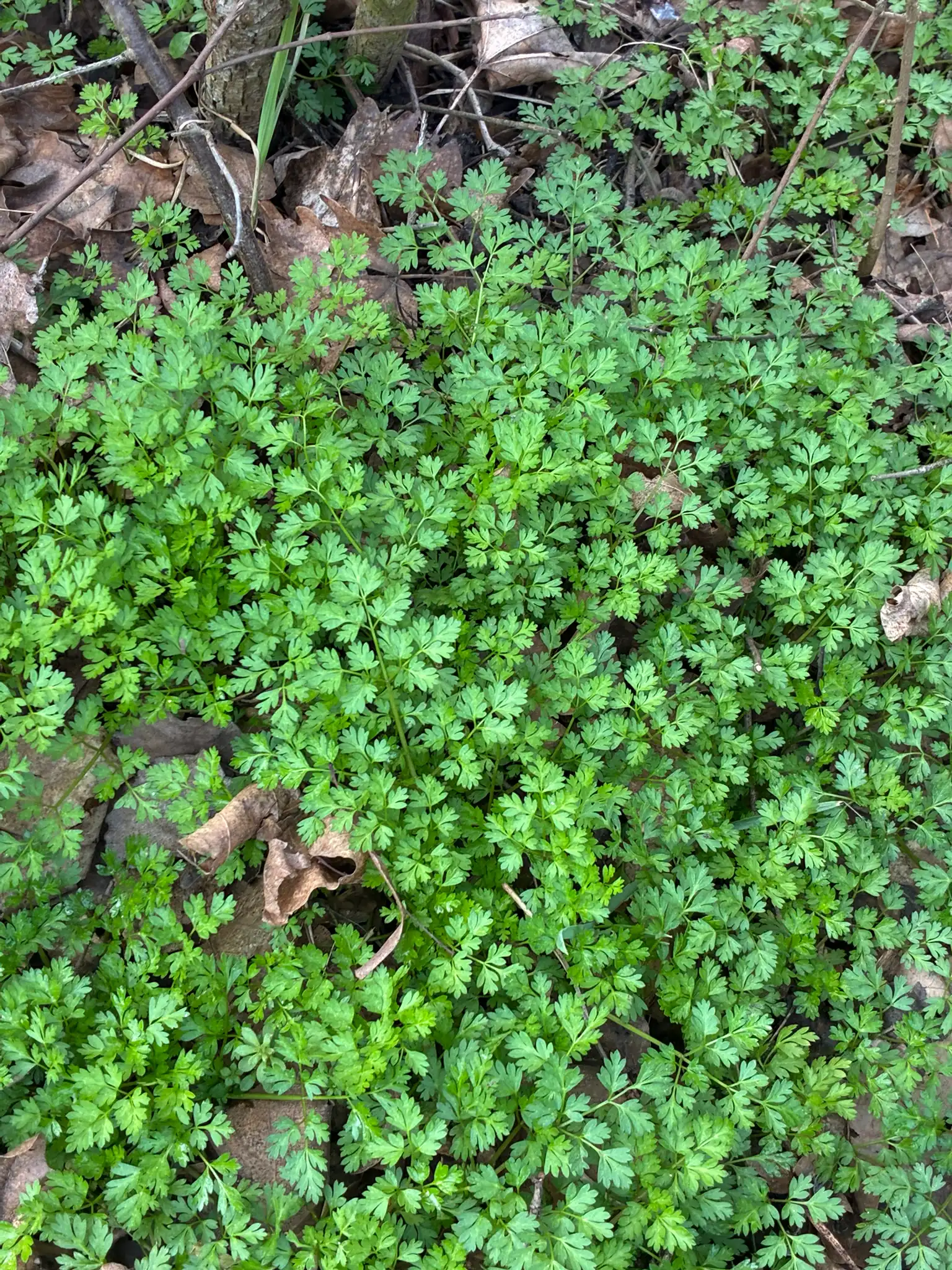
Anthriscus cerefolium, commonly known as chervil, is a delicate, soft-stemmed annual herb with an airy, branching habit that reaches twelve to twenty-four inches in height. The finely divided, tripinnate leaves resemble flat-leaf parsley but are softer and lighter green, carrying a mild anise-like fragrance.
The species produces small, flat-topped compound umbels of tiny white flowers in late spring and summer. Unlike many culinary herbs, it thrives in partial to full shade and quickly bolts to seed when exposed to intense afternoon sun or drought stress.
Uses & Benefits:
Essentials
At a Glance
Plant Type
Annual
Height
24"
Width
18"
Light
Partial Sun, Shade
Zones
6, 7, 8, 9
Water
Medium
Humidity
Moderate
Lifespan
Annual
Native To
Europe, Western Asia
Toxicity
Non-toxic
Bloom period
Late spring – Summer
In flower about 4 months of the year
Planting
How to Grow
- Select a planting site with rich, moisture-retentive loamy or sandy soil in partial to full shade.
- Sow seeds directly onto the soil surface in early spring or late fall, pressing them lightly as they require light to germinate.
- Water gently and keep the soil consistently moist but well-drained to prevent waterlogging.
- Thin seedlings to a spacing of six inches once they emerge, avoiding any disturbance to the remaining roots.
Pro Tip
Direct-sow seeds where they are to grow, as the delicate taproot cannot tolerate the root disturbance of transplanting without triggering premature bolting. Stagger plantings every three to four weeks to maintain a continuous supply of tender foliage before summer heat sets in.
Keep It Thriving
Care Guide
Do
- Pinch back early flower buds regularly to prolong the harvest of tender culinary leaves.
- Keep the soil consistently moist, especially during dry spells, to prevent the plant from bolting.
- Provide afternoon shade to protect the delicate foliage from scorching and heat stress.
Don't
- Do not transplant established seedlings, as root disturbance triggers immediate flowering and stops leaf production.
- Do not overwater or allow the soil to become waterlogged, which leads to root rot.
- Do not cover seeds deeply when sowing, as they require light to germinate.
Seasonal Care Calendar
| Task | Jan | Feb | Mar | Apr | May | Jun | Jul | Aug | Sep | Oct | Nov | Dec |
|---|---|---|---|---|---|---|---|---|---|---|---|---|
| Harvest | ||||||||||||
| Pest Check | ||||||||||||
| Pinch | ||||||||||||
| Propagate |
Watch Out For
Pests & Diseases
Common Pests
Common Diseases
In the Garden
Landscape Uses & Companions
Landscape Uses
Companion Plants
Multiply
Propagation Methods
Good to Know
Common Questions
Chervil questions
What zones can Chervil grow in?
Chervil is hardy in USDA Zones 6–9. Inside that range it survives winter in the ground; outside it, grow it as an annual or a container plant you protect.
Is Chervil deer resistant?
Not reliably. Deer may browse Chervil, especially tender spring growth — plan on repellents or fencing where pressure is high.
When does Chervil bloom?
Chervil typically blooms in late spring through summer. Exact timing shifts a week or two with your zone — Sow's bloom calendar maps it to your garden.
Does Chervil need full sun?
Chervil does best in part shade.
More Anthriscus to compare
Keep exploring
Explore the genus
Hardy in your zone?
Grow Chervil with confidence
See it in a design of your actual yard, get zone-matched care reminders, and track it season by season in your garden journal.