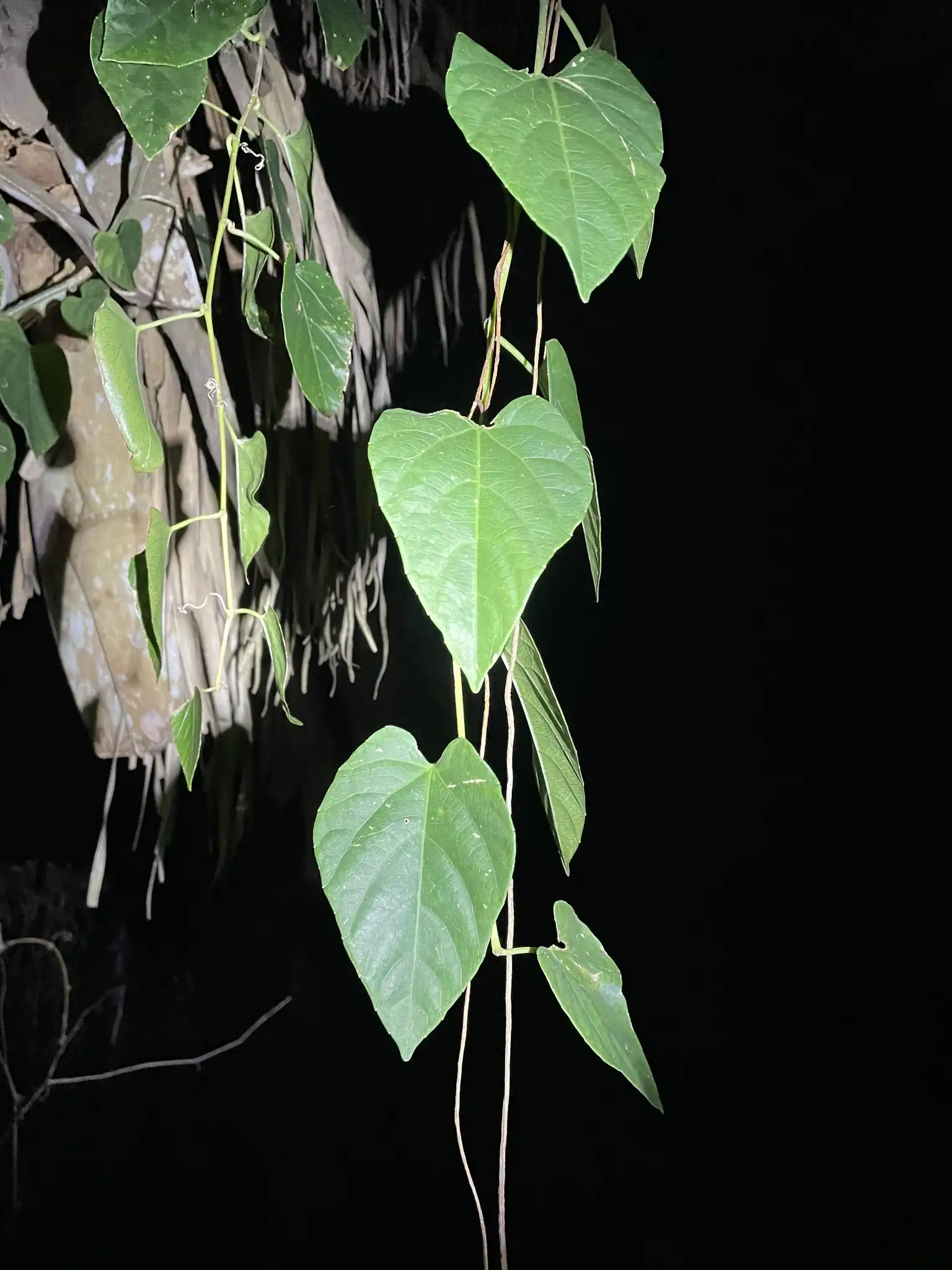
The Story
Plant Bio
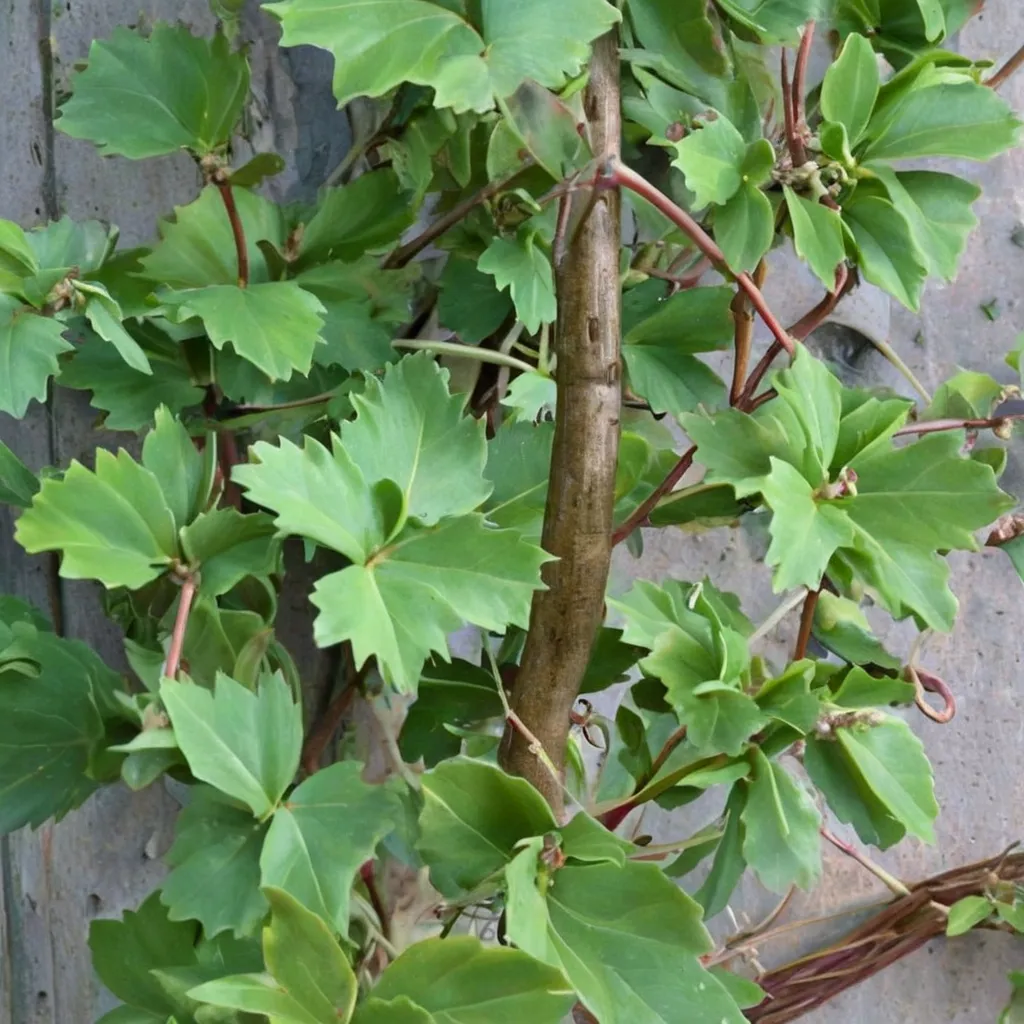
Cissus verticillata is a vigorous evergreen liana native to the tropical and subtropical Americas, climbing up to thirty feet or more via two-branched tendrils. It is characterized by its simple, alternate, oblong-to-ovate leaves with serrate margins and succulent, sometimes pubescent new growth.
This species is distinguished by its dramatic production of slender, lacy curtains of aerial roots that descend from the stems to anchor the plant and absorb atmospheric moisture. Inconspicuous greenish-yellow flowers are followed by small, globose berries that ripen from red to black.
Uses & Benefits:
Essentials
At a Glance
Plant Type
Vine
Height
390"
Width
190"
Light
Full Sun, Partial Sun
Zones
9, 10
Water
Moderate
Humidity
High
Lifespan
Perennial
Native To
Americas
Toxicity
Skin Irritant
Bloom period
Summer – Fall
In flower about 6 months of the year
Planting
How to Grow
- Select a planting site in full sun to partial shade with highly permeable, well-draining soil.
- Install a sturdy trellis, arbor, or support structure capable of holding a heavy, mature vine.
- Plant at the same depth as the nursery container, backfilling with native soil and watering thoroughly to settle.
- Apply a thin layer of organic mulch around the base to retain moisture while keeping the mulch clear of the main stem.
Pro Tip
Do not mistake the heavy production of aerial roots for a sign of disease; they are a natural mechanism for moisture absorption. Avoid heavy winter watering, which quickly triggers fatal root rot in cool or dormant periods.
Keep It Thriving
Care Guide
Do
- Prune annually in late winter to manage size and shape the aerial root curtain.
- Ensure the planting medium drains rapidly to prevent waterlogging.
- Provide a strong support structure for the climbing tendrils.
Don't
- Do not prune heavily into old, leafless woody stems, as they may fail to produce new buds.
- Do not overwater during the winter dormant period.
- Do not apply heavy, constant pruning unless strict containment is required.
Seasonal Care Calendar
| Task | Jan | Feb | Mar | Apr | May | Jun | Jul | Aug | Sep | Oct | Nov | Dec |
|---|---|---|---|---|---|---|---|---|---|---|---|---|
| Fertilize | ||||||||||||
| Pest Check | ||||||||||||
| Propagate | ||||||||||||
| Prune |
Watch Out For
Pests & Diseases
Common Pests
Common Diseases
In the Garden
Landscape Uses & Companions
Landscape Uses
Companion Plants
Multiply
Propagation Methods
Good to Know
Common Questions
Princess Vine questions
What zones can Princess Vine grow in?
Princess Vine is hardy in USDA Zones 9–10. Inside that range it survives winter in the ground; outside it, grow it as an annual or a container plant you protect.
When does Princess Vine bloom?
Princess Vine typically blooms in summer through fall. Exact timing shifts a week or two with your zone — Sow's bloom calendar maps it to your garden.
Does Princess Vine need full sun?
Princess Vine does best in full sun to part shade. In hot climates, afternoon shade keeps blooms fresher longer.
Is Princess Vine drought tolerant?
Yes — once established (usually after the first full season), Princess Vine handles dry spells with minimal watering. Water deeply its first year to build the root system that makes that possible.
More Cissus to compare

Keep exploring
Explore the genus
Hardy in your zone?
Grow Princess Vine with confidence
See it in a design of your actual yard, get zone-matched care reminders, and track it season by season in your garden journal.