The Story
Plant Bio
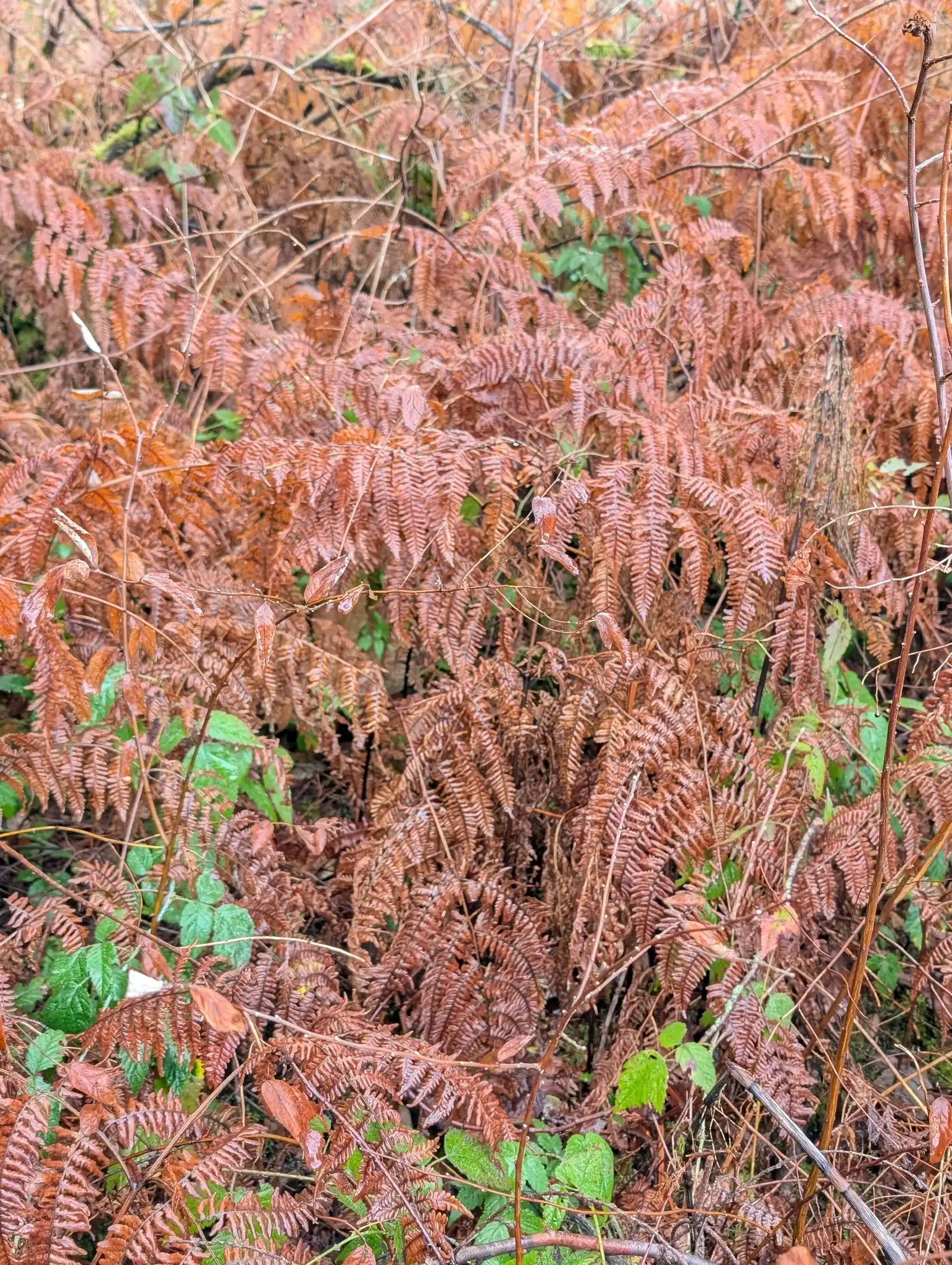
Pteridium aquilinum, commonly known as bracken, is a deciduous herbaceous fern that forms extensive colonies via deep, creeping underground rhizomes. Its large, triangular fronds are two to three times pinnately compound, uncurling from woolly spring fiddleheads to reach two to five feet in height.
Unlike most shade-loving ferns, bracken thrives in full sun and dry, acidic, low-fertility soils where it rapidly spreads to dominate open areas. Spores develop along the undersides of fertile frond margins from summer through fall, though primary spread occurs vegetatively through its aggressive root network.
Uses & Benefits:
Essentials
At a Glance
Plant Type
Fern
Height
60"
Width
120"
Light
Full Sun, Partial Sun, Shade
Zones
4, 5, 6, 7, 8, 9
Water
Low to Moderate
Humidity
Adaptable
Lifespan
Perennial
Native To
North America, Europe, Asia, Africa, Australia
Toxicity
High
Planting
How to Grow
- Select a site with well-drained, acidic soil in full sun to partial shade, isolated from bed edges.
- Dig a hole slightly wider than the root mass or lay rhizomes horizontally 2 to 3 inches deep.
- Place bare-root rhizomes or container plugs into the hole and backfill, firming soil gently.
- Water deeply after planting to settle the soil around the rhizomes.
- Avoid applying high-nitrogen fertilizers, as bracken naturally prefers poor, acidic soils.
Pro Tip
Plant bracken only within physical root barriers or isolated naturalized areas, as its deep rhizomes quickly infiltrate adjacent garden beds and are exceptionally difficult to eradicate once established.
Keep It Thriving
Care Guide
Do
- Cut back dead brown fronds in late winter to keep growth neat and make room for spring fiddleheads.
- Plant inside contained borders or isolated woodland plots to manage root expansion.
- Maintain lean, well-drained acidic soil conditions.
Don't
- Do not apply fertilizers, as nutrient-rich soils are unnecessary and encourage weed competition.
- Do not plant near sensitive garden borders without underground physical barriers.
- Do not allow livestock or pets to graze the toxic fronds or rhizomes.
Seasonal Care Calendar
| Task | Jan | Feb | Mar | Apr | May | Jun | Jul | Aug | Sep | Oct | Nov | Dec |
|---|---|---|---|---|---|---|---|---|---|---|---|---|
| Divide | ||||||||||||
| Pest Check | ||||||||||||
| Spring Cleanup | ||||||||||||
| Winter Prep |
Watch Out For
Pests & Diseases
Common Pests
Common Diseases
In the Garden
Landscape Uses & Companions
Landscape Uses
Multiply
Propagation Methods
Good to Know
Common Questions
Bracken questions
What zones can Bracken grow in?
Bracken is hardy in USDA Zones 4–9. Inside that range it survives winter in the ground; outside it, grow it as an annual or a container plant you protect.
Is Bracken deer resistant?
Yes — Bracken is rated deer-resistant. Deer typically pass it over, though extreme hunger can override any plant's defenses.
Does Bracken need full sun?
Bracken does best in full sun to part shade. In hot climates, afternoon shade keeps blooms fresher longer.
Is Bracken drought tolerant?
Yes — once established (usually after the first full season), Bracken handles dry spells with minimal watering. Water deeply its first year to build the root system that makes that possible.
Keep exploring
Explore the genus
Grow Bracken with confidence
See it in a design of your actual yard, get zone-matched care reminders, and track it season by season in your garden journal.