The Story
Plant Bio
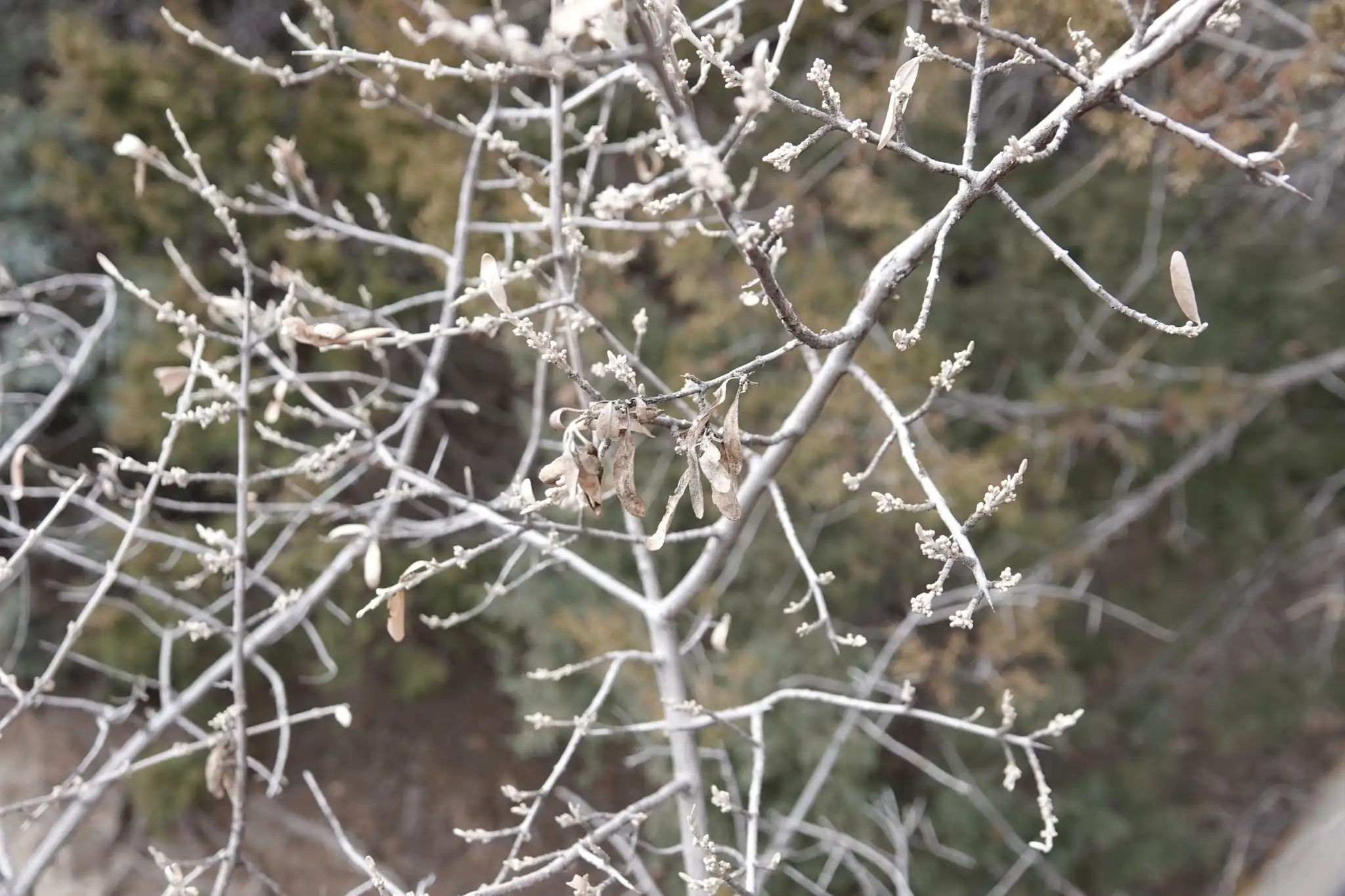
Shepherdia argentea, the silver buffaloberry, is a hardy deciduous shrub native to North America, forming dense, thorny thickets that thrive in poor, dry soils. Its distinctive opposite leaves are covered in silvery-white scales, giving the entire plant a striking, mealy grey-green appearance throughout the growing season.
This dioecious species requires both male and female plants to produce its tart, bright red autumn berries, which serve as a critical winter food source for native birds. The twigs develop sharp, thorny tips with age, providing excellent protective nesting cover for wildlife while deterring heavy browsing.
Uses & Benefits:
Essentials
At a Glance
Plant Type
Shrub
Height
144"
Width
144"
Light
Full Sun, Partial Sun
Zones
4, 5, 6, 7, 8, 9
Water
Low
Humidity
Low
Lifespan
Moderate to long
Native To
North America
Toxicity
Low (contains saponins)
Bloom period
Spring
In flower about 3 months of the year
Planting
How to Grow
- Select a planting site in full sun with well-drained sandy, loamy, or clay soil.
- Plant both male and female specimens close together to ensure wind and insect pollination for fruit production.
- Water moderately during the first growing season to establish the root system, then transition to dry, natural rainfall conditions.
- Control aggressive root suckers by digging them up at the base if you wish to prevent the shrub from forming a wide thicket.
Pro Tip
Avoid planting in highly irrigated beds or heavy, wet soils, as poor drainage rapidly induces fatal root rot. Because this species hosts nitrogen-fixing nodules, applying commercial fertilizers will suppress its natural symbiotic balance and cause weak, soft growth.
Keep It Thriving
Care Guide
Do
- Plant in full sun to maximize foliage density and fruit production.
- Ensure the soil drains rapidly and remains free of standing water.
- Prune selectively to remove dead wood or to manage suckering growth.
Don't
- Do not apply high-nitrogen fertilizers, which weaken the plant and disrupt its nitrogen-fixing roots.
- Do not prune heavily into old, leafless wood, as it fails to regenerate smoothly.
- Do not plant in humid, wet eastern climates where the shrub performs poorly.
Seasonal Care Calendar
| Task | Jan | Feb | Mar | Apr | May | Jun | Jul | Aug | Sep | Oct | Nov | Dec |
|---|---|---|---|---|---|---|---|---|---|---|---|---|
| Harvest | ||||||||||||
| Pest Check | ||||||||||||
| Prune | ||||||||||||
| Winter Prep |
Watch Out For
Pests & Diseases
Common Pests
Common Diseases
In the Garden
Landscape Uses & Companions
Landscape Uses
Multiply
Propagation Methods
Good to Know
Common Questions
Silver buffaloberry questions
What zones can Silver buffaloberry grow in?
Silver buffaloberry is hardy in USDA Zones 4–9. Inside that range it survives winter in the ground; outside it, grow it as an annual or a container plant you protect.
When does Silver buffaloberry bloom?
Silver buffaloberry typically blooms in spring through spring. Exact timing shifts a week or two with your zone — Sow's bloom calendar maps it to your garden.
Does Silver buffaloberry need full sun?
Silver buffaloberry does best in full sun to part shade. In hot climates, afternoon shade keeps blooms fresher longer.
Is Silver buffaloberry drought tolerant?
Yes — once established (usually after the first full season), Silver buffaloberry handles dry spells with minimal watering. Water deeply its first year to build the root system that makes that possible.
Keep exploring
Explore the genus
Grow Silver buffaloberry with confidence
See it in a design of your actual yard, get zone-matched care reminders, and track it season by season in your garden journal.