The Story
Plant Bio
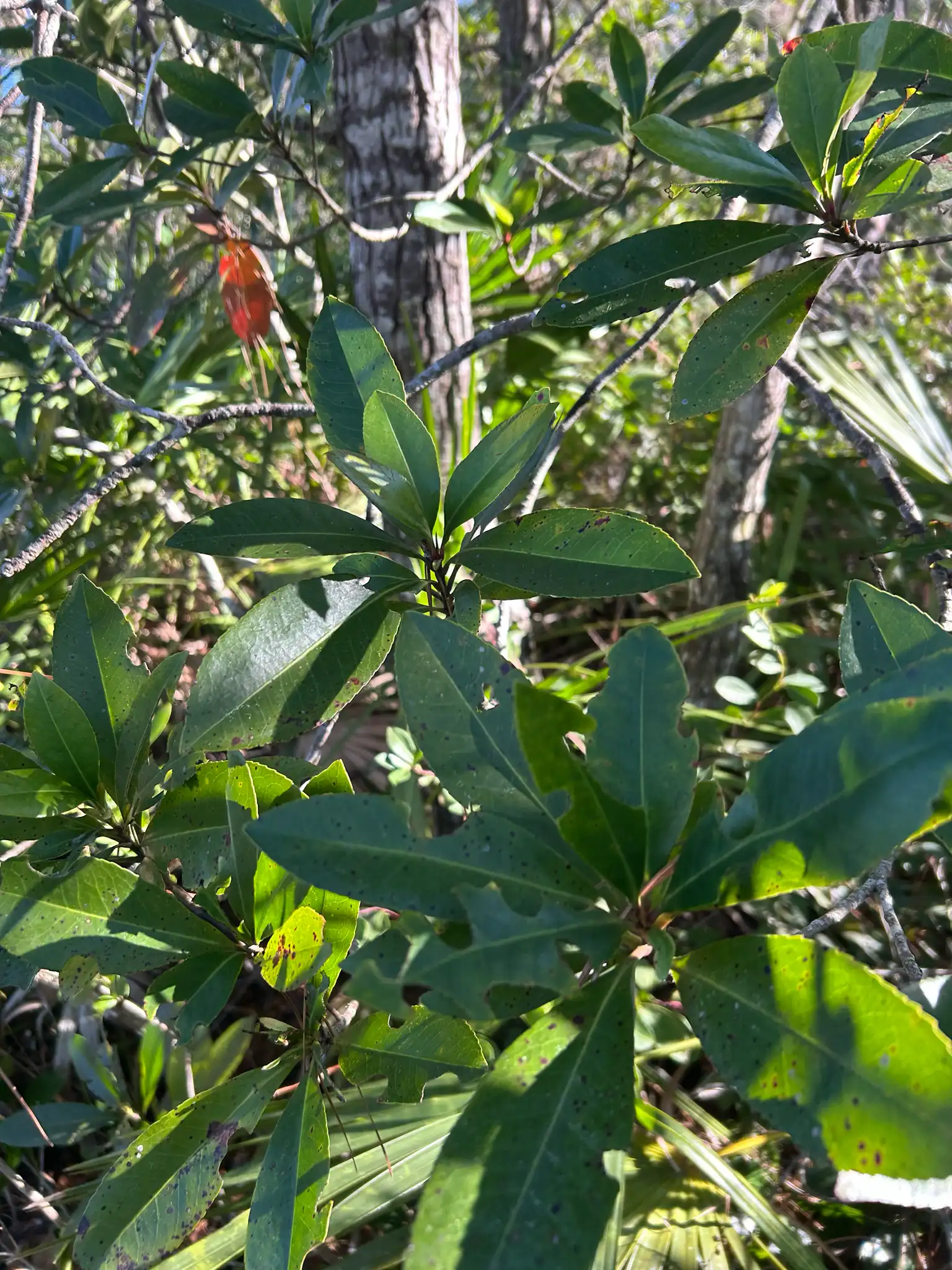
Gordonia lasianthus, commonly known as loblolly bay, is an evergreen tree native to wet coastal woods and wetland margins of the southeastern United States. It grows with a narrow columnar crown, bearing glossy leathery leaves and solitary waxy white flowers with yellow central stamens from late spring into early autumn.
The species is distinguished by its individual leaves turning brilliant scarlet before dropping, creating bright red foliage contrast against the dark green canopy throughout the year. The cup-shaped blooms closely resemble single camellias and open sequentially over a prolonged blooming period.
Uses & Benefits:
Essentials
At a Glance
Plant Type
Tree
Height
720"
Width
240"
Light
Full Sun, Partial Sun
Zones
7, 8, 9
Water
High
Humidity
High
Lifespan
Perennial
Native To
Southeastern United States
Toxicity
Non-toxic
Bloom period
Late spring – Early autumn
In flower about 5 months of the year
Planting
How to Grow
- Select a planting site in full sun or partial shade with acidic, organic-rich soil.
- Dig a planting hole twice as wide as the root ball and equal in depth.
- Position the tree so the root crown sits level with or slightly above the surrounding soil surface.
- Backfill with native acidic soil blended with organic matter, firming gently to remove air pockets.
- Water thoroughly at planting and establish a thick layer of organic mulch around the root zone.
- Maintain consistent soil moisture, especially during heat waves and dry weather.
Pro Tip
Limit pruning to removing dead or damaged branches during late winter dormancy; cutting back into old leafless wood prevents new growth from emerging on affected stems.
Keep It Thriving
Care Guide
Do
- Keep soil continuously moist to prevent root stress and defoliation.
- Maintain an acidic soil pH between 5.5 and 7.0.
- Apply a generous mulch ring to conserve moisture and regulate root temperature.
Don't
- Do not allow the soil to dry out completely around established roots.
- Do not plant in heavy, compacted clay soils without subsurface drainage.
- Do not hard-prune into bare wood, as it will not regenerate foliage.
Seasonal Care Calendar
| Task | Jan | Feb | Mar | Apr | May | Jun | Jul | Aug | Sep | Oct | Nov | Dec |
|---|---|---|---|---|---|---|---|---|---|---|---|---|
| Fertilize | ||||||||||||
| Mulch | ||||||||||||
| Pest Check | ||||||||||||
| Prune |
Watch Out For
Pests & Diseases
Common Pests
Common Diseases
In the Garden
Landscape Uses & Companions
Landscape Uses
Companion Plants
Multiply
Propagation Methods
Good to Know
Common Questions
Loblolly Bay questions
What zones can Loblolly Bay grow in?
Loblolly Bay is hardy in USDA Zones 7–9. Inside that range it survives winter in the ground; outside it, grow it as an annual or a container plant you protect.
When does Loblolly Bay bloom?
Loblolly Bay typically blooms in late spring through early autumn. Exact timing shifts a week or two with your zone — Sow's bloom calendar maps it to your garden.
Does Loblolly Bay need full sun?
Loblolly Bay does best in full sun to part shade. In hot climates, afternoon shade keeps blooms fresher longer.
Keep exploring
Explore the genus
Hardy in your zone?
Grow Loblolly Bay with confidence
See it in a design of your actual yard, get zone-matched care reminders, and track it season by season in your garden journal.