The Story
Plant Bio
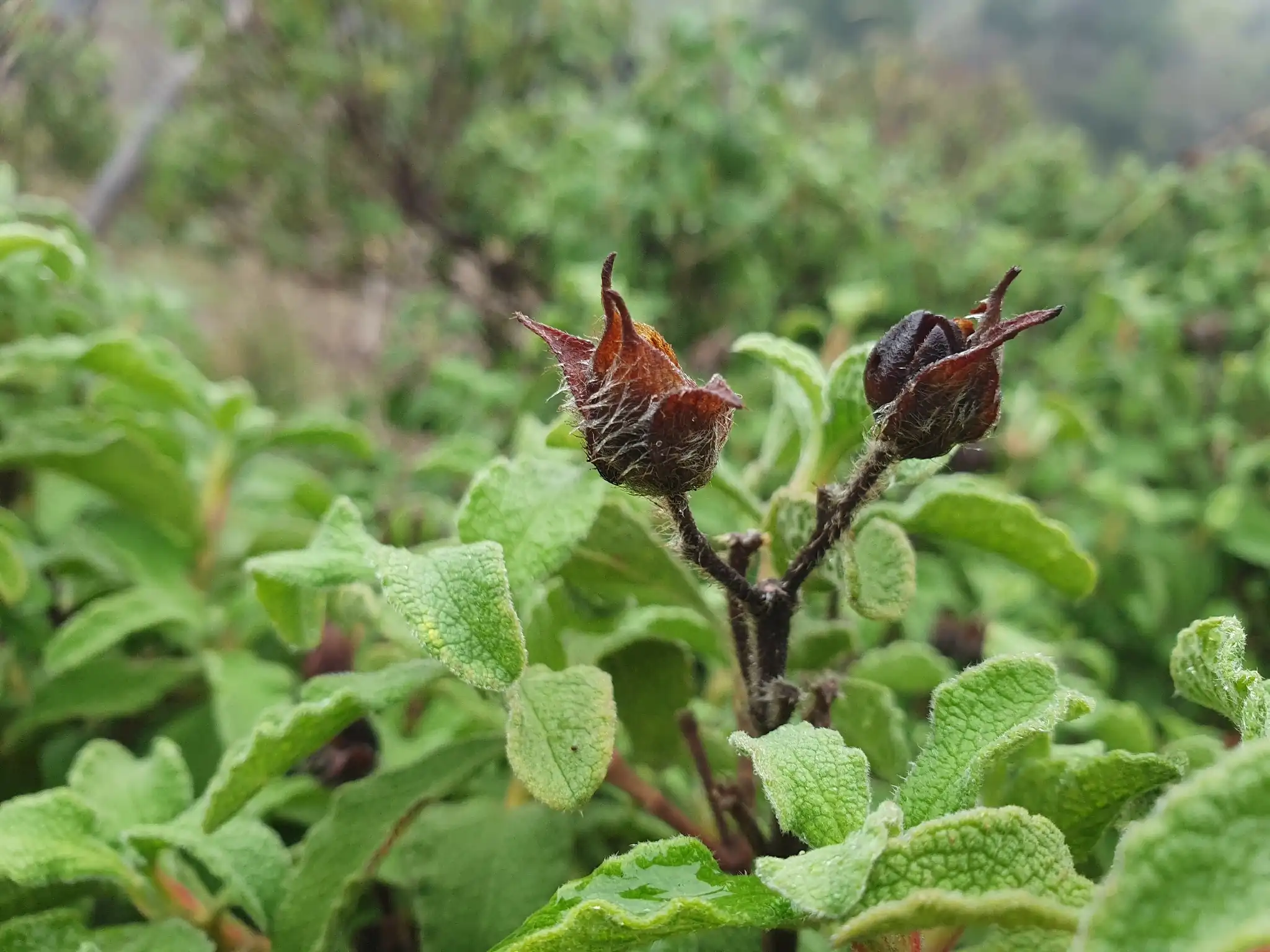
Cistus creticus, the Cretan rockrose, is a compact, rounded evergreen shrub native to the Mediterranean Basin that reaches two to five feet in height and width. The gray-green, wrinkled leaves are covered in soft, sticky hairs that exude a highly aromatic, balsamic resin known as ladanum on warm days.
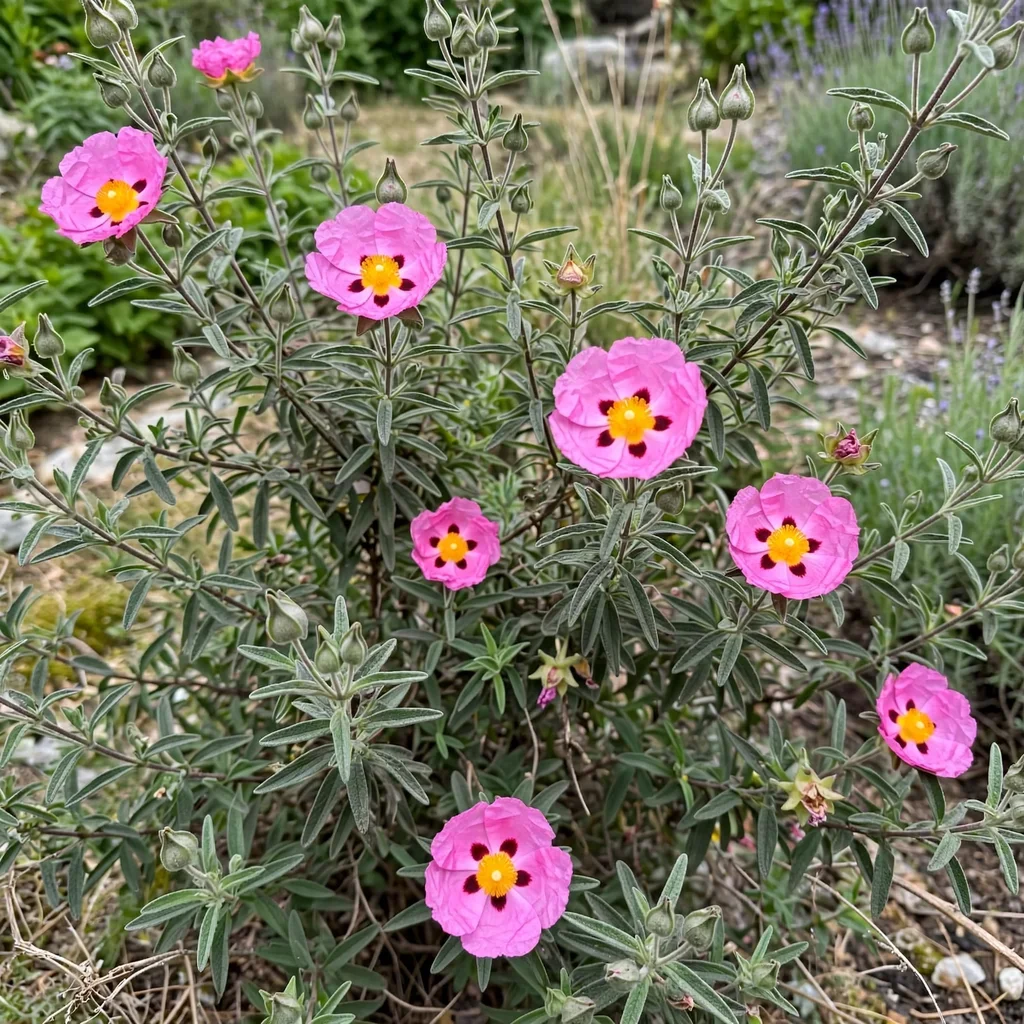
This species is distinguished by its terminal clusters of bright pink to purple-magenta flowers, each measuring up to two and a half inches across with crumpled petals surrounding a dense center of golden stamens. The individual blossoms open for only a single day, but the plant produces a continuous succession of flowers from late spring through summer.
Uses & Benefits:
Essentials
At a Glance
Plant Type
Shrub
Height
60"
Width
60"
Light
Full Sun
Zones
8, 9, 10
Water
Low
Humidity
Low to Moderate
Lifespan
10-15 years
Native To
Mediterranean Basin
Toxicity
Non-toxic
Bloom period
Late spring – Summer
In flower about 4 months of the year
Planting
How to Grow
- Select a planting site in full sun with exceptionally well-drained, poor, or sandy soil.
- Dig a hole twice as wide as the root ball but no deeper, ensuring the crown sits slightly above the surrounding soil level.
- Water the newly planted shrub deeply to settle the soil, then withhold water until the top few inches of soil are completely dry.
- Apply a thin layer of gravel mulch around the base of the plant to keep the foliage dry and prevent collar rot.
Pro Tip
Prune lightly immediately after summer flowering to maintain a compact shape; cutting back into old, leafless wood will kill the stems as the plant lacks latent buds on mature wood.
Keep It Thriving
Care Guide
Do
- Plant in poor, rocky, or sandy soils to prevent overly lush, weak growth.
- Provide full sun exposure to ensure robust flowering and prevent powdery mildew.
- Prune the soft, green tips immediately after flowering to encourage a dense habit.
Don't
- Do not prune into old, bare, brown wood, as the plant cannot regenerate from it.
- Do not apply high-nitrogen fertilizers, which shorten the plant's lifespan and cause floppy growth.
- Do not plant in heavy clay or poorly drained soils where water pools.
Seasonal Care Calendar
| Task | Jan | Feb | Mar | Apr | May | Jun | Jul | Aug | Sep | Oct | Nov | Dec |
|---|---|---|---|---|---|---|---|---|---|---|---|---|
| Pest Check | ||||||||||||
| Plant | ||||||||||||
| Prune | ||||||||||||
| Winter Prep |
Watch Out For
Pests & Diseases
Common Pests
Common Diseases
In the Garden
Landscape Uses & Companions
Landscape Uses
Multiply
Propagation Methods
Good to Know
Common Questions
Cretan Rockrose questions
What zones can Cretan Rockrose grow in?
Cretan Rockrose is hardy in USDA Zones 8–10. Inside that range it survives winter in the ground; outside it, grow it as an annual or a container plant you protect.
Is Cretan Rockrose deer resistant?
Yes — Cretan Rockrose is rated deer-resistant. Deer typically pass it over, though extreme hunger can override any plant's defenses.
When does Cretan Rockrose bloom?
Cretan Rockrose typically blooms in late spring through summer. Exact timing shifts a week or two with your zone — Sow's bloom calendar maps it to your garden.
Does Cretan Rockrose need full sun?
Cretan Rockrose does best in full sun (6+ hours).
Is Cretan Rockrose drought tolerant?
Yes — once established (usually after the first full season), Cretan Rockrose handles dry spells with minimal watering. Water deeply its first year to build the root system that makes that possible.
More Cistus to compare
Keep exploring
Explore the genus
Hardy in your zone?
Grow Cretan Rockrose with confidence
See it in a design of your actual yard, get zone-matched care reminders, and track it season by season in your garden journal.