The Story
Plant Bio
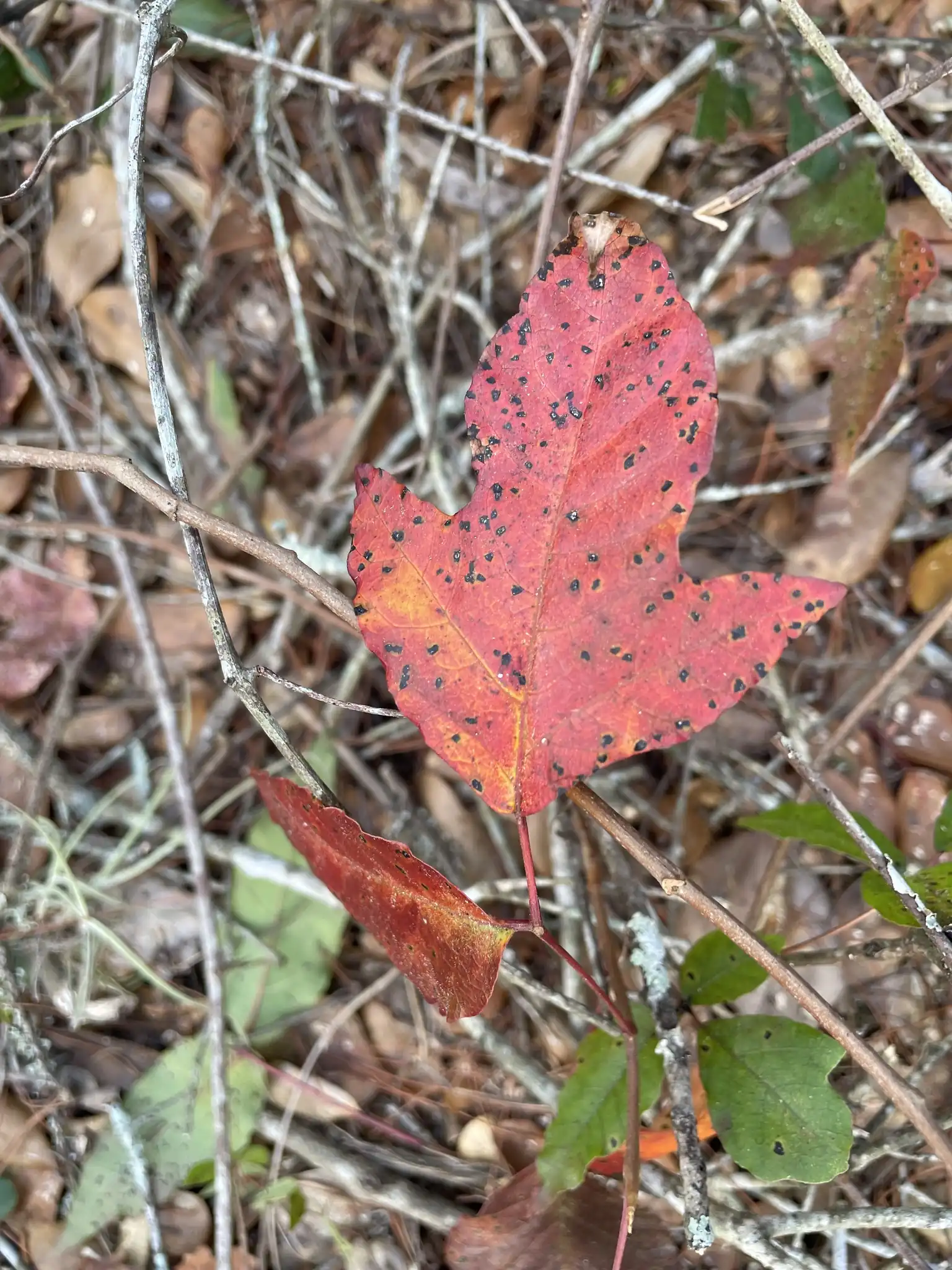
Toxicodendron radicans is a highly adaptable deciduous woody vine or sprawling shrub native to North America, climbing vertical structures via hairy aerial rootlets or spreading horizontally through underground rhizomes. The pinnately trifoliate leaves emerge with a glossy bronze tint in spring, mature to bright green, and turn brilliant shades of yellow, orange, and red in fall.
This species produces small, inconspicuous greenish-white flowers in spring followed by persistent grayish-white drupes that serve as a critical winter food source for over sixty bird species. All parts of the plant contain urushiol, a potent oil that causes severe contact dermatitis in humans upon physical contact.
Uses & Benefits:
Essentials
At a Glance
Plant Type
Vine
Height
1180"
Width
118"
Light
Full Sun, Partial Sun, Shade
Zones
4, 5, 6, 7, 8, 9
Water
Low to moderate
Humidity
High
Lifespan
Perennial
Native To
North America
Toxicity
Severe skin irritant
Bloom period
Spring – Early summer
In flower about 4 months of the year
Planting
How to Grow
- Identify the plant by its three leaflets, where the central leaflet has a longer petiolule than the lateral ones.
- Wear thick, impervious gloves, long sleeves, and protective eyewear before attempting any physical removal.
- Sever the main climbing stems at the base of the host tree or structure using dedicated pruners.
- Dig out the underground rhizomes completely to prevent aggressive resprouting from remaining root fragments.
Pro Tip
Urushiol remains active on dead stems, roots, and tools for years; never burn cleared vines, as the smoke carries the oil and causes severe systemic respiratory reactions.
Keep It Thriving
Care Guide
Do
- Wear protective clothing and heavy-duty gloves when working near suspected infestations.
- Wash tools, boots, and clothing with specialized degreasing soap immediately after exposure.
- Use thick mulching or sheet mulching to suppress emerging seedlings in cleared areas.
Don't
- Never burn any part of the plant, as the smoke contains toxic urushiol oil.
- Do not touch your face, skin, or pets after handling tools that have contacted the vine.
- Avoid weed-whacking or mowing the foliage, which aerosolizes the irritating sap.
Seasonal Care Calendar
| Task | Jan | Feb | Mar | Apr | May | Jun | Jul | Aug | Sep | Oct | Nov | Dec |
|---|---|---|---|---|---|---|---|---|---|---|---|---|
| Mulch | ||||||||||||
| Pest Check | ||||||||||||
| Prune | ||||||||||||
| Winter Prep |
Watch Out For
Pests & Diseases
Common Pests
Common Diseases
In the Garden
Landscape Uses & Companions
Landscape Uses
Companion Plants
Multiply
Propagation Methods
Good to Know
Common Questions
Eastern Poison Ivy questions
What zones can Eastern Poison Ivy grow in?
Eastern Poison Ivy is hardy in USDA Zones 4–9. Inside that range it survives winter in the ground; outside it, grow it as an annual or a container plant you protect.
Is Eastern Poison Ivy deer resistant?
Yes — Eastern Poison Ivy is rated deer-resistant. Deer typically pass it over, though extreme hunger can override any plant's defenses.
When does Eastern Poison Ivy bloom?
Eastern Poison Ivy typically blooms in spring through early summer. Exact timing shifts a week or two with your zone — Sow's bloom calendar maps it to your garden.
Does Eastern Poison Ivy need full sun?
Eastern Poison Ivy does best in full sun to part shade. In hot climates, afternoon shade keeps blooms fresher longer.
Is Eastern Poison Ivy drought tolerant?
Yes — once established (usually after the first full season), Eastern Poison Ivy handles dry spells with minimal watering. Water deeply its first year to build the root system that makes that possible.
Keep exploring
Explore the genus
Grow Eastern Poison Ivy with confidence
See it in a design of your actual yard, get zone-matched care reminders, and track it season by season in your garden journal.