2 named cultivars


The Story
Plant Bio
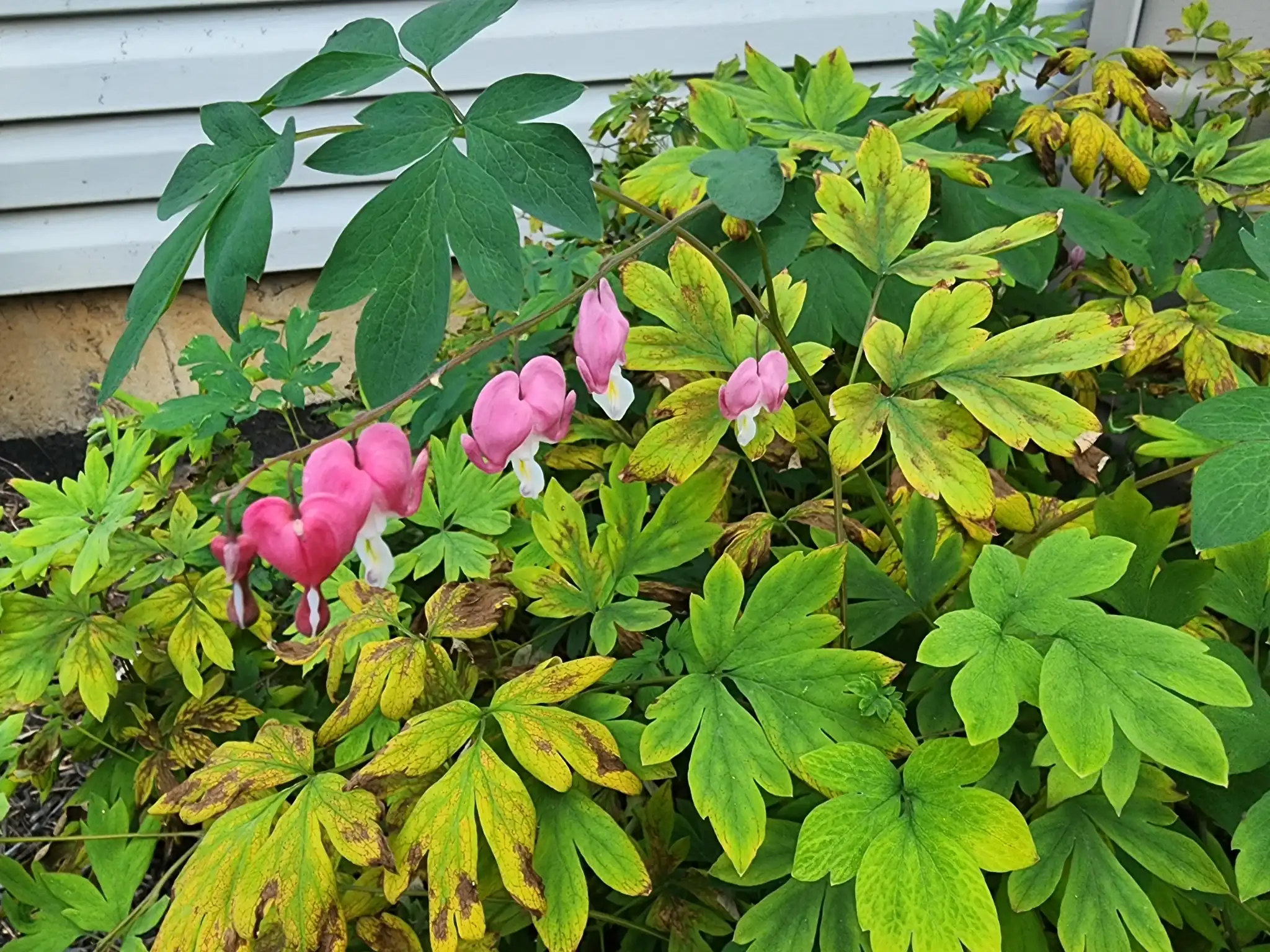
Lamprocapnos spectabilis, the old-fashioned bleeding heart and long known as Dicentra spectabilis, is a clumping perennial from Siberia, northern China, Korea and Japan. Thick juicy stems two to three feet long carry divided blue-green foliage, and arching sprays of pendent pink hearts, each with a white teardrop below, hang beneath them in spring.
It goes fully dormant by midsummer, yellowing and vanishing entirely, which is normal and not a failure — plant hostas or ferns beside it to fill the hole it leaves. If you want a bleeding heart that keeps its foliage and flowers into autumn, choose the native fringed bleeding heart, Dicentra eximia, instead. The sap can irritate skin.
Uses & Benefits:
Essentials
At a Glance
Plant Type
Perennial
Height
30"
Width
28"
Light
Partial Sun, Shade
Zones
4, 5, 6, 7, 8, 9
Water
Moderate
Humidity
Moderate
Lifespan
Perennial
Native To
Siberia, northern China, Korea and Japan
Toxicity
Mildly toxic; sap can irritate skin
Planting
How to Grow
- Plant in partial to deep shade in humus-rich soil.
- Keep the soil moist but never waterlogged.
- Plant hostas or ferns alongside to fill the summer gap.
- Mark the position before it dies back.
- Leave the dying foliage until it yellows completely.
- Divide only in early spring or after dormancy.
Pro Tip
Mark the crown before it disappears in midsummer — more plants are lost to a careless spade in August than to any pest.
Keep It Thriving
Care Guide
Do
- Plant it in shade with moist soil 🌿
- Pair it with hostas or ferns 🌱
- Mark the crown before dormancy 📍
- Wear gloves when handling it 🧤
Don't
- Assume midsummer dieback is disease ❌
- Dig near the dormant crown ❌
- Let it sit in waterlogged soil ❌
Seasonal Care Calendar
| Task | Jan | Feb | Mar | Apr | May | Jun | Jul | Aug | Sep | Oct | Nov | Dec |
|---|---|---|---|---|---|---|---|---|---|---|---|---|
| Divide | ||||||||||||
| Mark |
Watch Out For
Pests & Diseases
Common Pests
Common Diseases
In the Garden
Landscape Uses & Companions
Landscape Uses
Companion Plants
Multiply
Propagation Methods
Good to Know
Common Questions
Bleeding Heart questions
What zones can Bleeding Heart grow in?
Bleeding Heart is hardy in USDA Zones 4–9. Inside that range it survives winter in the ground; outside it, grow it as an annual or a container plant you protect.
Is Bleeding Heart deer resistant?
Yes — Bleeding Heart is rated deer-resistant. Deer typically pass it over, though extreme hunger can override any plant's defenses.
When does Bleeding Heart bloom?
Bleeding Heart typically blooms in spring through late spring. Exact timing shifts a week or two with your zone — Sow's bloom calendar maps it to your garden.
Does Bleeding Heart need full sun?
Bleeding Heart does best in part shade.
More Lamprocapnos to compare
Keep exploring
Explore the genus
Grow Bleeding Heart with confidence
See it in a design of your actual yard, get zone-matched care reminders, and track it season by season in your garden journal.