The Story
Plant Bio
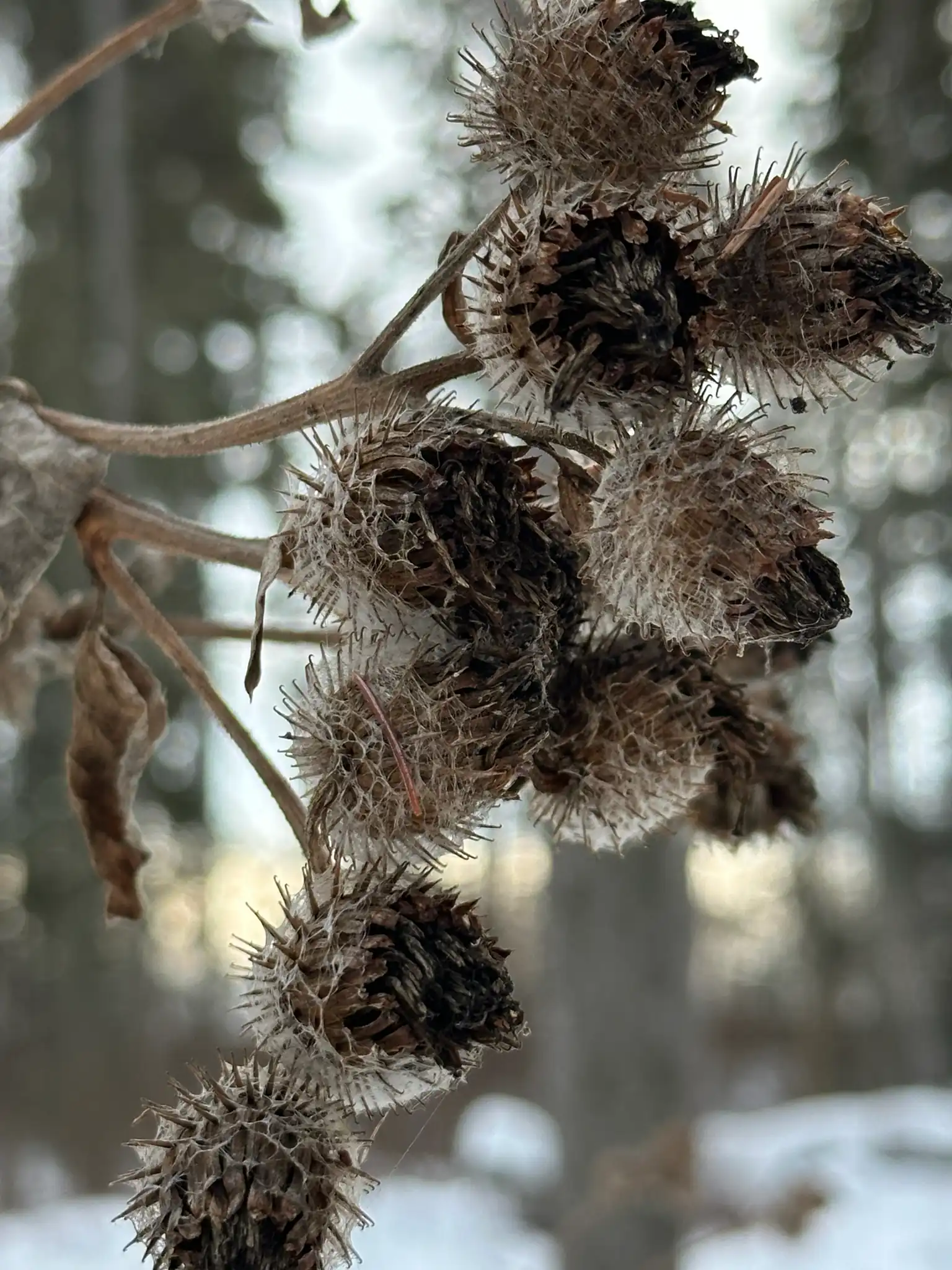
Arctium tomentosum, the woolly burdock, is a robust biennial herb that forms a coarse basal rosette of massive, heart-shaped leaves in its first year before sending up a tall, branched flowering stem in its second. The species is distinguished by a dense, felt-like white webbing that covers both the undersides of the foliage and the globose flower heads.
This species is separated from other common burdocks by the heavy, cobweb-like hairs on its flower involucres and its flat-topped, corymb-like flower clusters. The purplish-red flower heads feature hooked bracts that cling tightly to passing animals and clothing to disperse the seeds.
Uses & Benefits:
Essentials
At a Glance
Plant Type
Perennial
Height
79"
Width
59"
Light
Full Sun, Partial Sun
Zones
4, 5, 6, 7
Water
Moderate
Humidity
Moderate
Lifespan
Biennial
Native To
Eurasia
Toxicity
Skin Irritant / Toxic if Ingested
Bloom period
Summer – Fall
In flower about 6 months of the year
Planting
How to Grow
- Sow seeds directly into prepared garden beds in spring or fall, pressing them lightly into the soil surface as they require light to germinate.
- Select a site in full sun to partial shade with deep, well-draining soil to accommodate the long, fleshy taproot.
- Water young seedlings regularly to keep the soil moist until they establish a robust root system.
- Provide minimal supplemental fertilizer, as the plant thrives naturally in nutrient-rich, disturbed, or calcareous soils.
Pro Tip
Cut the flowering stalks down to the ground immediately after the blooms fade to prevent the plant from self-seeding aggressively and becoming a weed.
Keep It Thriving
Care Guide
Do
- Wear gloves when handling mature plants to avoid contact dermatitis from the foliage.
- Remove spent flower heads before they mature into dry, clinging burs.
- Grow in a dedicated, contained area of the garden to manage its self-seeding tendency.
Don't
- Do not plant near pathways or livestock pastures where the hooked seed burs can cling to clothing or animal fur.
- Do not overwater or plant in poorly drained soils where the deep taproot is susceptible to rot.
- Do not prune into the main stem during the active growing season if you wish to see the second-year flowers.
Seasonal Care Calendar
| Task | Jan | Feb | Mar | Apr | May | Jun | Jul | Aug | Sep | Oct | Nov | Dec |
|---|---|---|---|---|---|---|---|---|---|---|---|---|
| Pest Check | ||||||||||||
| Plant | ||||||||||||
| Prune | ||||||||||||
| Spring Cleanup |
Watch Out For
Pests & Diseases
Common Pests
Common Diseases
In the Garden
Landscape Uses & Companions
Landscape Uses
Companion Plants
Multiply
Propagation Methods
Good to Know
Common Questions
Woolly Burdock questions
What zones can Woolly Burdock grow in?
Woolly Burdock is hardy in USDA Zones 4–7. Inside that range it survives winter in the ground; outside it, grow it as an annual or a container plant you protect.
When does Woolly Burdock bloom?
Woolly Burdock typically blooms in summer through fall. Exact timing shifts a week or two with your zone — Sow's bloom calendar maps it to your garden.
Does Woolly Burdock need full sun?
Woolly Burdock does best in full sun to part shade. In hot climates, afternoon shade keeps blooms fresher longer.
Is Woolly Burdock drought tolerant?
Yes — once established (usually after the first full season), Woolly Burdock handles dry spells with minimal watering. Water deeply its first year to build the root system that makes that possible.
More Arctium to compare
Keep exploring
Explore the genus
Hardy in your zone?
Grow Woolly Burdock with confidence
See it in a design of your actual yard, get zone-matched care reminders, and track it season by season in your garden journal.