Also known as Burdock · 7 saves
Arctium
Arctium, the genus most gardeners know as burdock. We track 4 varieties; the ones most used by real gardeners.
The 4 most-saved Arctium varieties
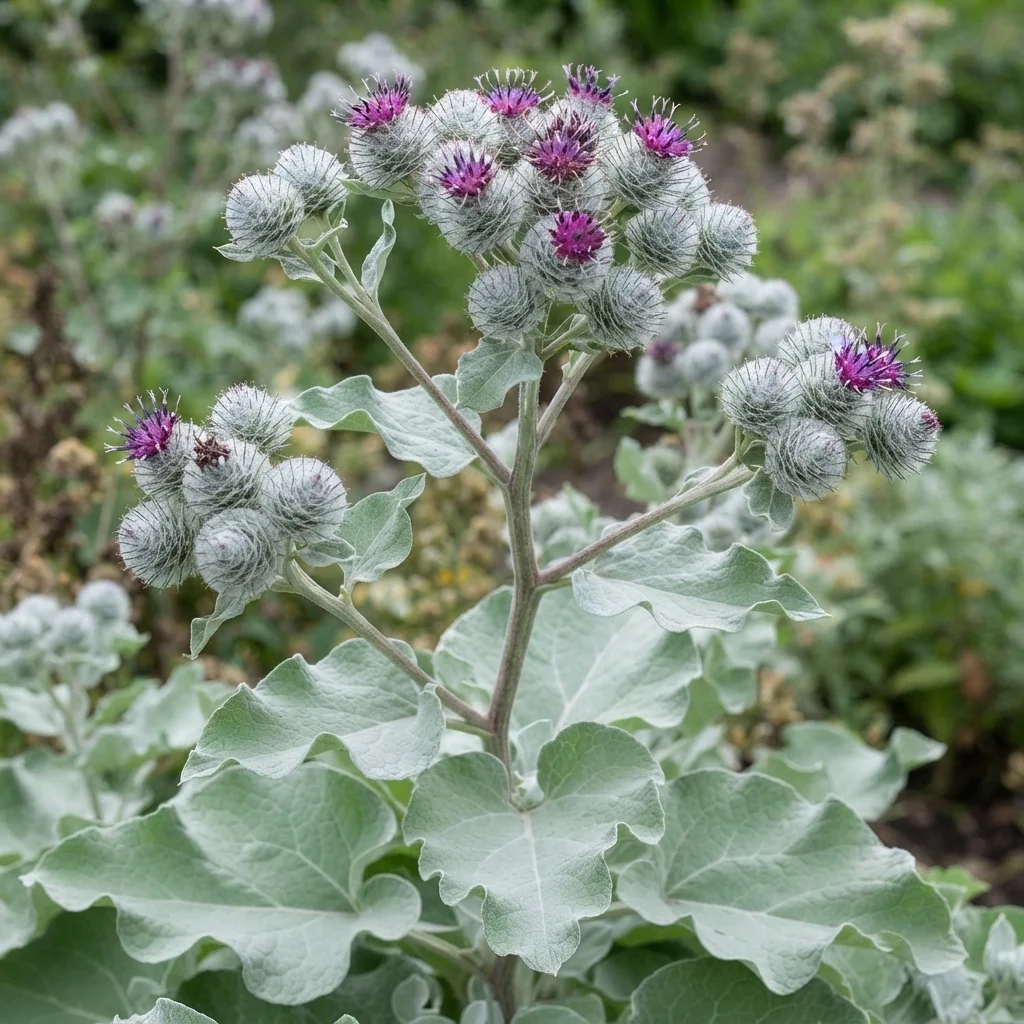
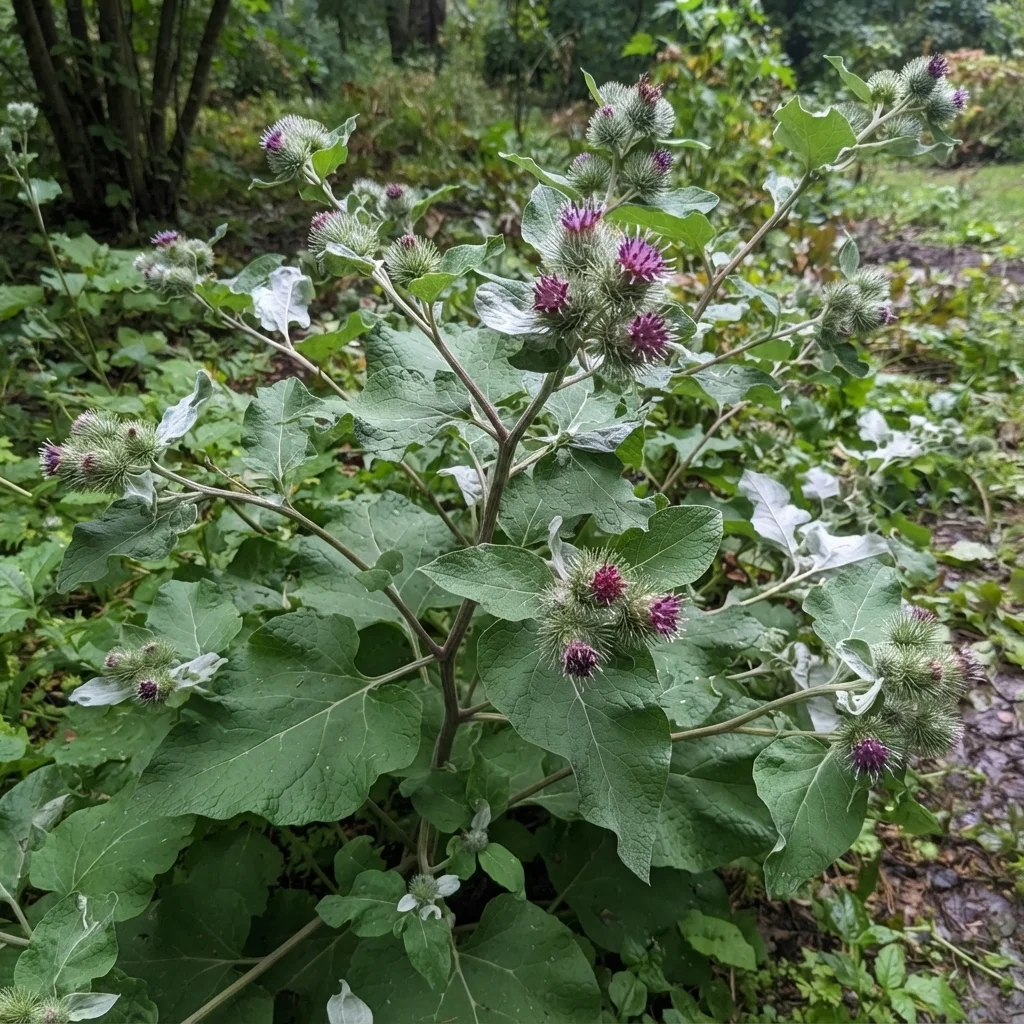
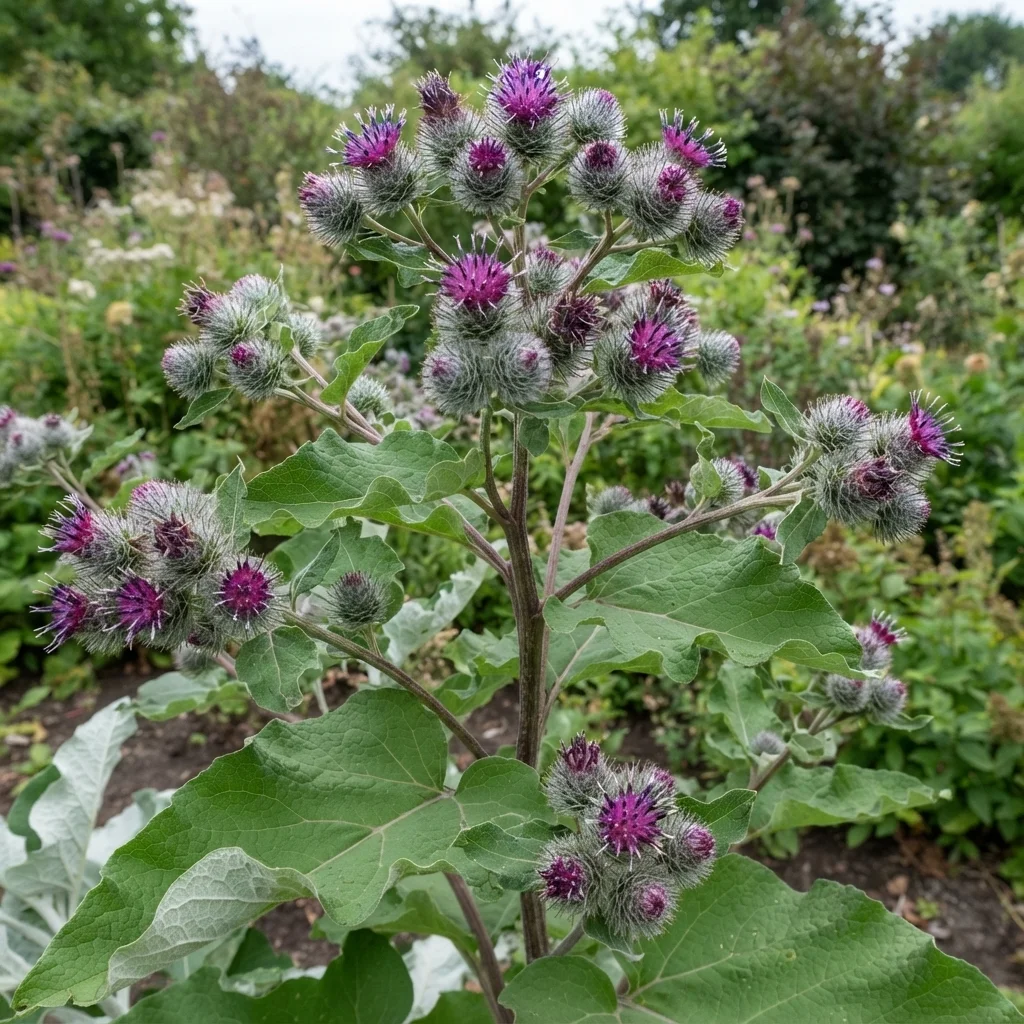
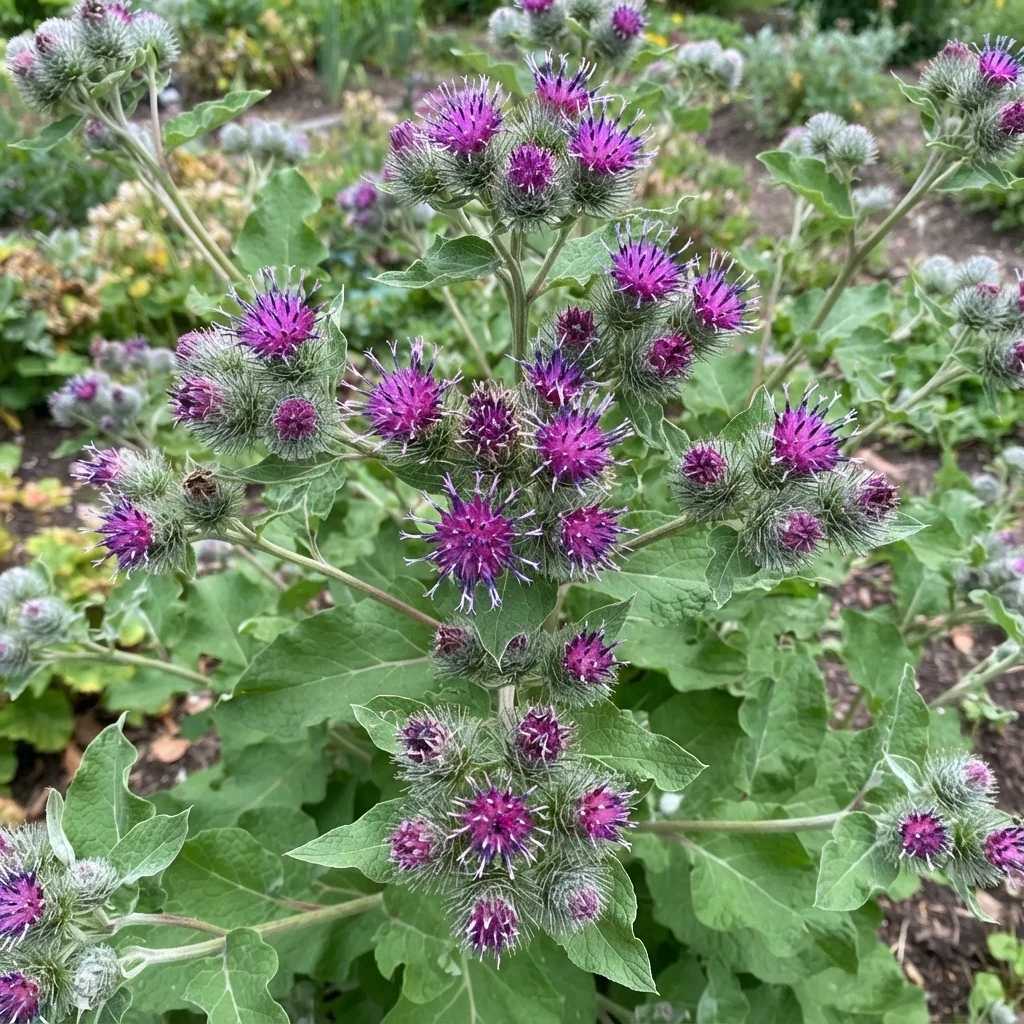
4 species of Arctium
Each one is a parent of the varieties above.
Track your Arctium in Sow
Save the Arctium you grow and get care reminders timed to your zone.
How to grow Arctium
Whats common across all Arctium varieties in our catalog — drawn from the care records of the 4 most-grown of them.
The Arctium year
- PruneJuly–September100% of varieties
Cut down spent flowering stalks before the seed burs mature to prevent unwanted spreading.
- Check for PestsJune and July100% of varieties
Inspect leaf undersides for aphids and spider mites during warm, dry weather.
- Spring CleanupMarch and April75% of varieties
Clear away dead leaf rosettes from first-year plants and check for emerging seedlings.
- PlantApril, September and October50% of varieties
Sow seeds directly into prepared soil in mid-spring or early fall.
- HarvestOctober50% of varieties
Dig up first-year roots in late fall when the plant's energy is concentrated underground.


Do
- Wear gloves when handling mature plants to avoid contact dermatitis from the foliage.
- Remove spent flower heads before they mature into dry, clinging burs.
- Grow in a dedicated, contained area of the garden to manage its self-seeding tendency.
- Grow in partial shade or dappled woodland light to mimic its natural forest-edge habitat.
- Maintain moderate soil moisture, especially during hot, dry summer spells to prevent leaf wilt.
Avoid
- Do not plant near pathways or livestock pastures where the hooked seed burs can cling to clothing or animal fur.
- Do not overwater or plant in poorly drained soils where the deep taproot is susceptible to rot.
- Do not prune into the main stem during the active growing season if you wish to see the second-year flowers.
- Do not plant in poorly drained or waterlogged soils, which quickly induce root and crown rot.
What goes wrong with Arctium
| Problem | What you'll see | What to do |
|---|---|---|
| Aphids | Clusters of small, soft-bodied insects on new growth and leaf undersides, accompanied by sticky honeydew. | Knock the insects off with a strong spray of water from a garden hose or apply insecticidal soap. |
| Spider mites | Fine webbing on the undersides of leaves and stippled, yellowing foliage. | Increase humidity around the plant and spray with insecticidal soap or neem oil. |
| Spider Mites | Fine webbing on the undersides of leaves accompanied by yellow stippling and bronzing of the foliage. | Increase humidity around the plant and spray the undersides of leaves thoroughly with water or horticultural oil. |
| Deer | Chewed foliage on young basal leaves during early spring. | Apply commercial scent-based repellents or install physical fencing to protect desirable adjacent plants. |
| Root rot | Wilting foliage, yellowing leaves, and a decaying, mushy taproot. | Plant in well-drained soil and avoid overwatering. |
| Powdery mildew | A white, powdery fungal coating on the upper surfaces of the leaves, especially in humid conditions. | Provide adequate spacing for air circulation and remove heavily infected leaves. |
| Powdery Mildew | A white, powdery fungal coating on the upper surfaces of leaves, leading to premature yellowing and leaf drop. | Ensure adequate spacing for air circulation and water the soil directly rather than wetting the foliage. |
Making more Arctium
Seed
- Collect mature seed burs in late summer or fall when they turn brown and dry.
- Extract the seeds carefully from the hooked bracts, wearing gloves to avoid skin irritation.
- Sow seeds directly onto the soil surface in spring or fall, as they do not require cold stratification.
- Keep the soil surface lightly moist until germination occurs, typically within two to three weeks.
Arctium questions
How many types of Arctium are there?
The Sow catalog tracks 4 distinct Arctium varieties. The most popular — ranked by 7 real gardeners — are shown first above.
What zones does Arctium grow in?
Across its varieties, Arctium covers USDA Zones 4–10. Individual varieties differ — each plant page lists its exact range, and Sow filters the catalog to your zone automatically.
When does Arctium bloom?
Most Arctium varieties bloom in summer. Staggering early, mid, and late varieties extends the genus's season in one bed.
Which Arctium should I choose?
Start from the most-saved varieties above — popularity across thousands of gardens is a strong signal of reliability — then filter by your zone and sun. In the Sow app you can preview any of them in a photo of your actual yard before you buy.