The Story
Plant Bio
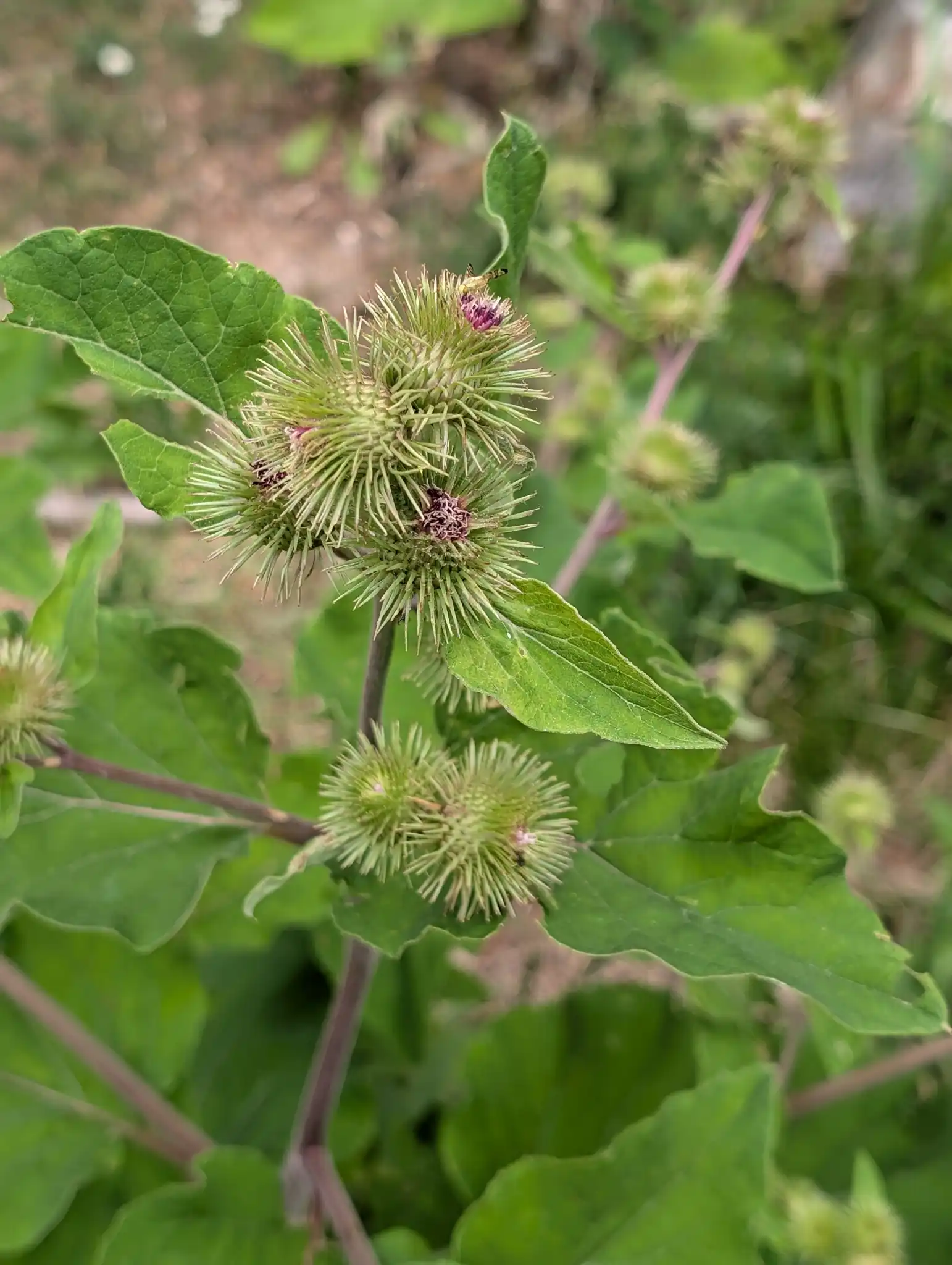
Arctium nemorosum, commonly known as wood burdock, is a robust biennial herb native to Europe and western Asia that forms a massive basal rosette of broad leaves in its first year. In its second season, the plant bolts into a tall, stout, branched structure bearing spherical, thistle-like purple flower heads surrounded by hooked, prickly bracts.
This species is distinguished from its close relatives by its preference for shadier, damp woodland margins and its hollow leaf petioles. The large, heart-shaped leaves feature a dark green upper surface contrasted by a densely felted, grayish-white woolly underside.
Uses & Benefits:
Essentials
At a Glance
Plant Type
Perennial
Height
98"
Width
47"
Light
Full Sun, Partial Sun, Shade
Zones
5, 6, 7, 8, 9
Water
Medium
Humidity
Medium
Lifespan
Biennial
Native To
Europe, Caucasus
Toxicity
Mild Skin Irritant
Bloom period
Summer – Fall
In flower about 6 months of the year
Planting
How to Grow
- Sow seeds directly into rich, moist, loamy soil in a partially shaded woodland margin during early spring.
- Keep the soil consistently moist but well-drained during the first year to support the development of the large basal rosette.
- Avoid applying high-nitrogen fertilizers, which trigger excessive, weak foliage growth at the expense of structural integrity.
- Allow the plant to bolt and flower in its second year, then cut the stalks to the ground before the green burs dry and harden.
Pro Tip
Cut the flowering stalks completely to the ground immediately after the second-year bloom cycle finishes to prevent the hooked burs from dispersing seeds and creating an aggressive weed problem.
Keep It Thriving
Care Guide
Do
- Grow in partial shade or dappled woodland light to mimic its natural forest-edge habitat.
- Maintain moderate soil moisture, especially during hot, dry summer spells to prevent leaf wilt.
- Wear thick gloves when handling mature plants to protect skin from irritating foliage sap and hooked burs.
Don't
- Do not plant in poorly drained or waterlogged soils, which quickly induce root and crown rot.
- Never prune into old, leafless wood or cut back the first-year rosette, as this disrupts the biennial growth cycle.
- Do not allow the second-year seed heads to mature fully if you wish to prevent aggressive self-seeding.
Seasonal Care Calendar
| Task | Jan | Feb | Mar | Apr | May | Jun | Jul | Aug | Sep | Oct | Nov | Dec |
|---|---|---|---|---|---|---|---|---|---|---|---|---|
| Pest Check | ||||||||||||
| Propagate | ||||||||||||
| Prune | ||||||||||||
| Spring Cleanup |
Watch Out For
Pests & Diseases
Common Pests
Common Diseases
In the Garden
Landscape Uses & Companions
Landscape Uses
Companion Plants
Multiply
Propagation Methods
Good to Know
Common Questions
Wood Burdock questions
What zones can Wood Burdock grow in?
Wood Burdock is hardy in USDA Zones 5–9. Inside that range it survives winter in the ground; outside it, grow it as an annual or a container plant you protect.
Is Wood Burdock deer resistant?
Not reliably. Deer may browse Wood Burdock, especially tender spring growth — plan on repellents or fencing where pressure is high.
When does Wood Burdock bloom?
Wood Burdock typically blooms in summer through fall. Exact timing shifts a week or two with your zone — Sow's bloom calendar maps it to your garden.
Does Wood Burdock need full sun?
Wood Burdock does best in full sun to part shade. In hot climates, afternoon shade keeps blooms fresher longer.
More Arctium to compare
Keep exploring
Explore the genus
Hardy in your zone?
Grow Wood Burdock with confidence
See it in a design of your actual yard, get zone-matched care reminders, and track it season by season in your garden journal.