1 named cultivar

The Story
Plant Bio
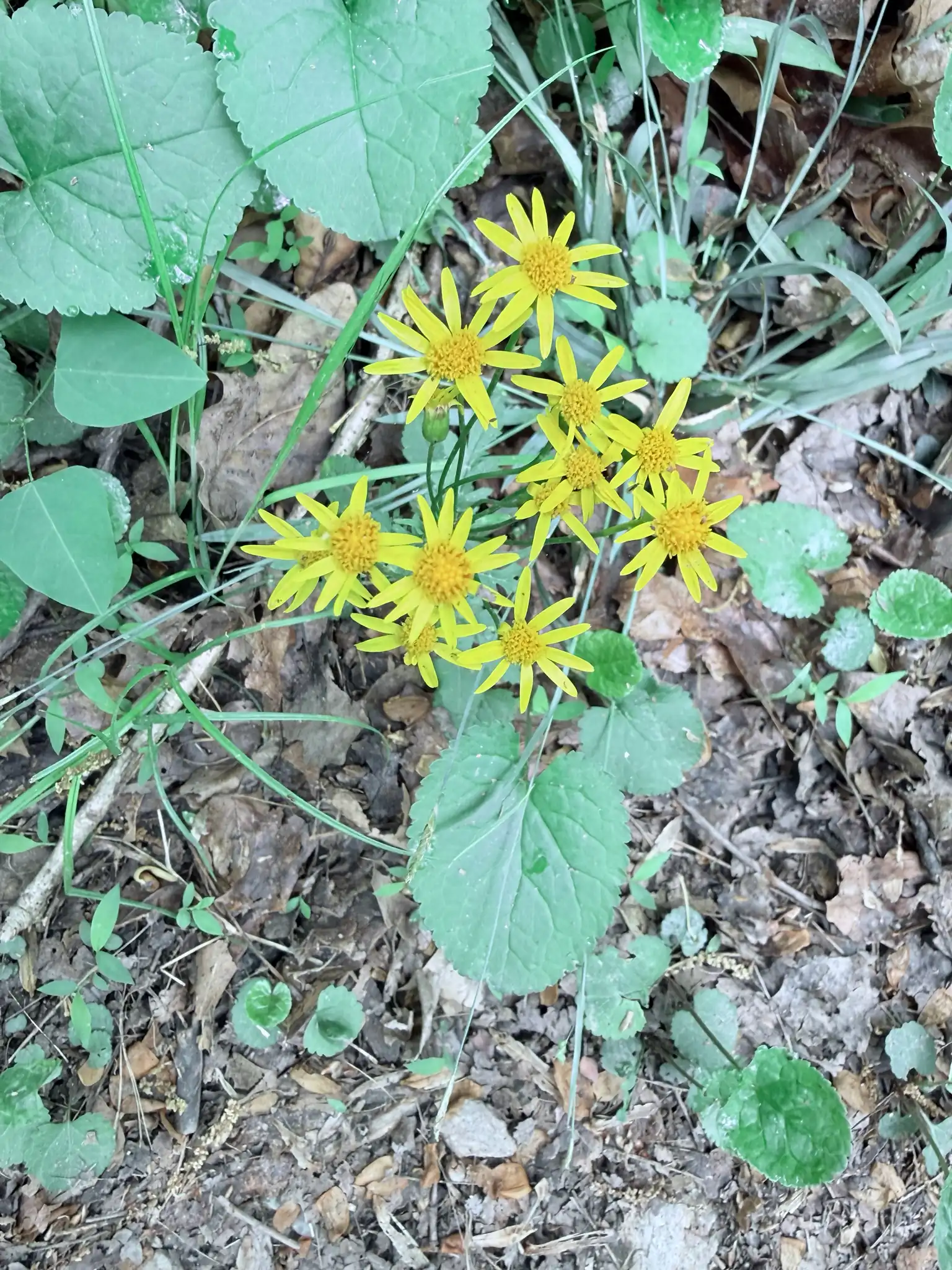
Packera aurea, golden ragwort, is a spreading semi-evergreen perennial native from eastern Canada through the eastern United States to Texas. Rounded, heart-shaped basal leaves form a low evergreen mat, and in spring flat clusters of small golden-yellow daisies rise on stems six inches to two and a half feet tall. It spreads steadily by rhizome into broad colonies.
The basal rosettes persist through winter, so it works as a genuine evergreen groundcover rather than dying back like most perennials — useful under trees where bare soil would otherwise show. It contains pyrrolizidine alkaloids and is toxic to people and livestock, which is also why deer and rabbits leave the colonies alone.
Uses & Benefits:
Essentials
At a Glance
Plant Type
Perennial
Height
18"
Width
18"
Light
Full Sun, Partial Sun, Shade
Zones
4, 5, 6, 7
Water
Moderate to high
Humidity
Moderate
Lifespan
Perennial
Native To
Eastern Canada and the eastern United States to Texas
Toxicity
Toxic if ingested
Marketplace
Where to Buy
Shipping costs Year-round shipping Free shipping
Planting
How to Grow
- Plant in spring or autumn in moist, humus-rich soil.
- Choose full sun to partial shade.
- Space about a foot apart; it fills in quickly.
- Keep the soil moist, especially in sun.
- Let it run as groundcover, or edge it to contain.
- Cut spent flower stems after bloom to limit seeding.
Pro Tip
Use it where you want ground covered fast — it colonises willingly, which is a virtue under trees and a nuisance in a small bed.
Keep It Thriving
Care Guide
Do
- Keep the soil moist 💧
- Let it colonise as woodland groundcover 🌱
- Deadhead after flowering to limit seedlings ✂️
- Keep it away from grazing animals 🐄
Don't
- Plant it in a small tidy border ❌
- Let it dry out in full sun ❌
- Let livestock or pets graze it ❌
Seasonal Care Calendar
| Task | Jan | Feb | Mar | Apr | May | Jun | Jul | Aug | Sep | Oct | Nov | Dec |
|---|---|---|---|---|---|---|---|---|---|---|---|---|
| Divide | ||||||||||||
| Prune |
Watch Out For
Pests & Diseases
Common Pests
Common Diseases
In the Garden
Landscape Uses & Companions
Landscape Uses
Multiply
Propagation Methods
Good to Know
Common Questions
Golden Ragwort questions
What zones can Golden Ragwort grow in?
Golden Ragwort is hardy in USDA Zones 4–7. Inside that range it survives winter in the ground; outside it, grow it as an annual or a container plant you protect.
Is Golden Ragwort deer resistant?
Yes — Golden Ragwort is rated deer-resistant. Deer typically pass it over, though extreme hunger can override any plant's defenses.
When does Golden Ragwort bloom?
Golden Ragwort typically blooms in spring through late spring. Exact timing shifts a week or two with your zone — Sow's bloom calendar maps it to your garden.
Does Golden Ragwort need full sun?
Golden Ragwort does best in full sun to part shade. In hot climates, afternoon shade keeps blooms fresher longer.
More Packera to compare
Keep exploring
Explore the genus
Hardy in your zone?
Grow Golden Ragwort with confidence
See it in a design of your actual yard, get zone-matched care reminders, and track it season by season in your garden journal.