The Story
Plant Bio
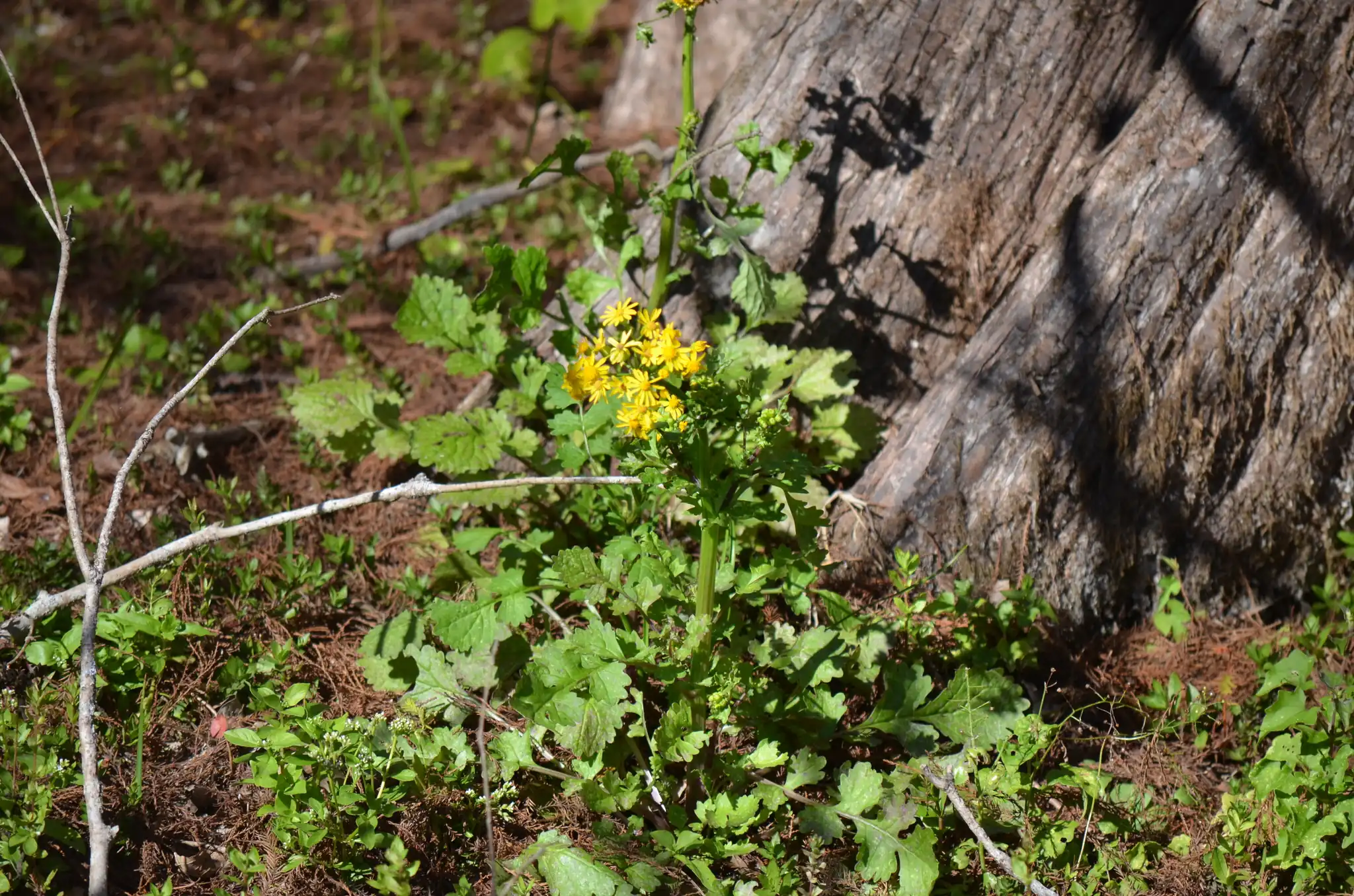
Packera glabella, commonly known as butterweed, is a winter annual forb native to central and eastern North America that forms a low foliage rosette in fall before flowering the following spring. The plant produces stout, hollow, deeply grooved stems streaked with red, topped by flat clusters of bright canary yellow daisy-like blooms.
Its hairless, cress-like leaves feature deeply pinnately lobed margins that grow progressively smaller up the stem. All plant parts contain toxic pyrrolizidine alkaloids, rendering the foliage unpalatable to deer, rabbits, and grazing livestock.
Uses & Benefits:
Essentials
At a Glance
Plant Type
Annual
Height
36"
Width
18"
Light
Full Sun, Partial Sun
Zones
4, 5, 6, 7, 8, 9
Water
High / Consistently Moist
Humidity
High
Lifespan
Annual / Biennial
Native To
Central and Eastern North America
Toxicity
Toxic to livestock and pets if ingested
Bloom period
Spring – Early summer
In flower about 4 months of the year
Planting
How to Grow
- Sow seeds on the surface of moist, rich soil in early fall, as seeds require sunlight and cool ambient temperatures to germinate.
- Keep the site continuously moist throughout fall and winter while the basal rosette establishes.
- Provide full sun to light shade during active spring growth as flowering stalks erect.
- Allow the winter annual cycle to finish naturally or cut back spent stems before fluffy seed heads release into the wind.
Pro Tip
Mow or hand-pull stands before seeds mature in late spring to eliminate aggressive self-seeding in wet or disturbed ground.
Keep It Thriving
Care Guide
Do
- Keep soil consistently wet or damp during active winter and spring growth.
- Sow seed in early autumn for natural cold stratification and fall rosette emergence.
Don't
- Do not allow soil to dry out completely during active growth.
- Do not allow livestock or horses to pasture where heavy infestations occur.
Seasonal Care Calendar
| Task | Jan | Feb | Mar | Apr | May | Jun | Jul | Aug | Sep | Oct | Nov | Dec |
|---|---|---|---|---|---|---|---|---|---|---|---|---|
| Pest Check | ||||||||||||
| Plant | ||||||||||||
| Prune | ||||||||||||
| Spring Cleanup |
Watch Out For
Pests & Diseases
Common Pests
Common Diseases
In the Garden
Landscape Uses & Companions
Landscape Uses
Companion Plants
Multiply
Propagation Methods
Good to Know
Common Questions
Butterweed questions
What zones can Butterweed grow in?
Butterweed is hardy in USDA Zones 4–9. Inside that range it survives winter in the ground; outside it, grow it as an annual or a container plant you protect.
Is Butterweed deer resistant?
Yes — Butterweed is rated deer-resistant. Deer typically pass it over, though extreme hunger can override any plant's defenses.
When does Butterweed bloom?
Butterweed typically blooms in spring through early summer. Exact timing shifts a week or two with your zone — Sow's bloom calendar maps it to your garden.
Does Butterweed need full sun?
Butterweed does best in full sun to part shade. In hot climates, afternoon shade keeps blooms fresher longer.
More Packera to compare
Keep exploring
Explore the genus
Grow Butterweed with confidence
See it in a design of your actual yard, get zone-matched care reminders, and track it season by season in your garden journal.