The Story
Plant Bio
Brunfelsia australis is an evergreen to semi-evergreen woody shrub native to South America, reaching heights of up to thirteen feet in mature gardens. The dense, upright branching structure carries glossy, dark green leathery leaves that can develop purplish tinges during cooler weather.
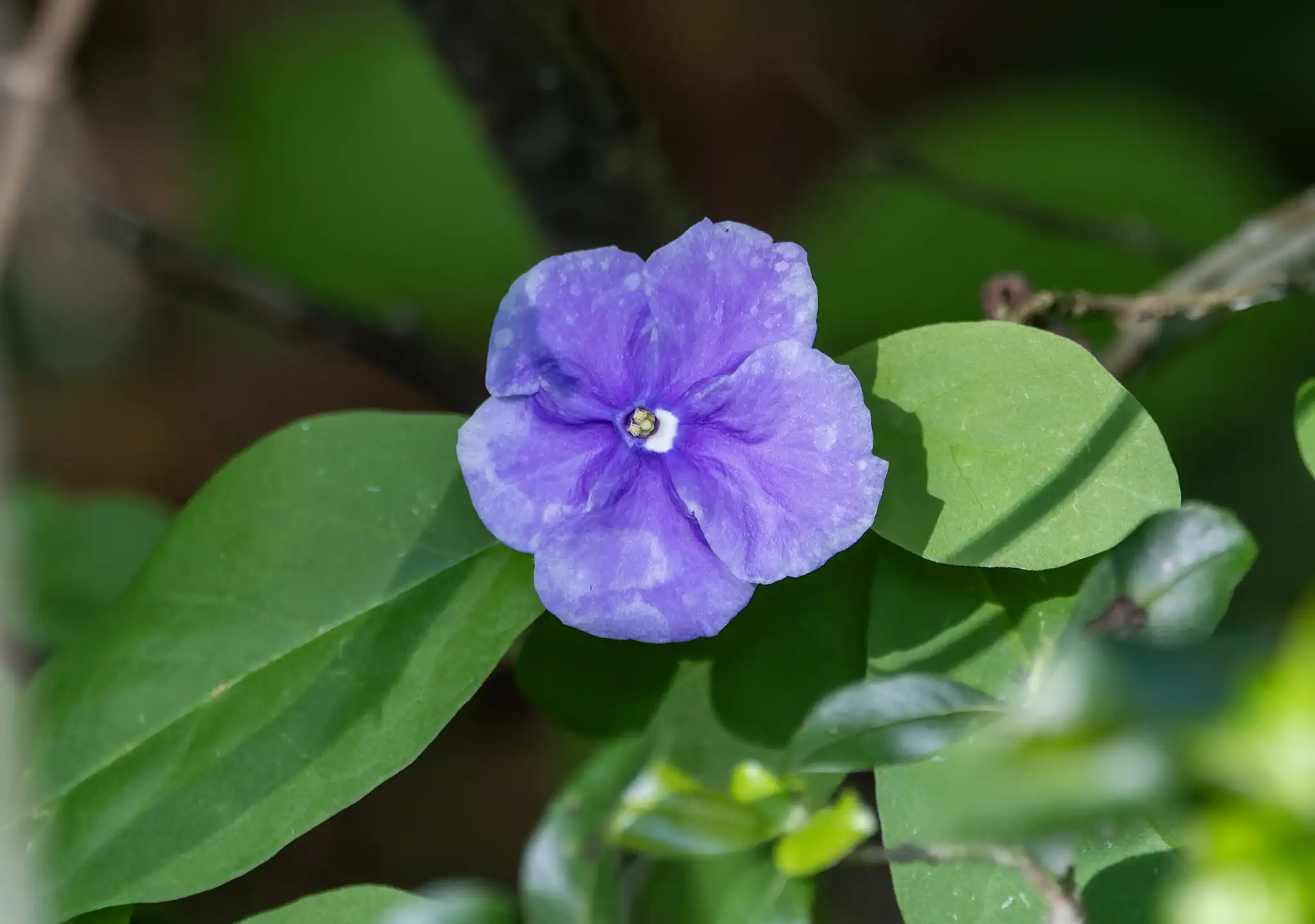
The tubular flowers open deep purple, fade to lavender on the second day, and turn white by the third day, showing three distinct colors simultaneously on the plant. These terminal clusters emerge primarily in spring and early summer, attracting butterflies, bees, and hummingbirds.
Uses & Benefits:
Essentials
At a Glance
Plant Type
Shrub
Height
157"
Width
118"
Light
Full Sun, Partial Sun, Shade
Zones
9, 10
Water
Regular
Humidity
High
Lifespan
Long
Native To
South America
Toxicity
Highly Toxic
Bloom period
Spring – Summer
In flower about 6 months of the year
Planting
How to Grow
- Select a planting site with rich, humus-rich, acidic to neutral soil that drains rapidly.
- Position the plant in partial shade or morning sun, providing afternoon protection to prevent foliage scorch.
- Water regularly to maintain consistent soil moisture, especially during dry spells.
- Apply a balanced, bloom-boosting fertilizer during the active spring and summer growing season.
Pro Tip
Slight root-binding in containers intensifies flower production, but avoid planting in heavy, compacted clay where standing water triggers fatal root rot.
Keep It Thriving
Care Guide
Do
- Prune heavily immediately after the primary spring flowering cycle to encourage dense branching.
- Provide frost protection for young specimens when temperatures drop near freezing.
- Grow in containers in USDA zones below 9 to allow indoor overwintering.
Don't
- Do not prune heavily into old, leafless wood, as the plant fails to regenerate from these stems.
- Do not allow the soil to dry out completely or become waterlogged.
- Do not plant where domestic animals can access the highly toxic bark, roots, or seeds.
Seasonal Care Calendar
| Task | Jan | Feb | Mar | Apr | May | Jun | Jul | Aug | Sep | Oct | Nov | Dec |
|---|---|---|---|---|---|---|---|---|---|---|---|---|
| Fertilize | ||||||||||||
| Pest Check | ||||||||||||
| Prune | ||||||||||||
| Winter Prep |
Watch Out For
Pests & Diseases
Common Pests
Common Diseases
In the Garden
Landscape Uses & Companions
Landscape Uses
Companion Plants
Multiply
Propagation Methods
Good to Know
Common Questions
Yesterday-Today-and-Tomorrow questions
What zones can Yesterday-Today-and-Tomorrow grow in?
Yesterday-Today-and-Tomorrow is hardy in USDA Zones 9–10. Inside that range it survives winter in the ground; outside it, grow it as an annual or a container plant you protect.
Is Yesterday-Today-and-Tomorrow deer resistant?
Not reliably. Deer may browse Yesterday-Today-and-Tomorrow, especially tender spring growth — plan on repellents or fencing where pressure is high.
When does Yesterday-Today-and-Tomorrow bloom?
Yesterday-Today-and-Tomorrow typically blooms in spring through summer. Exact timing shifts a week or two with your zone — Sow's bloom calendar maps it to your garden.
Does Yesterday-Today-and-Tomorrow need full sun?
Yesterday-Today-and-Tomorrow does best in full sun to part shade. In hot climates, afternoon shade keeps blooms fresher longer.
Keep exploring
Explore the genus
Hardy in your zone?
Grow Yesterday-Today-and-Tomorrow with confidence
See it in a design of your actual yard, get zone-matched care reminders, and track it season by season in your garden journal.