1 named cultivar

The Story
Plant Bio
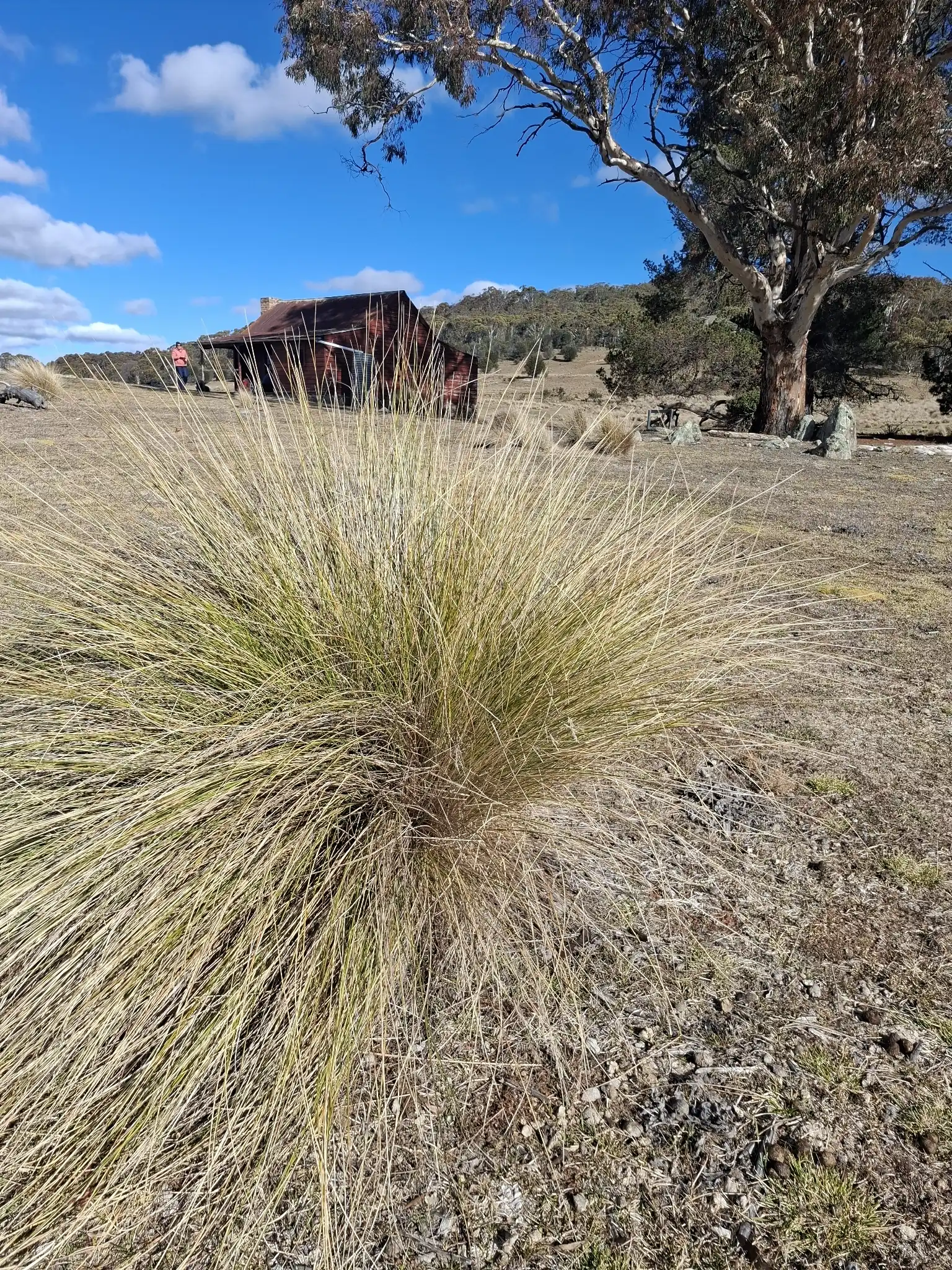
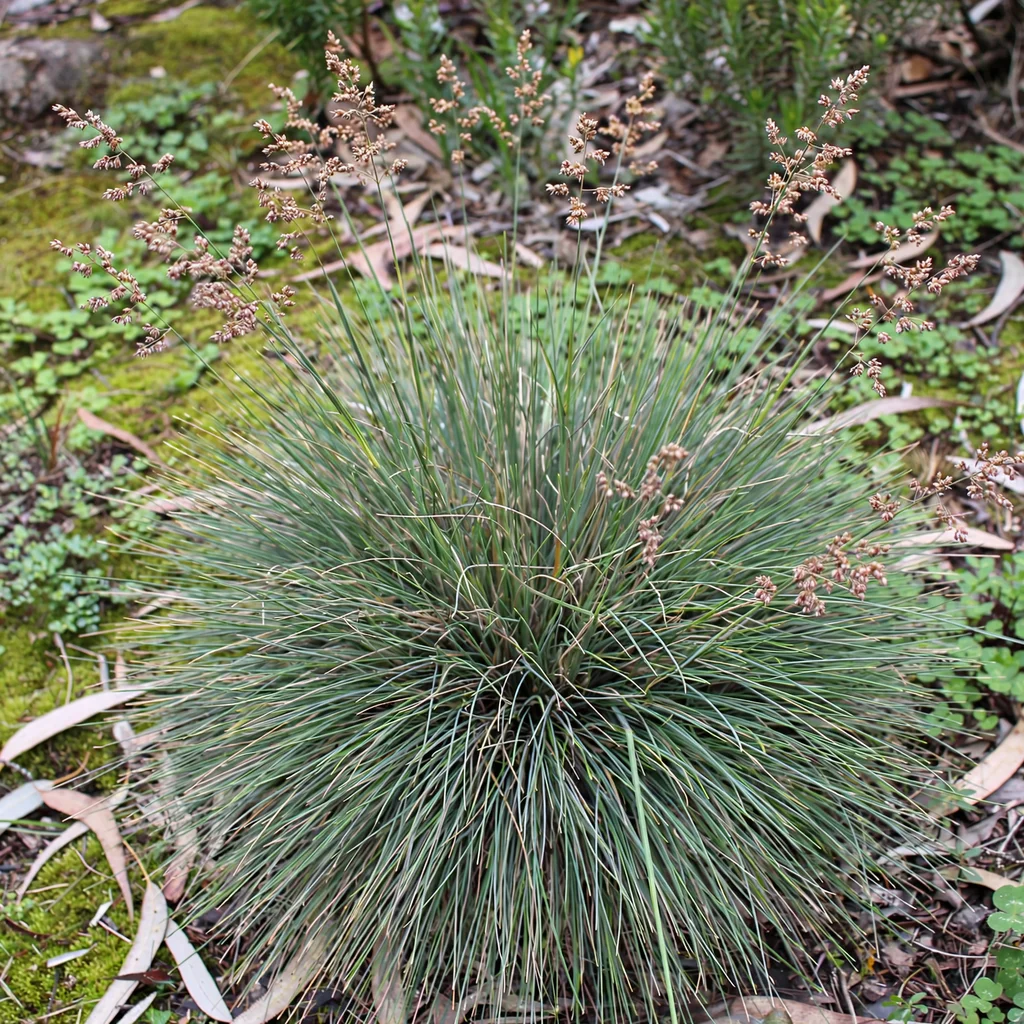
Poa labillardierei, commonly known as common tussock-grass, is a dense, coarsely tufted perennial grass native to southern and eastern Australia. It forms large, upright mounds of slender, tightly rolled foliage that arches gracefully under its own weight.
The fine-textured leaves display a distinct blue-green or grayish-blue tint before aging to a warm golden-straw color in late summer. In spring and summer, delicate, open flower panicles rise well above the foliage, creating a misty, translucent screen.
Uses & Benefits:
Essentials
At a Glance
Plant Type
Grass
Height
47"
Width
39"
Light
Full Sun, Partial Sun
Zones
8, 9, 10
Water
Moderate
Humidity
Unknown
Lifespan
Perennial
Native To
Australia
Toxicity
Non-toxic
Planting
How to Grow
- Select a planting site in full sun to partial shade with moist, well-draining loam or clay soil.
- Dig a hole twice the width of the root ball and set the plant so the crown sits level with the surrounding soil.
- Water deeply and regularly during the first growing season to establish a deep, resilient root system.
- Apply a light layer of organic mulch around the base to retain soil moisture, keeping it clear of the crown.
Pro Tip
Avoid shearing this grass back to a tight stubble annually; cutting into the old, leafless woody base can kill the tussock.
Keep It Thriving
Care Guide
Do
- Water regularly during dry spells to maintain the vibrant blue-green foliage color.
- Divide mature clumps in late winter or early spring to propagate and rejuvenate congested plants.
Don't
- Do not shear the foliage back to the ground annually, as this can weaken or kill the tussock.
- Avoid planting in dry, arid climates without providing supplemental irrigation.
Seasonal Care Calendar
| Task | Jan | Feb | Mar | Apr | May | Jun | Jul | Aug | Sep | Oct | Nov | Dec |
|---|---|---|---|---|---|---|---|---|---|---|---|---|
| Divide | ||||||||||||
| Pest Check | ||||||||||||
| Prune | ||||||||||||
| Spring Cleanup |
Watch Out For
Pests & Diseases
Common Pests
Common Diseases
In the Garden
Landscape Uses & Companions
Landscape Uses
Companion Plants
Multiply
Propagation Methods
Good to Know
Common Questions
Common Tussock-grass questions
What zones can Common Tussock-grass grow in?
Common Tussock-grass is hardy in USDA Zones 8–10. Inside that range it survives winter in the ground; outside it, grow it as an annual or a container plant you protect.
Is Common Tussock-grass deer resistant?
Not reliably. Deer may browse Common Tussock-grass, especially tender spring growth — plan on repellents or fencing where pressure is high.
When does Common Tussock-grass bloom?
Common Tussock-grass typically blooms in spring through summer. Exact timing shifts a week or two with your zone — Sow's bloom calendar maps it to your garden.
Does Common Tussock-grass need full sun?
Common Tussock-grass does best in full sun to part shade. In hot climates, afternoon shade keeps blooms fresher longer.
Is Common Tussock-grass drought tolerant?
Yes — once established (usually after the first full season), Common Tussock-grass handles dry spells with minimal watering. Water deeply its first year to build the root system that makes that possible.
More Poa to compare
Keep exploring
Explore the genus
Hardy in your zone?
Grow Common Tussock-grass with confidence
See it in a design of your actual yard, get zone-matched care reminders, and track it season by season in your garden journal.