The Story
Plant Bio
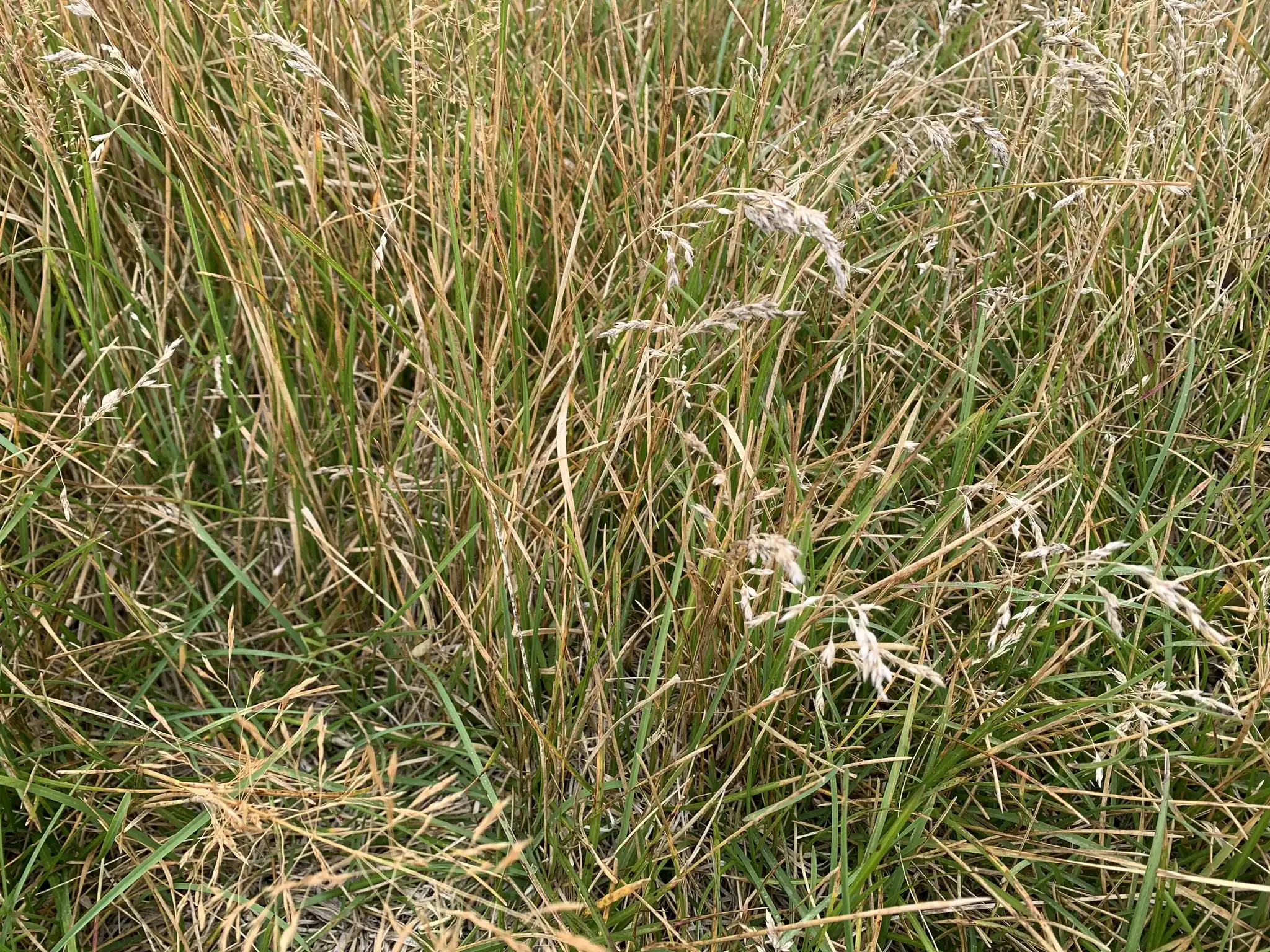
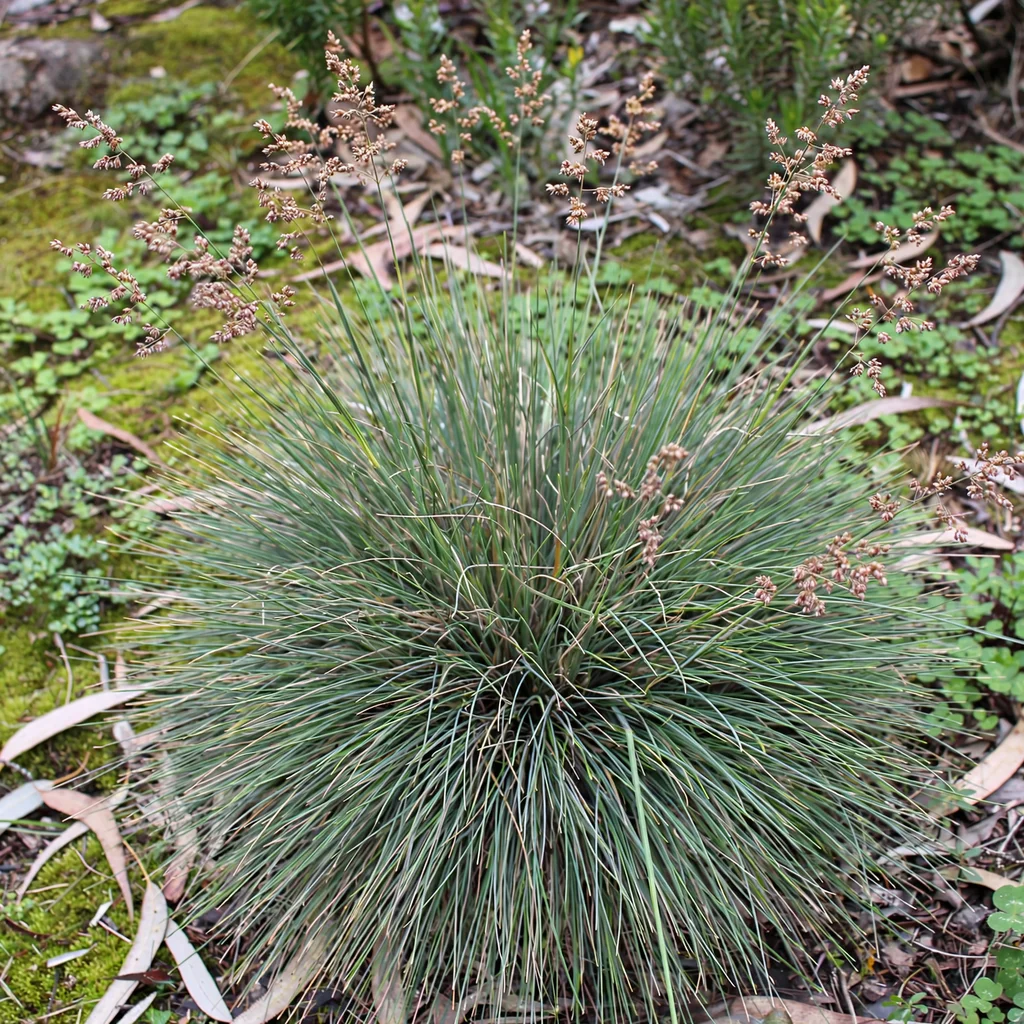
Poa pratensis, known as Kentucky bluegrass, is a cool-season perennial grass that spreads via creeping underground rhizomes to form a dense, sod-forming turf. In unmowed settings, it produces open, pyramidal panicles of greenish-purple spikelets on slender stalks rising above the foliage.
The bright to dark green leaf blades are characterized by parallel sides, distinctive boat-shaped tips, and two translucent lines running parallel to the midrib. This species is highly winter-hardy but enters dormancy during hot, dry summer periods unless irrigated.
Uses & Benefits:
Essentials
At a Glance
Plant Type
Grass
Height
35"
Width
36"
Light
Full Sun, Partial Sun
Zones
4, 5, 6, 7, 8
Water
Moderate
Humidity
Moderate
Lifespan
Perennial
Native To
Europe, Asia, North Africa
Toxicity
Non-toxic
Bloom period
Spring – Summer
In flower about 6 months of the year
Planting
How to Grow
- Sow seed in early fall or spring into well-drained, fertile loam rich in organic matter.
- Maintain consistent moisture during germination and early establishment phases.
- Mow regularly during active spring and fall growth flushes, keeping the height between two and three inches.
- Apply a balanced slow-release turf fertilizer in split applications during spring and fall.
Pro Tip
Avoid applying high-nitrogen fertilizers during peak summer heat; this forces weak, disease-prone growth and triggers severe outbreaks of summer patch and dollar spot.
Keep It Thriving
Care Guide
Do
- Mow regularly to maintain a height of two to three inches during active growth.
- Irrigate deeply and infrequently to encourage a deep, drought-resistant root system.
- Aerate the soil annually to relieve compaction and reduce thatch buildup.
Don't
- Do not scalp the lawn or remove more than one-third of the leaf blade in a single mowing.
- Do not over-fertilize with high nitrogen during hot summer weather.
- Do not allow the soil to remain waterlogged, which invites root rot and fungal diseases.
Seasonal Care Calendar
| Task | Jan | Feb | Mar | Apr | May | Jun | Jul | Aug | Sep | Oct | Nov | Dec |
|---|---|---|---|---|---|---|---|---|---|---|---|---|
| Fertilize | ||||||||||||
| Pest Check | ||||||||||||
| Prune | ||||||||||||
| Spring Cleanup |
Watch Out For
Pests & Diseases
Common Pests
Common Diseases
In the Garden
Landscape Uses & Companions
Landscape Uses
Companion Plants
Multiply
Propagation Methods
Good to Know
Common Questions
Kentucky Bluegrass questions
What zones can Kentucky Bluegrass grow in?
Kentucky Bluegrass is hardy in USDA Zones 4–8. Inside that range it survives winter in the ground; outside it, grow it as an annual or a container plant you protect.
Is Kentucky Bluegrass deer resistant?
Not reliably. Deer may browse Kentucky Bluegrass, especially tender spring growth — plan on repellents or fencing where pressure is high.
When does Kentucky Bluegrass bloom?
Kentucky Bluegrass typically blooms in spring through summer. Exact timing shifts a week or two with your zone — Sow's bloom calendar maps it to your garden.
Does Kentucky Bluegrass need full sun?
Kentucky Bluegrass does best in full sun to part shade. In hot climates, afternoon shade keeps blooms fresher longer.
More Poa to compare
Keep exploring
Explore the genus
Hardy in your zone?
Grow Kentucky Bluegrass with confidence
See it in a design of your actual yard, get zone-matched care reminders, and track it season by season in your garden journal.