
Species
 Nandina domesticaHeavenly Bamboo
10 other cultivars
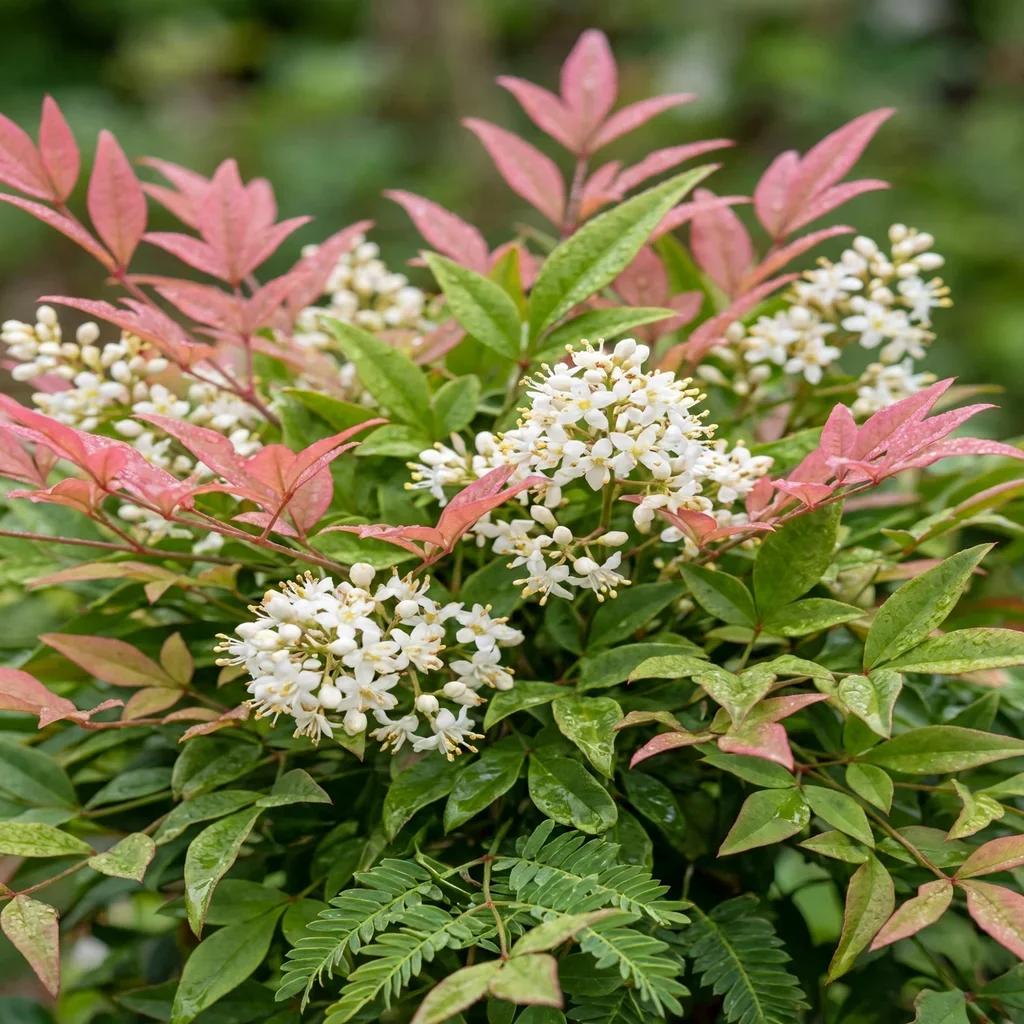 ‘Blush Pink’Blush Pink Heavenly Bamboo
 ‘Gulf Stream’Gulf Stream Nandina
 ‘Seika’Obsession Nandina
 ‘Jaytee’Harbor Dwarf Heavenly Bamboo
 ‘Compacta’Compact Heavenly Bamboo
 ‘Aka’Aka Blush Pink Heavenly Bamboo
 ‘Fire Power’Heavenly Bamboo
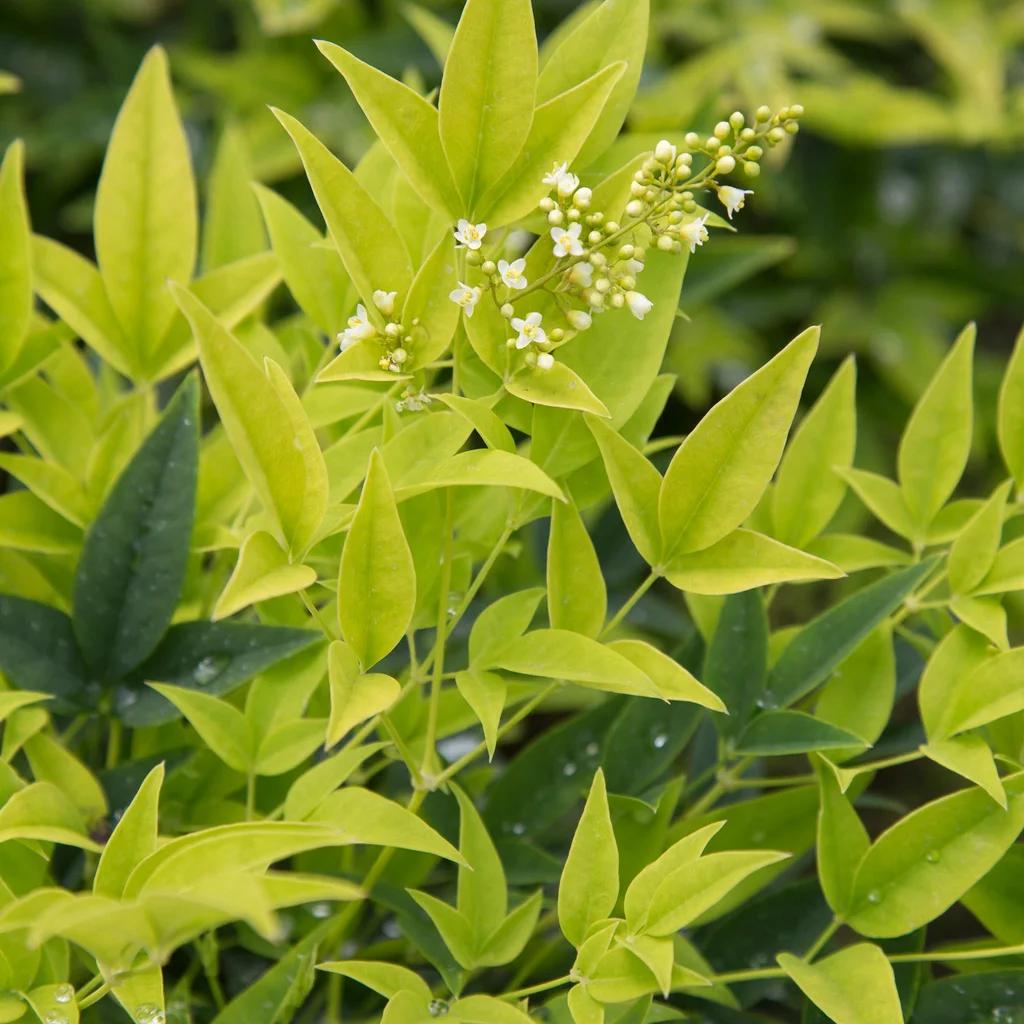 ‘Lemon and Lime’Heavenly Bamboo
 ‘Moon Bay’Heavenly Bamboo
 ‘Flirt’Flirt Nandina
The Story
Plant Bio
Nandina domestica is an evergreen shrub known for its fine-textured, bamboo-like foliage that often changes color throughout the seasons. It produces panicles of white flowers followed by bright red berries.
'Harbor Dwarf' is a compact, low-growing cultivar that spreads by rhizomes to form a dense groundcover. Its foliage turns a striking bronze-red to purplish-red in winter, and it rarely flowers or sets fruit, reducing concerns about toxicity and invasiveness.
Uses & Benefits:
Essentials
At a Glance
Plant Type
Shrub
Height
24"
Width
36"
Light
Full Sun, Partial Sun
Zones
6, 7, 8, 9, 10
Water
Low to moderate
Humidity
Adaptable
Lifespan
15+ years
Native To
Eastern Asia
Toxicity
All parts, especially berries, are toxic if ingested
Bloom period
Late spring – Early summer
In flower about 2 months of the year
Planting
How to Grow
- Select a site in sun or part shade with well-drained soil.
- Dig a hole twice the width of the root ball.
- Amend heavy clay soil with compost to improve drainage.
- Set the plant so the top of the root ball is level with the soil surface.
- Backfill the hole and water thoroughly.
- Mulch to conserve moisture and suppress weeds, keeping it away from stems.
Pro Tip
For the best winter color, plant 'Harbor Dwarf' in a location that receives full sun.
Keep It Thriving
Care Guide
Do
- Plant in well-drained soil.
- Water regularly until established, then only during dry periods.
- Provide some afternoon shade in very hot climates.
- Prune to remove any dead or damaged canes in late winter.
Don't
- Do not plant in soggy, poorly drained locations.
- Avoid planting the berry-producing species where birds or pets might consume them.
- Don't shear the plant; it ruins its natural, graceful form.
- Avoid deep cultivation around the base, which can damage the spreading rhizomes.
Seasonal Care Calendar
| Task | Jan | Feb | Mar | Apr | May | Jun | Jul | Aug | Sep | Oct | Nov | Dec |
|---|---|---|---|---|---|---|---|---|---|---|---|---|
| Divide | ||||||||||||
| Fertilize | ||||||||||||
| Prune |
Watch Out For
Pests & Diseases
Common Pests
Common Diseases
In the Garden
Landscape Uses & Companions
Landscape Uses
Companion Plants
Multiply
Propagation Methods
Good to Know
Common Questions
Heavenly Bamboo questions
What zones can Heavenly Bamboo grow in?
Heavenly Bamboo is hardy in USDA Zones 6–10. Inside that range it survives winter in the ground; outside it, grow it as an annual or a container plant you protect.
Is Heavenly Bamboo deer resistant?
Yes — Heavenly Bamboo is rated deer-resistant. Deer typically pass it over, though extreme hunger can override any plant's defenses.
When does Heavenly Bamboo bloom?
Heavenly Bamboo typically blooms in late spring through early summer. Exact timing shifts a week or two with your zone — Sow's bloom calendar maps it to your garden.
Does Heavenly Bamboo need full sun?
Heavenly Bamboo does best in full sun to part shade. In hot climates, afternoon shade keeps blooms fresher longer.
Is Heavenly Bamboo drought tolerant?
Yes — once established (usually after the first full season), Heavenly Bamboo handles dry spells with minimal watering. Water deeply its first year to build the root system that makes that possible.
More Nandina to compare
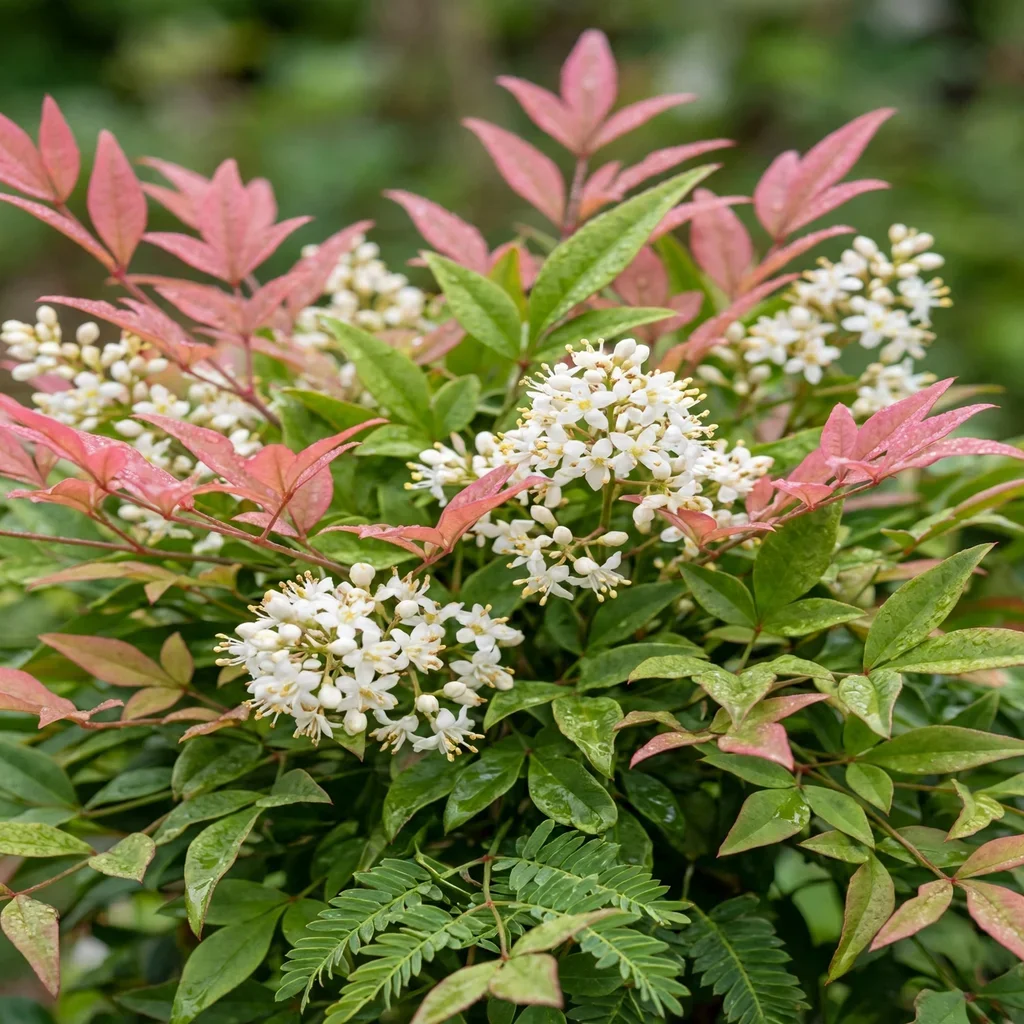
Blush Pink Heavenly Bamboo
Nandina domestica 'Blush Pink'
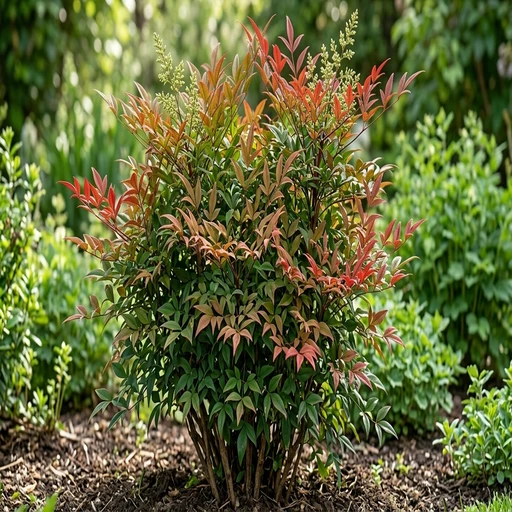
Gulf Stream Nandina
Nandina domestica 'Gulf Stream'
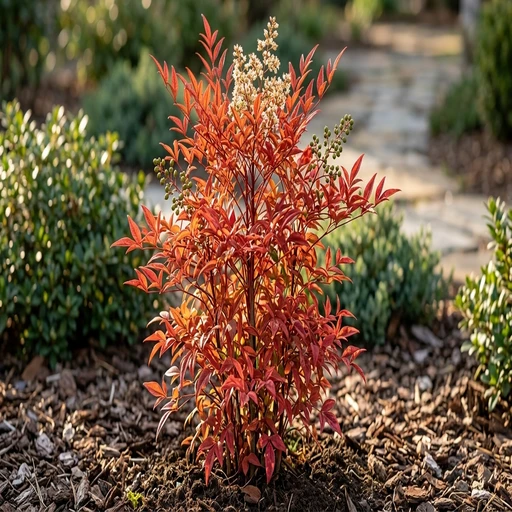
Obsession Nandina
Nandina domestica 'Seika'
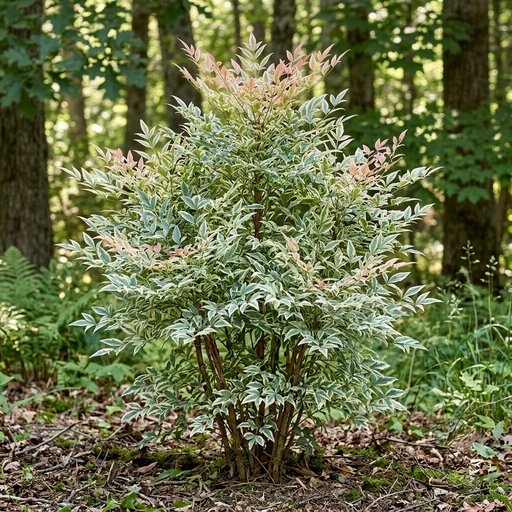
Harbor Dwarf Heavenly Bamboo
Nandina domestica 'Jaytee'
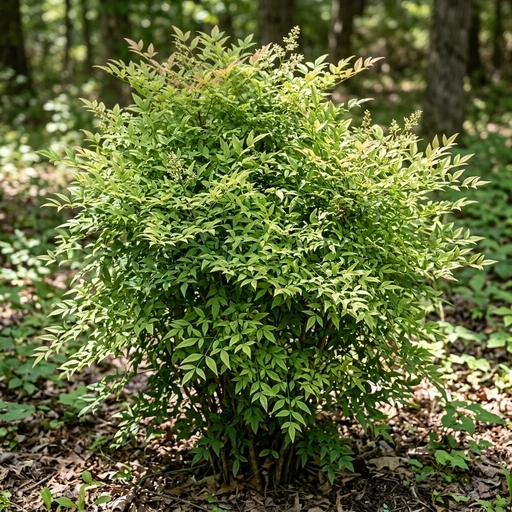
Compact Heavenly Bamboo
Nandina domestica 'Compacta'
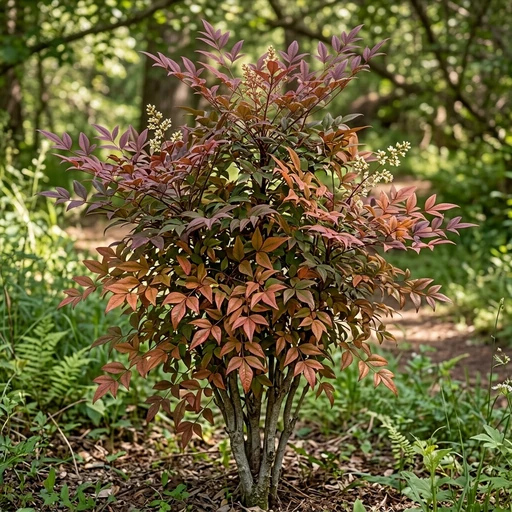
Aka Blush Pink Heavenly Bamboo
Nandina domestica 'Aka'
Keep exploring
Explore the genus
Hardy in your zone?
Grow Heavenly Bamboo with confidence
See it in a design of your actual yard, get zone-matched care reminders, and track it season by season in your garden journal.